
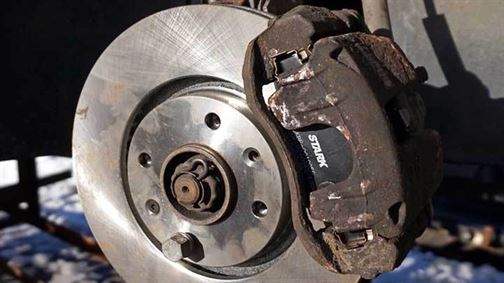
Brake Caliper Seizing can cause serious braking problems if left unaddressed. This issue is relatively rare, but it can affect your vehicle’s safety if not diagnosed and resolved immediately.
How to Detect Brake Caliper Seizing Problems
There are various factors that affect a car’s brakes, however, most of them are due to something being stuck or seized inside the system.
For example, the piston has become stuck. In this situation, the engine and brakes will warn you with small red flags about brake seizing issues.
Symptoms may include:
The Engine Has Trouble Maintaining Speed
When brake caliper seizing problems occur, or when the brake pad is stuck, the car will lose power and be unable to maintain its speed. It feels as if the parking brake is engaged.
The Brakes Do Not Release Smoothly After Releasing Pressure from the Pedal
This is another common symptom to know if a brake is seized or not. Unused vehicles are often the target of this problem. In some cases, the brakes are so tight that the car cannot even move.
Your Car Seems to Pull More to One Side When Braking
In many situations, brakes seize on one wheel so often that some drivers may not even notice it. Most of the time, car owners only discover this symptom when automotive mechanics test the brakes.
The Seized Brake Becomes Hot
Last but not least, brake overheating is a symptom that any driver can notice. Sometimes, you can even see smoke coming from the brakes.
So, when this happens, stop driving now! Not only can a seized brake cause a fire, but it can also damage car components and the discs connected to the wheel hub.
Reasons for Brake Caliper Seizing
Many drivers wonder: what would prevent the brakes from releasing? Some of them know that the caliper sticks after brake work, but what are the factors that lead to seizing?
Well, seized brake calipers can occur for various reasons. If you are knowledgeable about automotive mechanisms and have a knack for fixing things yourself, knowing the reasons will help you solve problems easily. The car’s brake caliper can stick when:
- The caliper’s brake pads are stuck or corroded because they cannot move in and out smoothly.
- The brake caliper bolts are not sufficiently lubricated to allow smooth movement in or out. This happens when their protective rubber boots are damaged or torn.
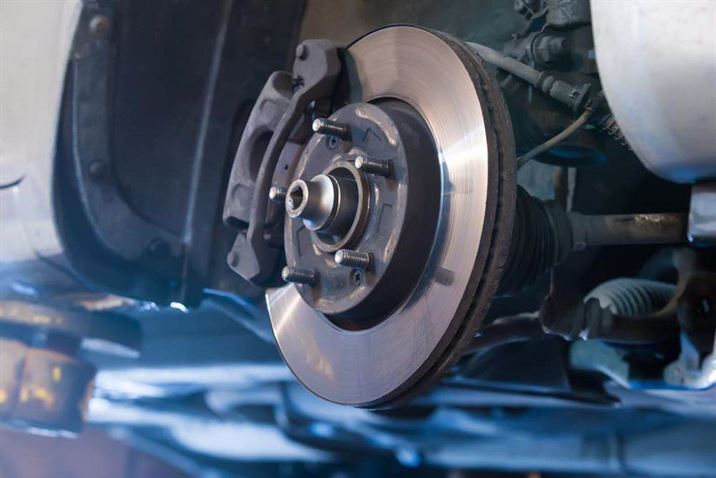
- The caliper piston’s rubber boot is torn by rust.
- The brake hose deteriorates internally.
How to Fix a Car Brake Caliper Seizing
Fixing brake seizing problems is a complicated task and you may need professional help. However, you can do it if you have good knowledge of automotive mechanisms.
Removing sticking brake calipers will require a professional mechanic if they are semi-loaded. However, you can attempt it if yours is not loaded.
Tools and Supplies Needed for Brake Caliper Seizing Repair
In order to answer the question: how to fix a sticking caliper? Tools and supplies are essential. Here is our list of what you might need to fix the seizing instead of buying a brand new brake caliper that sticks:
- A set of ratchets
- Pliers
- Brake pads
- Screwdrivers
- A wrench
- Brake bleeding tools
- A brake caliper piston turning tool
- A catch pan
- Brake fluid
- Brake lubricant
Instructions for Brake Caliper Seizing Repair
Removing the wheels. Remove the wheel and loosen the lug nuts with the ratchet. Remove the wheel and lug nuts and set them aside.
Removing the caliper. Loosen the banjo bolt that connects the brake caliper to the brake line. Loosen and remove the bolts that hold the caliper attached to the wheel assembly. Remember to place a catch pan under the brake mechanism to collect brake fluid. Remove the bolts, rubber boots, and caliper sliders and lubricate all these mounting components.
Installing the new caliper. Compress the piston of the new caliper with the brake caliper piston tool. Attach it to the end of the brake line. Lubricate the caliper bolts, place the new brake pads on them, and attach them to the wheel assembly. Finish the job by attaching the brake hose and tightening the banjo bolt.
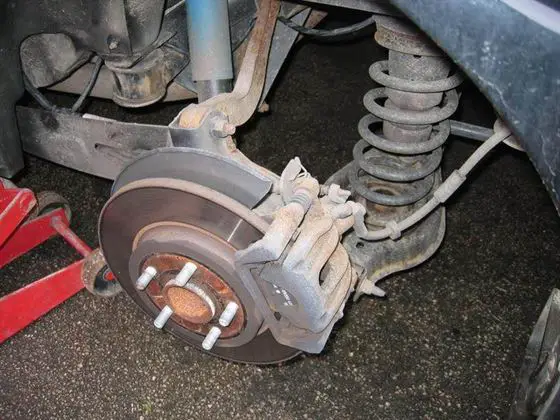
Bleeding the brakes. Fill the master cylinder and connect a hose to the bleeder valve. Now, open the valve and have someone else press the brakes at that moment. Close the valve when you see air bubbles in the jar. Repeat this process until there are no more bubbles in the jar. Fill the cylinder and close the bleeder valve.
Installing the wheel. Use your hands to tighten the lug nuts after putting the tire back on the wheel assembly. Once you have lowered the car to the ground by removing the jack, tighten the lug nuts with the ratchet.
Congratulations! You have just gotten rid of your brake caliper seizing problem!
FAQ on Brake Caliper Seizing
The brake is the most crucial part of the car, so it is essential for all car owners to understand its operation as well as the problems surrounding it. Here are the FAQs and answers for each one:
1. What would cause a brake caliper to stick?
One of the most common reasons a brake caliper sticks is the combination of a caliper piston and a brake hose. Normally, the piston can function thanks to a rubber boot lubricating and protecting it.
However, the rubber will tear over time, causing rust and debris to form inside the caliper.
2. Can I spray WD-40 on my brake calipers?
Furthermore, the cleaner can be used on brake linings, brake shoes, rotors, drums, calipers, pads, and other areas of the brake system as long as they are still intact. Remember to cover other areas of the car when applying the brake cleaner.
3. Can a stuck caliper fix itself?
Yes. Stuck caliper pistons can be repaired by the hydraulic pressure of the system itself. Even though car owners can take their vehicle to the auto shop and request a quick check, they can also fix it at home.
After that, drivers can pump the brake pedal to move the piston past the corroded section.
4. Can I drive with a sticking caliper?
If you have a sticking caliper, you can still drive with the brakes slightly engaged all the time.
Since the brake pad cannot fully disengage from the brake disc surface, the vehicle will move with a stuck caliper and create stress on the transmission.
5. Which way should I turn my caliper piston?
Clockwise. This is the correct direction for turning rear calipers. Before performing the turn, remember to use the rear caliper tool and align the piston notches.
6. How much does it cost to repair a seized brake caliper?
From $60 to $200. If only the caliper is broken and nothing else, car owners only need to replace the caliper and possibly the rest of the brake work (rotors and pads).
Watch this video from AutoEclinic to learn how to diagnose and repair a sticking brake caliper!
7. Should I grease the brake caliper piston?
Yes, you should. And drivers are recommended to use brake fluid often. Not only can it help install the piston more easily, but it also lubricates the rubber brake components.
8. Should I open the bleeder valve to compress the piston?
Yes. Drivers must open the bleeder valve in order to compress the piston, because they want to reinstall the piston on the vehicle instead of pushing fluid back up into the ABS unit.
9. What is the best lubricant for caliper pins?
Our recommendation is Permatex Ultra Disc Brake Caliper Lubricant. It is an environmentally friendly synthetic lubricant that does not melt.
10. What is the best brake lubricant?
Mission Automotive Dielectric Grease/Silicone Paste/Waterproof Marine Grease. It is undoubtedly the best automotive brake lubricant.
Not only is it waterproof, but it also protects brake caliper pins as well as other car components. Permatex Ultra Disc Brake Caliper Lubricant is another option for drivers.
11. What can I use instead of brake grease?
Instead of brake grease, silicone grease is the perfect substitute. Car owners can purchase it at auto parts and home improvement stores.
For automobiles, it is an amazing lubricant for all brake systems. It also works on rubber and plastic surfaces.
Final Words
In conclusion, brake caliper seizing is a critical issue that requires prompt attention to ensure both vehicle safety and performance. Ignoring this problem can lead to uneven brake wear, reduced braking efficiency, and potential safety risks.
Regular maintenance, such as lubricating caliper components and monitoring brake fluid levels, can help prevent caliper seizing.
If you suspect a seized caliper, it is essential to have it inspected and repaired by a qualified mechanic. Timely intervention will not only restore proper brake function but also contribute to the overall longevity and reliability of your vehicle!