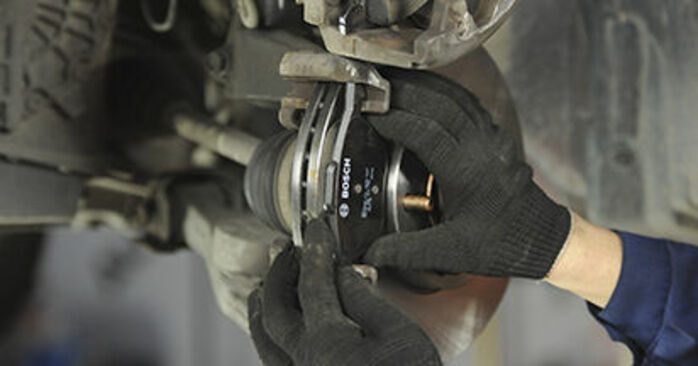
AUTODOC recommends
- Replace brake pads in complete sets for each axle. This ensures effective braking.
- Do not clean brake components with gasoline, diesel fuel, or petroleum-based solvents.
- Follow safety procedures! When brake pads are in use, brake dust is generated. Therefore, do not use compressed air and avoid inhaling dust when cleaning brake pads.
- Replace all four pads, even if only one of them is contaminated with oil or grease. Remember, there is no way to fully clean a pad.
Perform the replacement in the following order:
-
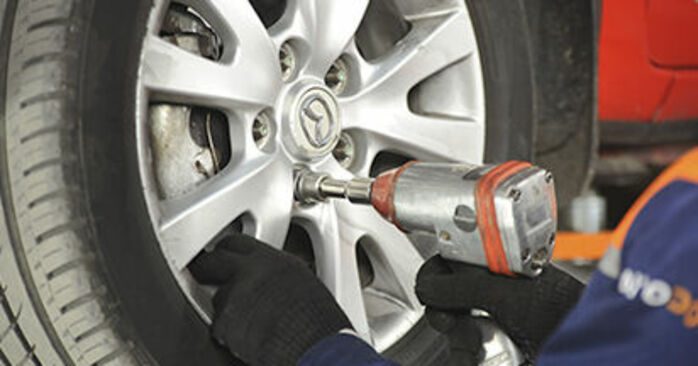 Step 1Engage the parking brake lever.Step 2Place chocks under the rear wheels.Step 3Loosen the wheel mounting bolts.
 -
 Step 4Lift the front of the car and secure it on stands.Step 5Remove the front wheels.
 -
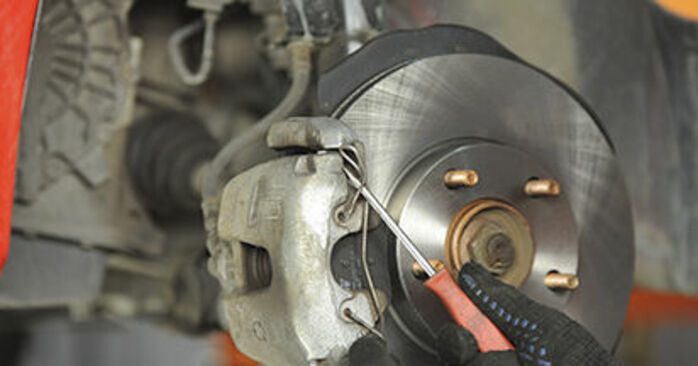 Step 6Using a simple screwdriver, remove the spring clip from the brake caliper.
 -
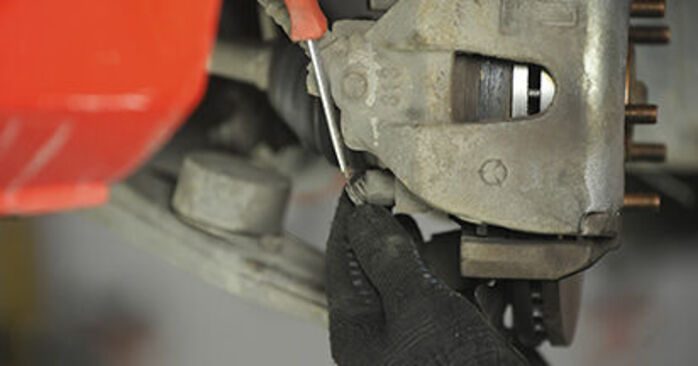
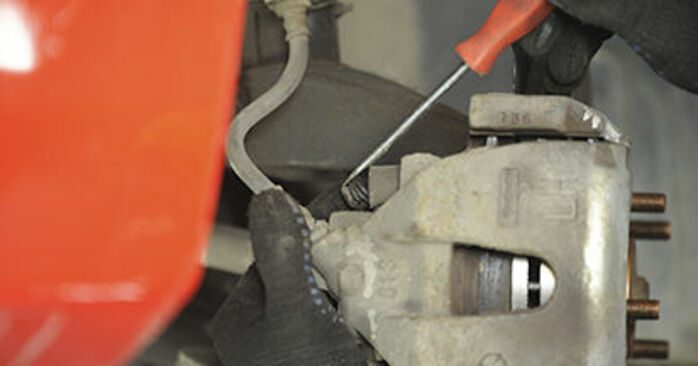 Step 7.1With a simple screwdriver, remove the caps from the two guide pins.Step 7.2
 -
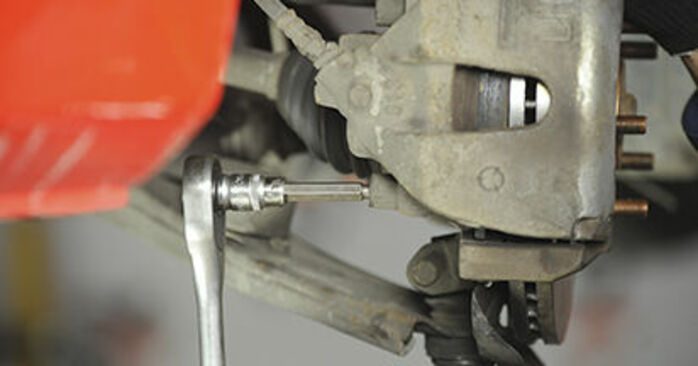
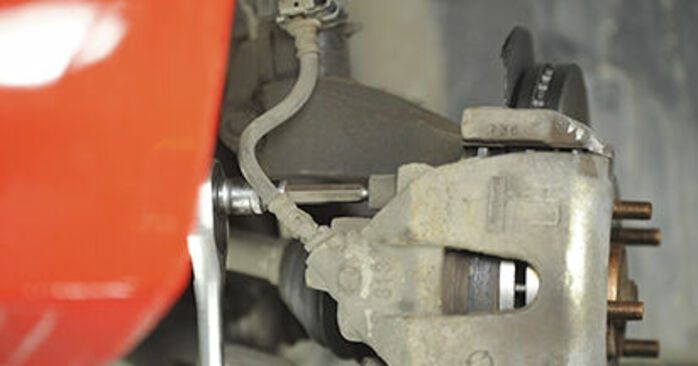 Step 8.1Unscrew the brake caliper mountingStep 8.2
 -
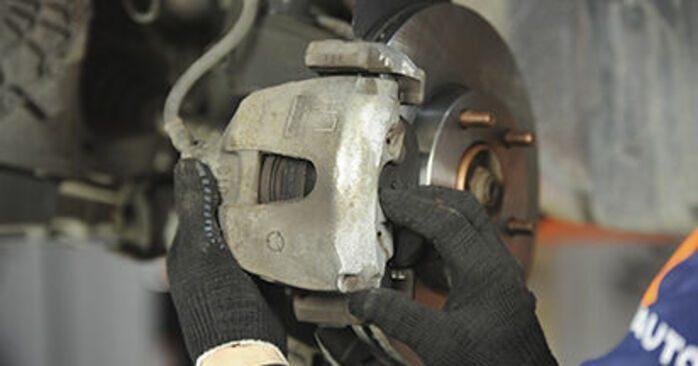 Step 9Remove the brake caliper.AutoDoc recommends:Secure the caliper to the suspension or body with a wire without disconnecting it from the brake hose to avoid depressurizing the brake system. Do not press the brake pedal after removing the brake pads. This will cause the piston to fall out of the brake cylinder, leading to brake fluid leakage and system depressurization.
 -

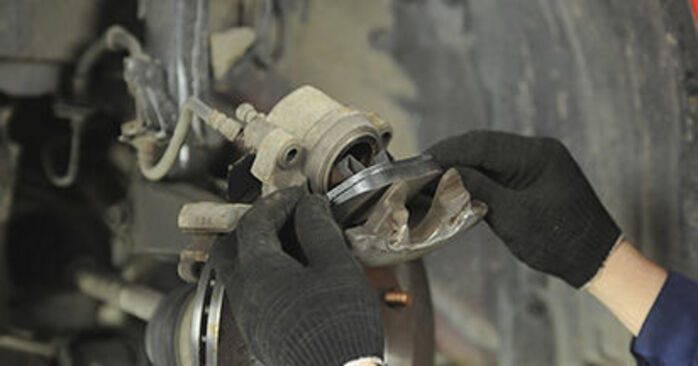
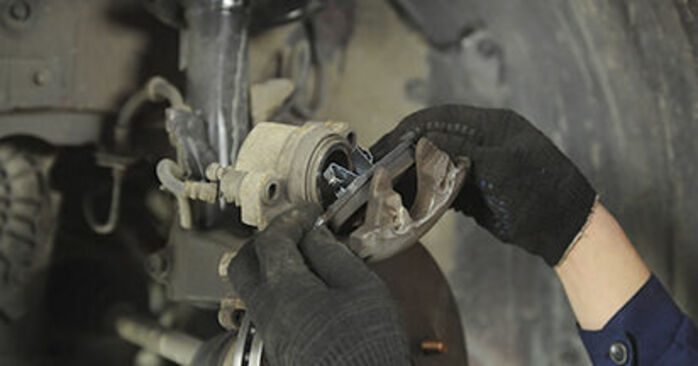 Step 10.1Remove the brake pads.Step 10.2
 -
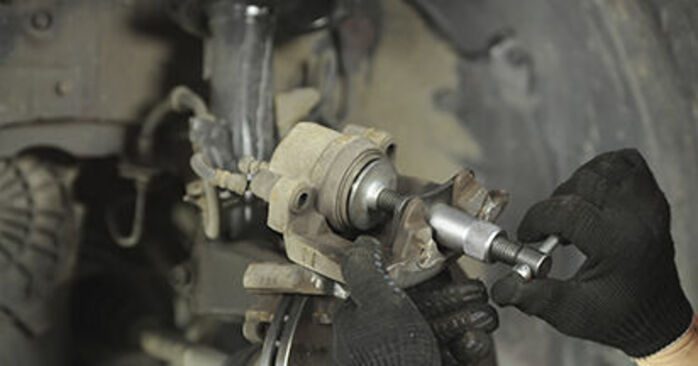 Step 11Press the piston into the cylinder until it stops.
 -