
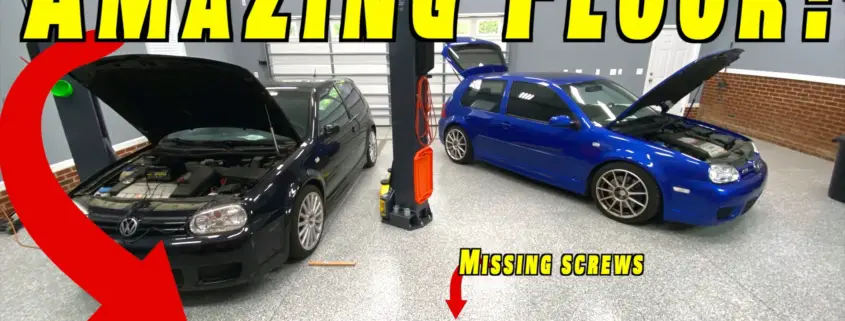
Discover how to apply a garage floor coating, whether with epoxy or a similar treatment like the two-layer polyaspartic with flakes we used. There are numerous different treatments for garage floors: special paint, tiles, epoxy resin, and many others. Most epoxy-type treatments for garage floors can be completed in a single day with the right method and products.
The Different Types of Garage Floor Coatings
The market offers a wide range of solutions to protect and beautify your concrete. The choice depends on your budget, how you use your garage, and the desired aesthetic result.
Epoxy Resin
Epoxy is a popular choice for its durability and resistance to chemical stains and abrasion. It provides a shiny, seamless finish that is relatively easy to maintain.
Polyaspartic
Polyaspartic, like the two-layer system used here, is a derivative of epoxy. Its main advantage is its extremely fast drying time, often allowing the garage to be back in service within just 24 hours. It also offers excellent UV resistance.
Concrete Floor Paint
A more economical but generally less durable option. It can be an acceptable solution for lightly used garages.
Tiles and Pavers
This is a modular solution that does not require the application of liquid products. It is simple to install and replace, but the cost can be higher.
Key Steps for a Successful Result
Preparation is the most crucial step to ensure the longevity of your coating. A poorly prepared floor will inevitably lead to premature peeling.
1. Cleaning and Surface Preparation
The concrete must be perfectly clean, dry, and degreased. Stripping or grinding (sanding) is often necessary to open the pores of the concrete and ensure optimal adhesion.
2. Applying the Primer
This base coat is essential for the finish to adhere. It seals the concrete and creates a uniform base.
3. Applying the Finish Coat and Flakes
Apply the chosen resin and immediately sprinkle the decorative flakes randomly for an aesthetic and anti-slip effect.
4. Applying the Clear Protective Coat (Top Coat)
This final layer, often made of polyaspartic, seals the flakes and provides additional resistance to impacts, UV rays, and chemicals. It is what gives that deep, professional shine.
Conclusion
Renovating your garage floor in one day is entirely achievable, especially by opting for fast-drying products like polyaspartic. Success lies in meticulously following the preparation steps and the manufacturer’s instructions. The final result will radically transform your space, making it cleaner, brighter, and much easier to maintain.