
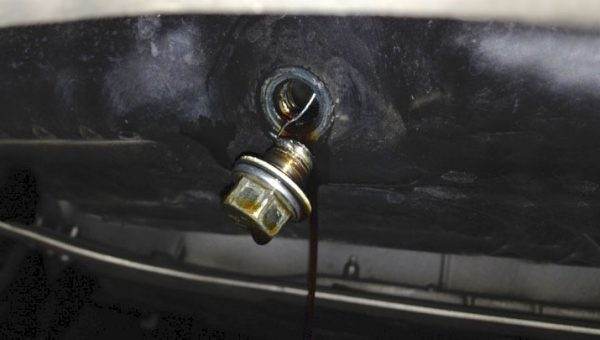

Regular oil changes are essential to prolong the life of any engine. Fortunately, changing a vehicle’s oil is generally a simple matter that usually takes no more than 30 minutes.
With a little know-how and a few basic hand tools, most motorists can change their own oil without any problems.
Occasionally, however, an oil change can present unexpected difficulties. Perhaps the most significant of these difficulties are those arising from a stripped (or rounded) drain plug. Since removing the drain plug is essential to completing any oil change, such problems can halt even the best efforts.
Furthermore, a stripped drain plug can lead to oil loss if the plug cannot be properly tightened. This leaking oil can often be seen beneath an engine’s oil pan. In such cases, proper repair will be necessary to avoid significant oil loss and potential engine damage.
Read on to learn more about how to remove a stripped drain plug, should you find yourself facing such problems in the future.
How Does an Oil Drain Plug Get Stripped?
The term “stripped” oil drain plug (or oil pan plug) is generally used to describe one of two conditions. These problems differ from each other in their context, as well as in the possible means of repair.
The first of these conditions involves damage to the threads of an oil pan’s drain hole. This damage prevents a drain plug (or oil pan bolt) from being properly tightened.
This condition often results in continuous oil leaks and must be repaired at the first available opportunity. Failure to correct these issues can damage the engine due to excessive oil loss.
Stripping of a drain plug’s or oil pan’s threads usually results from prior over-tightening. All drain plugs are subject to a specific torque at which they must be tightened upon reinstallation. If this torque value is ignored and over-tightening occurs, it can damage the threads of a drain plug or oil drain pan.
The second condition often described as a “stripped drain plug” actually refers to the rounding of a drain plug’s hex head. This prevents a wrench or socket from being properly applied to a drain plug during removal.
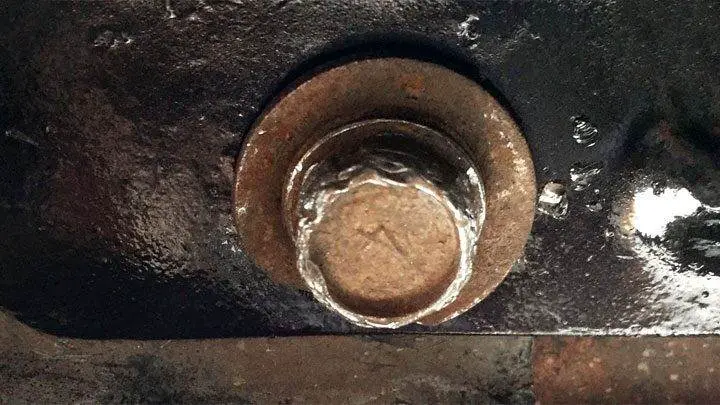
As a result, it is impossible to drain the old oil from an engine’s pan. Ultimately, this problem must be corrected before an oil change can be performed.
The most common cause of a rounded drain plug is the use of an improperly sized wrench or socket during prior removal/installation. This often occurs when a standard socket is used in a metric application or vice versa.
Once the head of a drain plug begins to round, further rounding during successive oil changes is imminent.
How to Remove a Stripped (or Rounded) Oil Drain Plug
As mentioned earlier, the term “stripped drain plug” is often used to describe two different conditions. The procedure for remedying each of these two problems also differs. However, with patience and a steady hand, one can take control of either scenario.
Drain Plug With Stripped Threads
A drain plug with stripped threads can often be removed simply by turning it counterclockwise with a wrench or socket. However, it may be necessary to provide slight outward force on the plug itself to engage the remaining threads.
This can usually be accomplished using a flathead screwdriver, wedged between the external surface of the oil pan and the underside of the drain plug’s head.
If the head of the stripped drain plug is flush with your engine’s oil pan body, a channel lock pliers can be used to turn the plug counterclockwise while pulling outward. In most cases, this method will prove sufficient for removal, even under less-than-ideal circumstances.
Drain Plug With a Rounded Head
Removing a drain plug with a rounded head requires a totally different strategy. Removing a drain plug in this condition usually requires the use of a special socket called a bolt extractor, which features internal spiral grooves. Irwin Tools makes one of the best sets and it doesn’t cost a fortune.
A socket of this nature can be lightly tapped onto the head of such a drain plug using an impact hammer. This causes the socket’s internal grooves to bite into the head of a rounded bolt, thus simplifying the extraction process.
How to Repair a Stripped Oil Pan Drain Hole

In some cases, an oil pan’s drain hole can become stripped, making it impossible to tighten your engine’s drain plug as desired. This can be quite troubling, leaving many motorists worried about what seems to be an irreconcilable problem.
Fortunately, such problems can often be resolved using a quality oil drain plug repair kit, like those made by Lisle or Supercrazy Tools.
Oil drain plug repair kits focus on removing any remaining damaged threads from an oil pan’s drain hole, before re-threading this drain hole to accept a slightly oversized plug.
When performed correctly, this procedure allows for the installation of a new drain plug in the same manner as the vehicle’s original plug. This eliminates the need to purchase and install a replacement oil pan, thus saving a lot of time and money.
How to Use an Oil Drain Plug Repair Kit
The general steps for using an oil drain plug repair kit are as follows.
#1 – Remove Damaged Threads
Many oil drain plug repair kits feature a boring drill bit, which removes the remnants of any pre-existing threading. This provides a renewed surface, which can be tapped to accept a new drain plug.
#2 – Tap New Threads
A special-sized tap will then be carefully screwed into the oil pan’s drain hole. This cuts new threads, to which an oversized drain plug will grip. In most cases, a tap of this nature will be turned several turns clockwise, before being turned 1-2 turns in the opposite direction.
This process will be repeated until the tap has passed through the entire depth of the oil pan’s drain hole.
#3 – Inspect Threads
Once a new set of threads has been cut into your oil pan’s drain hole, one must pause to carefully inspect their handiwork. Ensure that all threads are cut evenly and are free of excess metal chips.
#4 – Flush Out Oil Pan
After re-tapping your oil pan’s drain hole, it is always a good idea to flush a ½ quart of oil through your vehicle’s engine before installing a new drain plug. This will remove the vast majority of metal chips that would otherwise circulate in your engine oil.
#5 – Install Oversized Drain Plug
You will now screw a new drain plug into your oil pan’s newly threaded drain hole. Care should be taken when initially tightening this plug to identify any potential abnormalities.
The drain plug itself should be tightened to the value specified by your repair kit’s instructions. After tightening the drain plug, check that its sealing washer sits evenly around the outer perimeter of the drain hole.
#6 – Refill Oil And Check For Leaks
Check the integrity of your repair by checking for leaks after filling your engine’s crankcase to full capacity with fresh oil. If no leaks are evident, start your engine and check again for leaks.
This inspection should be repeated once more after driving your vehicle a short distance. If your oil pan and drain plug still appear dry at the end of a short road test, there will be little reason to anticipate further problems of any kind.
Preventing Stripped Drain Plug Threads
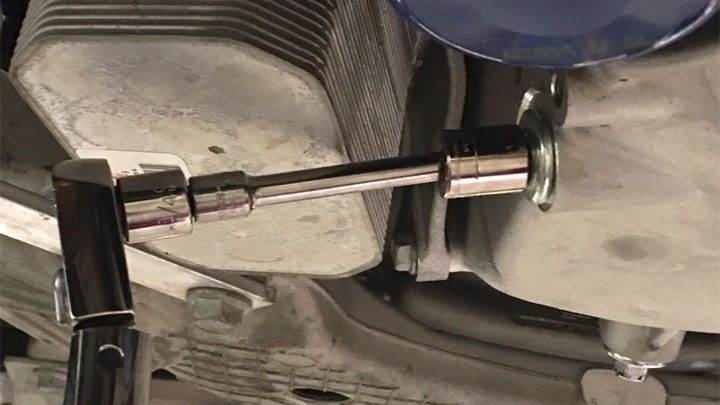
While it is impossible to avoid the possibility of suffering drain plug damage inflicted by a vehicle’s previous owner, several precautions can be taken to avoid causing such damage yourself. By following these key procedural points, the risk of stripping a drain plug is virtually eliminated.
The first of these precautions is to use a properly sized wrench or socket during every oil change. This significantly reduces the risk of rounding a drain plug’s hex head. Information regarding the drain plug size for a particular vehicle can often be found via the internet or by consulting a manufacturer-specific service manual.
One should also adhere to proper torque specifications when tightening their vehicle’s drain plug. This significantly reduces the risk of damaging the threads of your engine’s drain plug or oil pan.
A torque wrench can be used to avoid over-tightening, while ensuring that the drain plug in question is not left loose to any degree.