
Only a little mechanical knowledge is needed to perform a brake piston replacement. Additionally, you must have a DIY mindset. A soft brake can be the result of many factors. There may be air in the brake lines or the master cylinder may be leaking.
In all these cases, it is recommended to replace the brake piston. Using a brake bleeder, you can remove the air. By the way, to perform a brake piston repair, you must follow the steps below.
Tools and materials
- Ratchet or tire iron
- Car jack
- Wrench
- C-clamp
- Drain pan
- Brake bleeding kit
- Pin punch set
- Pliers
- Brake caliper piston removal tool
- Air hose
#1: Remove the wheel and lift the car
Using the tire iron or ratchet, loosen the lug nuts and lift the car using the jack. Use the jack stand to secure the position and remove the tire and lug nuts. Set them aside now.
#2: Remove the brake pads and caliper
Remove the retaining clips that hold the pads to the caliper. Then, detach the pads from the caliper.
To remove the caliper, push the brake pistons toward the rotor, compressing the brakes. As soon as the pressure is released, remove the caliper.
#3: Remove the pistons from the caliper
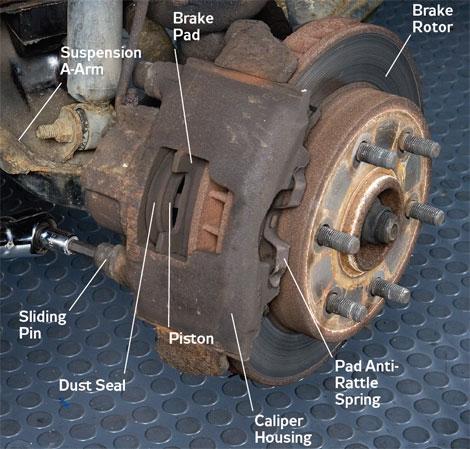
When replacing a brake caliper piston, remember to prevent one of the pistons from moving while removing the other.
Once you have secured one piston, use a pressurized air hose to blow out the other. Use a cloth to wrap the caliper before blowing out the piston, to prevent brake fluid from splattering.
#4: Cleaning / Replacing the brake piston
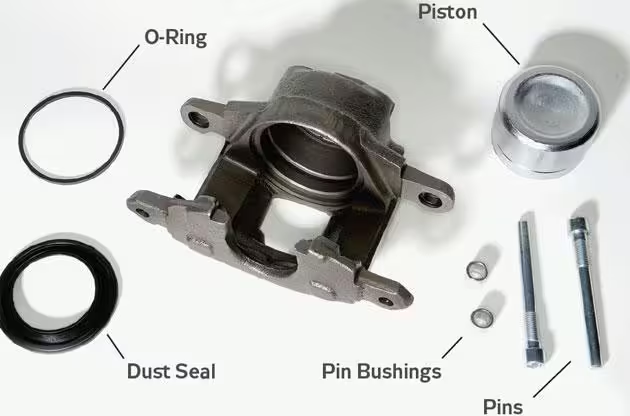
The next step in brake piston removal is to clean the caliper. The piston kit includes a seal for the piston cylinder, as well as a retaining pin and a rubber dust boot.
Additionally, replacement retaining clips are there to keep the pads attached to the caliper. You must replace these parts. Often, you will also need to clean the pistons.
#5: Reassemble the caliper
As soon as you finish cleaning the parts, put the pistons and other new parts back on the caliper. The piston orientation must match the rotor.
The cut-out area on each piston indicates the correct way to proceed with reassembly. During final adjustment, remove the pads to ensure the pistons compress toward the rotor. To avoid having spongy brakes, leave enough room to be able to install the pads.
Even though it’s quite difficult, once you’ve done it, it should be easier for you. Fully bleed the brake cylinder after completing the replacement work and filling the master cylinder.
FAQ
1. Can weather conditions affect the need to replace the brake piston?
Yes, extreme weather conditions can accelerate the wear of brake components, including the piston.
In very cold climates, for example, moisture can freeze inside the caliper, which can cause the piston to seize.
Conversely, in very hot climates, the increased temperature can contribute to the degradation of piston seals, leading to leaks or sticking.
2. Is there a way to prevent brake piston problems?
Regular maintenance and inspections are essential to avoid brake piston problems. This includes checking the brake fluid levels and quality, as dirty or low brake fluid can lead to caliper and piston malfunctions.
Additionally, avoiding aggressive driving habits that cause excessive brake heat can help extend the life of your brake pistons.
3. How does the brake piston material affect its performance?
Brake pistons can be made from various materials, including steel, aluminum, and phenolic (a type of plastic).
Steel pistons are durable and withstand high temperatures well, but they can be prone to rust.
Aluminum pistons are lighter and help dissipate heat more quickly, but may wear out faster.
Phenolic pistons, while less heat conductive than metal, do not expand as much under heat and resist corrosion.
The choice of material can affect the piston’s performance and longevity.
4. Can upgrading the brake piston improve braking performance?
Switching to high-performance brake pistons, typically made from materials that better withstand high temperatures, can improve braking performance, especially under demanding conditions such as racing or heavy towing.
However, for everyday driving, standard pistons are usually sufficient if properly maintained.
5. What are the environmental implications of disposing of old brake pistons?
Disposing of used brake pistons, especially metal ones, can have environmental consequences if not done correctly. It is important to recycle metal pistons as much as possible.
Phenolic pistons, however, should be disposed of in accordance with local plastic waste regulations, as they can release harmful chemicals if incinerated.
6. Is it possible for a brake piston to cause uneven brake pad wear?
Yes, if a brake piston seizes or does not retract properly, it can lead to uneven brake pad wear.
One pad may wear out faster than the other, reducing braking efficiency and potentially causing the vehicle to pull to one side during braking.
Conclusion
Replacing a brake piston is a detailed process that requires careful attention, the right tools, and a solid understanding of brake systems.
Whether you are an experienced DIY mechanic or a novice ready to tackle your car’s maintenance tasks, it is essential to approach brake piston replacement with caution due to its critical role in vehicle safety!