

There are many occasions that may require you to work under the vehicle. This could be changing a tire, checking the brakes, or inspecting for a leak or damage. Whatever the reason, it is absolutely essential to use the proper equipment and follow the correct procedure. After all, you will be working under the car, so even a small mistake can cause a serious accident. But how to safely jack up a car?
Jacking up a car may seem simple; it’s a preparation for performing actual tasks. But trying to take shortcuts or using poor quality equipment can cause a life-threatening accident. This process involves using the right equipment and carefully following instructions.
Why do you need to jack up a car?
The reasons can vary. The most common are draining engine oil, removing a wheel, and replacing a flat tire. In fact, you will need to lift the car to access the undercarriage parts.
Some questionable repair shops might scam you during repair work. They might simply top up the oil without draining the dirty oil, use inferior quality products, and overcharge for certain parts. If you know how to perform mechanical work in addition to jacking up a car, you can save a lot of money.
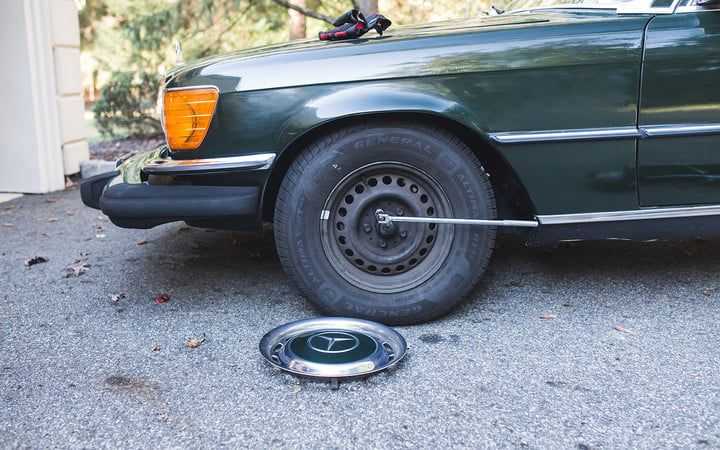
Knowing how to use a car jack can save you in an emergency when you don’t have access to outside help. However, never attempt to change a flat tire on the highway. It’s dangerous for you and other drivers. The best thing to do is call roadside assistance. If this service is not available, you must attract the attention of the highway police by hanging something white (a piece of cloth or paper) on the driver’s side window.
Never attempt to change a flat tire or do anything else by jacking up a car on a hill slope. If going downhill poses a risk of completely destroying the tire, you should park the car near the curb. To prevent the car from rolling downhill, turn the wheels towards the curb and block the wheels on the downhill side.
How to jack up a car: follow the step-by-step instructions
Lifting a vehicle with a jack is a simple operation, but one that requires the utmost caution. Safety must be the priority during this tedious task. This detailed guide will teach you how to jack up a car in the safest and most effective way.
The tools you need
To perform repair or maintenance work on a vehicle, you will need the right tools. Before starting the process, make sure you have these items on hand:
- A jack
- Jack stands (for added safety and stability)
- A few pieces of wood blocks, which can work similarly to jack stands
- Cinder blocks or something similar/wheel chocks
- Lights like wireless LED lights (if the area is not well lit)
- Utility gloves
- Owner’s manual
How to jack up a car: steps to follow
If you want to complete the lifting smoothly, proceed exactly as indicated in the following steps. Do not attempt to improvise unless you are sure it will not cause an accident.
Park the car correctly.
The first thing to do is park the car on a flat asphalt or concrete surface. An uneven surface can cause the jack to shift or tilt, which can lead to serious injuries. If you have a garage, choose a flat spot to perform this operation.
Engage the parking brake and keep the gear selector in “Park.” In the case of a manual transmission, engage first gear. Turn off the ignition and remove the key.
Place the wheel chock.
A chock is a wedge made from sturdy materials. A wheel chock prevents the wheels from rolling unexpectedly. Its bottom is covered with rubber for better traction and a firm grip on the ground.
You must place the chock behind the wheels opposite to the ones you are going to jack up. For example, the right rear wheel should be chocked if you want to lift the left wheel. When lifting the left side of the car, use two chocks against the right front and rear wheels.
Prepare the floor jack.
This part of the procedure for jacking up a car involves preparing the floor jack for the task. The jack’s relief valve must be closed. If it is open, you must close it by turning the jack handle clockwise. Also check for any fluid leaks or damaged parts. You should never use a jack that shows signs of deterioration.
A hydraulic jack is an ideal tool for lifting a vehicle. Some people might be tempted to use the car’s emergency jack instead of spending money on another jack. Don’t do that. The emergency jack is for changing flat tires when there is no other option. A floor jack is stronger, more stable, and can support more weight.
Mark the safe lifting points.
Mark a point where you are going to position the jack. It should be on the part of the car you wish to lift.
Vehicles are likely to have designated areas where you can place the jack. A jack positioned on these points ensures it can support the weight of the entire vehicle without breaking.
There are places where you should never place the jack, such as under the body panel. Placing it in the wrong spot can lead to a life-threatening accident.
Place the jack under the vehicle.
Where to place the jack under the vehicle? This is important because it might not support the weight for long if the placement is incorrect. Place it just behind or in front of the wheel to lift a front or rear wheel respectively. Place it somewhere in the middle between the two wheels when you want to lift the entire front or rear section.
Some vehicles come with dedicated points for placing the jack. There should be one near each wheel, and another additional point may be located between the front and rear wheels. Consult the owner’s manual if you can’t find them. The points are probably marked by a small arrow.
If there aren’t any, calculate the midpoint of the subframe and position the jack under that point. There are certain non-structural components, including the steering rack, radiator, and oil pan, on which you should never place the jack.
The rear differential on some vehicles is strong enough to be used as a lifting point. But you must check the owner’s manual to be sure.
Adjust the jack’s position.
After placing the jack in the correct spot, the next step is to adjust its position because the angle of the car may change after being lifted. Readjusting the position will ensure the jack does not slip.
Lift the vehicle.
After completing all the necessary preparations for jacking up a car, here is the step where you finally lift the car. To do this, push the jack handle down and pull it up quickly.
Continue pushing and pulling the handle until the vehicle reaches the desired height. Once the operation is complete, carefully monitor the vehicle’s stability. It is important that the jack remains exactly on the designated point. If it needs readjusting, lower the vehicle by releasing the jack’s valve, then lift it again after repositioning.
Place the jack stand.
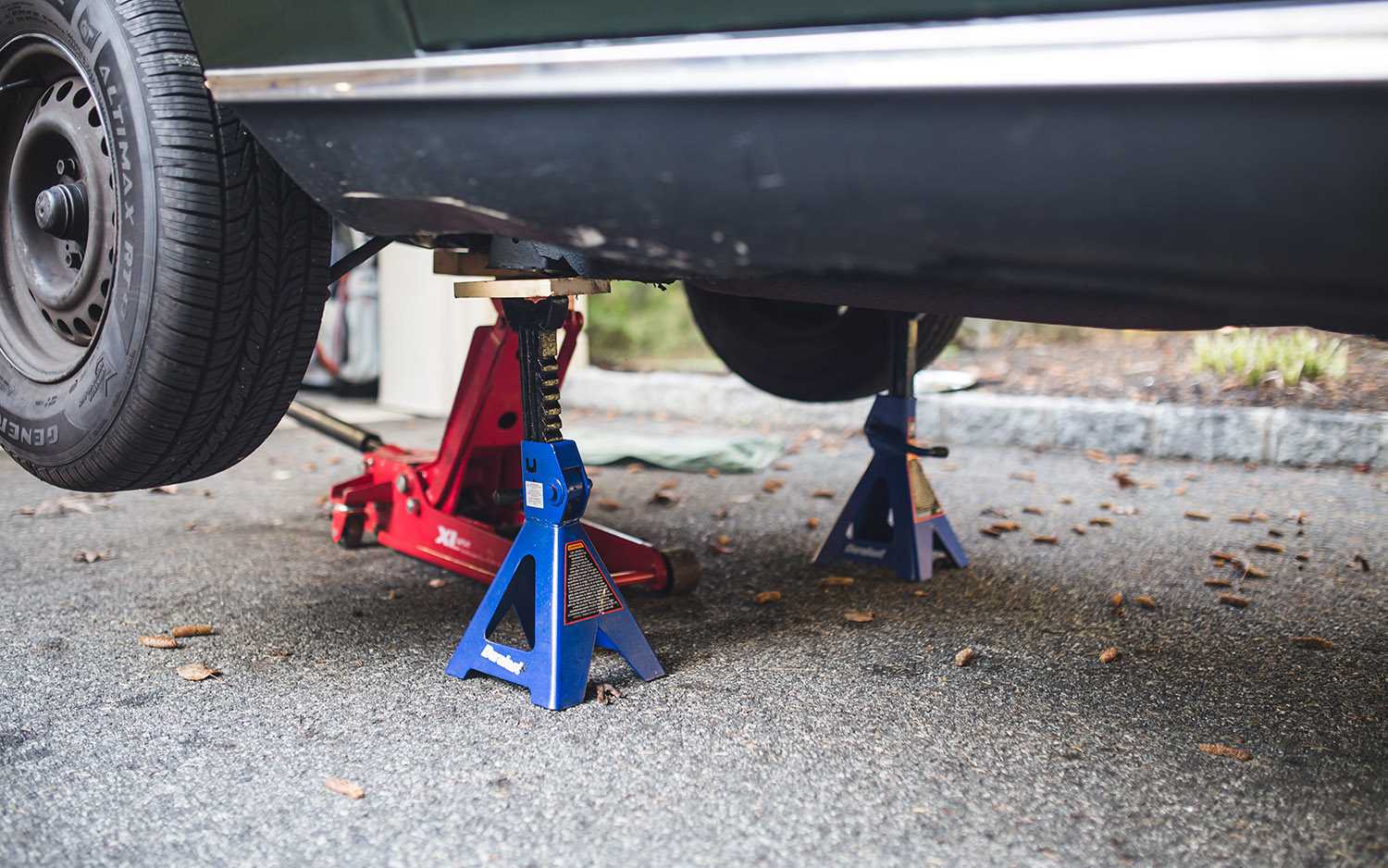
This is the time to place the jack stand (one or more, as needed) under the vehicle. Place the jack stand near the jack so it can firmly support the vehicle. Its location should be under a secure part mentioned above. When lifting both ends of the wheels, you should place jack stands on each side.
Then, you can remove the jack. Simply open its release valve and lower it until the car touches the jack stand. Let it rest on the jack stand while you remove the jack. However, if you don’t need to use the jack for another task, leave it under the vehicle for added safety.
Remove the jack.
The final step is to remove the jack when you have finished the maintenance or repair work. You need to push and pull the jack lever to raise the car a few inches in order to remove the jack stands. After that, slowly open the jack’s release valve to lower the car to the ground. Then, carefully remove the jack.
This is how to jack up a car when you need to perform a repair, maintenance, or inspection. After completing the task and safely removing the jack, you can get back behind the wheel.