
Most vehicles you see today are 4-cylinder engines. They are small, compact, and easily fit into almost any engine compartment. Interestingly, they are lighter, with one cylinder head, fewer moving parts, and one exhaust manifold compared to multiple cylinder banks.
4-cylinder engines are among the most versatile vehicles in this modern era. However, you might be unsatisfied with the power level produced by your car. Since modern technology has come with advancements in automotive engineering, car manufacturers have established ways to improve your vehicle.
There are several ways to extract more power from your vehicle’s 4-cylinder engine. Performing this activity would void your warranty. Its success depends on your skills, budget, and the number of options.
So far, writing this guide will provide answers to these specific questions ranging from: how to make a 4-cylinder faster than a V8, how to supercharge a 4-cylinder engine, turbocharger for a 4-cylinder engine, how much horsepower a turbo adds to a 4-cylinder, can you swap a 4-cylinder for a V8, and more.
Be patient; let’s get started right away!
How to Make a 4-Cylinder Faster Than a V8?
To make your 4-cylinder faster than a V8 engine, you need to turbocharge or supercharge it. You would do this through forced induction since V8 engines are larger than inline 4-cylinders. To produce greater power, it’s necessary to move the vehicle at a significant speed.
It would be vital to increase the power of 4-cylinder engines to make them faster and give the V8 engine a run for its money. That said, by removing vast chunks from inside its engine and replacing them with turbocharging or supercharging kits.
How to Increase Power in a 4-Cylinder Car?
The procedures to increase power in a 4-cylinder car are as follows:
1. Maintain Your Vehicle Properly
Most of the time, vehicle owners must pay attention to proper maintenance procedures. However, the best way to increase power is to follow the instructions recommended by your manufacturer. Such as oil changes, wheel alignment, brake checks, and a few others.
2. Install a Cold Air Intake
Remove the intake tube and airbox surrounding the 4-cylinder’s filter. Then, install a new intake designed to increase the air passing into your engine. Increasing the airflow into your engine would improve its mileage. However, most aftermarket intakes produce more noise than stock ones.
3. Improve Your Vehicle’s Exhaust Flow
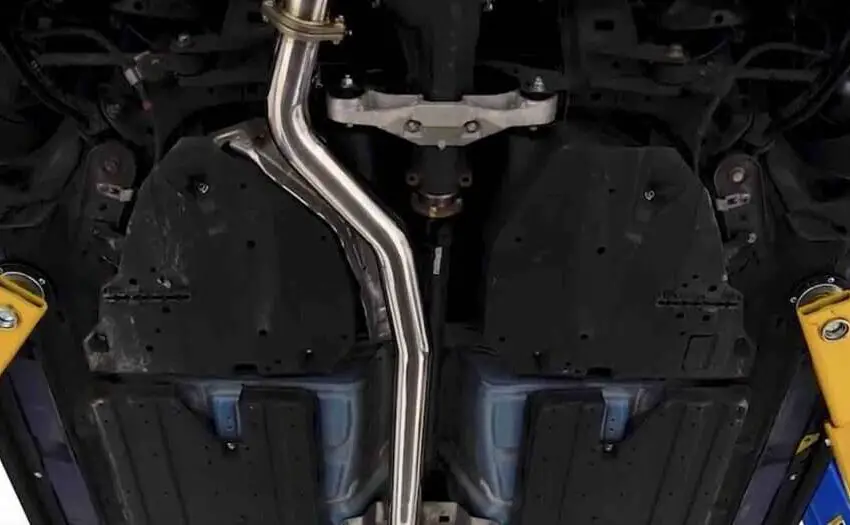
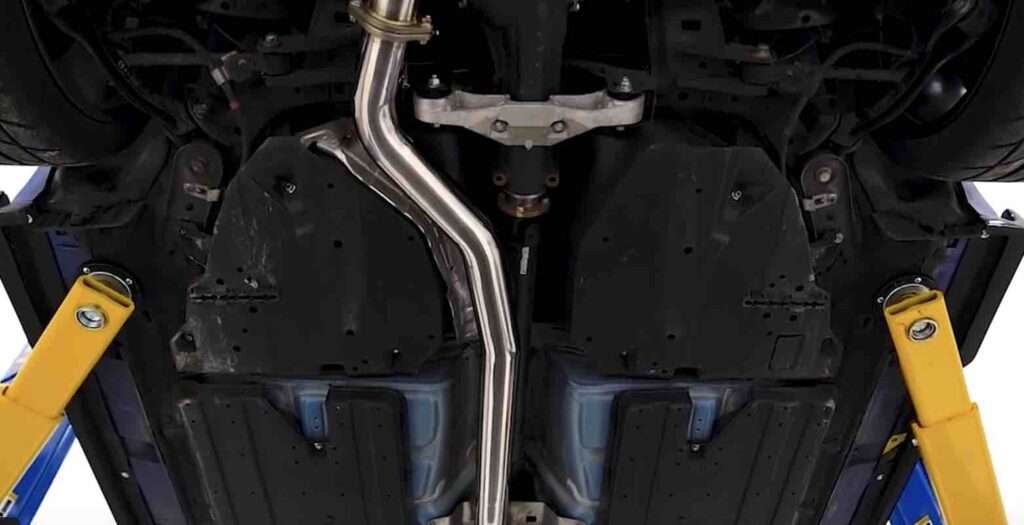
Replace parts of your exhaust flow with larger diameter pipes. These larger pipes will reduce backpressure that would limit the speed at which exhaust gases could be expelled from the engine. You can replace the piping directly behind the catalytic converter (cat-back). You can also remove all the piping that leads to your exhaust manifold.
4. Reprogram Your Vehicle’s Computer
The computer controls important functions of most modern vehicles and their operation. Computer programs help balance efficiency, fuel consumption, output power, emissions, and reliability. Reprogramming would be vital to increase power. Get the right programming company for your vehicle online, or you can visit your dealer.
5. Replace Ignition Components
For your engine to function correctly, it needs fuel, air, and a spark to ignite the mixture. It would be helpful to replace worn spark plug wires and old spark plugs to increase the ignition of the air-fuel mixture.
6. Install a New Throttle Body
This is where your intake meets the engine when air enters the intake manifold. Thus, installing a larger diameter throttle body would allow more air to flow over the engine. As a result, this leads to an increase in engine power. For example, replacing a 65 mm throttle body with a 75 mm throttle body would increase airflow. Although replacing your throttle bodies would also require a new gasket between the body and the intake manifold.
7. Upgrade to More Aggressive Camshafts
Camshafts or cams help open and close the intake and exhaust valves. This also allows air and fuel to enter the engine and exhaust gases out at the right time. Remember that your engine’s stock camshafts are concerned with fuel economy, emissions, power, and efficiency. It would be appropriate to replace them with more specialized ones to increase engine power.
Note: Ensure all components to be installed are specific to your vehicle.
The Most Powerful Non-Turbo 4-Cylinder?
The highest power for a non-turbocharged engine is 340 hp. The 4-cylinder engine with this figure is the BAC Mono R 2.4 L inline 4-cylinder with 243 lb-ft. It achieves 0 to 100 km/h in 2.5 seconds, a top speed of 170 km/h, and the engine is mid-rear engine.
How Much Horsepower Does a Cold Air Intake Add to a 4-Cylinder?
The power level of a 4-cylinder depends on the potential power. The exact amount varies, but a car would have up to a 5% power increase with an excellent cold intake. However, a 4-cylinder engine would have marginal power due to its potential power. For example, a 200 hp 4-cylinder engine would gain about 10 hp when installing a cold air intake.
According to reports, the modding community had agreed that the cold air intake would be insignificant for naturally smaller engines (4-cylinders).
Maximum Power for a 4-Cylinder
The maximum power of a 4-cylinder engine is about 415 hp. The maximum power value comes from the German luxury brand, Mercedes-AMG CLA45 S, M139 2.0 L inline 4-cylinder. This vehicle is the most powerful 4-cylinder engine in the world with 369 lb-ft of torque. It also accelerated to 60 mph in 4 seconds when manufacturing the CLAS45 S.
How to Supercharge a 4-Cylinder Engine?
Supercharging a 4-cylinder engine is possible and can be achieved with forced induction. Even though car manufacturers prefer to supercharge larger engines, the result of a 4-cylinder would also be worth it. Supercharging forces compressed air into your engine, which is belt-driven. Supercharging is more efficient than turbocharging for vehicle owners who appreciate power at lower RPMs.
Here are the steps to supercharge your 4-cylinder:
- Maintain your vehicle using your manufacturer’s guide.
- Upgrade your exhaust system using larger diameter exhaust pipes.
- Replace your ignition components.
- Replace associated fuel modifications.
- Use a supercharger kit such as a bracket and a larger serpentine belt to improve the supercharger pulley support.
- Use a dry/wet nitrous oxide kit. This kit contains more oxygen than air; injecting nitrous into your 4-cylinder engine would be possible. On the other hand, the wet nitrous kit injects a mixture of fuel and nitrous into your cylinder. The essence of the wet type is to create more power, more safely than the dry kit.
- Tune your vehicle professionally because you have installed the nitrous oxide kit and force-induced it. Doing this would support the power increase.
Turbocharger for 4-Cylinder Engine
A 4-cylinder engine consists of lines of each cylinder accordingly, forming a straight line. This gives it the reason why the 4-cylinder is also called an inline 4.
Introducing a turbocharger for a 4-cylinder engine would give it a displacement of less than 3 liters. Thus, the 4-cylinder becomes different since it is turbocharged.
Therefore, returning the exhaust gases into the cylinder would create a giant explosion when the pistons pump inside the cylinders. After turbocharging your 4-cylinder, the result will be more power and significant horsepower than some larger engines, like V8s.
Getting the right turbocharger for your 4-cylinder would be essential.
How Much Horsepower Does a Turbo Add to a 4-Cylinder?
Significantly, a turbocharger can add about 30 to 40% or 70 to 150 hp to a 4-cylinder engine. This power range is generally the same as what would be added to the diesel engine. So far, the turbocharger improves more power on a 4-cylinder than what the cold air intake adds.
Can You Swap a 4-Cylinder for a V8?
Yes, you can swap a 4-cylinder for a V8. To do this, you will need to weld new engine mounts while notching the metal and reinforcing areas. It depends if the 4-cylinder engine compartment would fit a V8 engine, which is only possible for vehicles produced in the last 25 years.
However, Caroll Shelby swapped a Ford V8 into an Alpine Sunbeam. As a result, he produced an incredibly controlled and very fast Sunbeam Tiger skate.
How to Increase Power in a Naturally Aspirated Engine?
A naturally aspirated engine is an atmospheric engine. It is not a turbocharged or supercharged engine.
Here are the steps to increase power in a naturally aspirated engine:
· Remove Restrictions in the Cylinder Head
Remove the primary restriction found in the cylinder head. The process must be performed by a professional.
· Add a Larger Diameter Throttle Body
Since air is an essential component that affects the overall combustion process, allowing more air would not only increase power but affect multiple elements of the naturally aspirated engine’s performance. Adding a larger throttle body will provide more air at a higher flow rate to increase power.
· Make Your Vehicle More Aerodynamic
Improving the aerodynamics, shape, and design of your vehicle would make a huge difference. You can make your vehicle aerodynamic and reduce weight to avoid feeling sluggish.
· Install a High-Performance Exhaust
Installing a cat-back exhaust will allow exhaust gases to leave the engine and exit the muffler much faster. It’s best to leave it to a professional if you get a kit for your exhaust.
· Switch to a High-Performance Camshaft
Choosing the appropriate camshaft will help you achieve better results at the manifold or exhaust. So, install a new camshaft to increase your vehicle’s power. Remember that your car may idle roughly.
· Install a New Water Injection Kit
Suppose you notice that your vehicle’s power has dropped for a while. Installing a water injection kit will help restore the previous level and maintain the naturally aspirated engine. This will also ensure that you get your vehicle back on track.
· Reprogramming
Changing the vehicle’s programs in terms of timing would be helpful. This will also modify the air-fuel mixture and necessary settings. When it comes to a naturally aspirated engine, you might get a minor difference in reprogramming.
Note: Please try to perform other vital services such as oil changes, fuel system cleaning, and using appropriate fuel.
Conclusion
Finally, there is no doubt that everything is possible today in the automotive world. Increasing the power of your naturally aspirated engine is more complex than it seems. The most significant improvement is to supercharge or turbocharge your vehicle with vital kits. Apart from that, any added component is marginal in its performance.
However, I have detailed the steps for you to increase your 4-cylinder’s power to a higher horsepower. Be sure to use the services of a professional during such a conversion. Feel free to share this guide with others!