

Seeing the tire pressure sensor error message on the instrument cluster while driving the car is quite common. Do you know how serious the problem is and how much replacing the tire pressure sensor will cost?
All automobiles manufactured after 2007 require a TPMS or tire pressure monitoring system. The system has sensors that monitor the pressurized air level inside the tires. The sensors provide real-time information about tire pressure.
What does the tire pressure sensor fault mean?
The tire pressure sensor fault message indicates a problem with one or more sensors in a vehicle’s Tire Pressure Monitoring System (TPMS). TPMS sensors are installed in the tires and are responsible for monitoring air pressure levels. They send signals to the vehicle’s computer system, which then displays the tire pressure readings on the dashboard.

The error code indicates whether the pressure sensor is faulty or if the air pressure in the tires is too high or too low.
When the tire pressure sensor is malfunctioning too badly, it provides inaccurate readings. A faulty TPMS control unit or frayed wiring could also be the cause. Sometimes you can resolve the problem
Simply by resetting the TPMS, but replacement is the only option in some cases.
Symptoms of a faulty pressure sensor
The sensor is an electrical component and can therefore be damaged for many reasons such as age, heat from dirt, and irregular power supply. Some of the symptoms of high or low tire pressure sensor failure are:
1. Incorrect Readings
One of the main indications of a faulty pressure sensor is incorrect or inconsistent pressure readings. The sensor may provide readings significantly higher or lower than the actual tire pressure. This can be observed via the Tire Pressure Monitoring System (TPMS) display on the dashboard or with a separate tire pressure gauge.
2. A warning light on the dashboard
A faulty pressure sensor can trigger the TPMS warning light on the dashboard. The warning light may appear as a symbol resembling a tire with an exclamation point or the letters “TPMS”. This light usually indicates a fault in the tire pressure monitoring system.
3. False alarm
The car’s dashboard constantly displays warning alerts (indicating low tire pressure when the tires are actually properly inflated), but the tire is still in a normal condition. Furthermore, it is possible that when the tire pressure and temperature change, the parameters displayed on the screen remain unchanged.
4. Inconsistent behavior
A faulty pressure sensor can cause irregular behavior of the TPMS. For example, readings may fluctuate frequently or display different values each time the vehicle is started or while driving.
When the tire pressure sensor is faulty, the driver can resolve this issue by resetting or replacing the sensor. If the sensor is not receiving the signal, you must replace the sensor valve with a new one. To learn more about the detailed steps, let’s move on to the next part to find out:
How to fix the tire pressure sensor fault?
Manually check tire pressure
Before starting the repair process, you must ensure that all tires have the correct air pressure. There is a label behind the driver’s door that indicates the suitable tire pressure for your car. You can find the same information in the repair manual. Check the tires with a pressure gauge to see if they have the correct level or air pressure.
In case of overinflation, release some air until it reaches the correct level. Inflate with air if the tires are underinflated. Fill them with a bit more pressure than mentioned on the label when the tires are hot, as high temperatures lower the pressure label.
For example, if the tire pressure label indicates 240 kpa, the TPMS will display an error code when the pressure drops below this level. If you fill the tire to 240 kpa when the tires are hot, the pressure may drop to 220 kpa when they are cold.
Check the repair manual to see how to reset your car’s TPMS. Some models have a reset button. Simply push it after filling the tires with the correct pressure. You may need to drive some cars for at least 15 minutes for the warning lights to turn off.
Inspect the tire pressure sensor
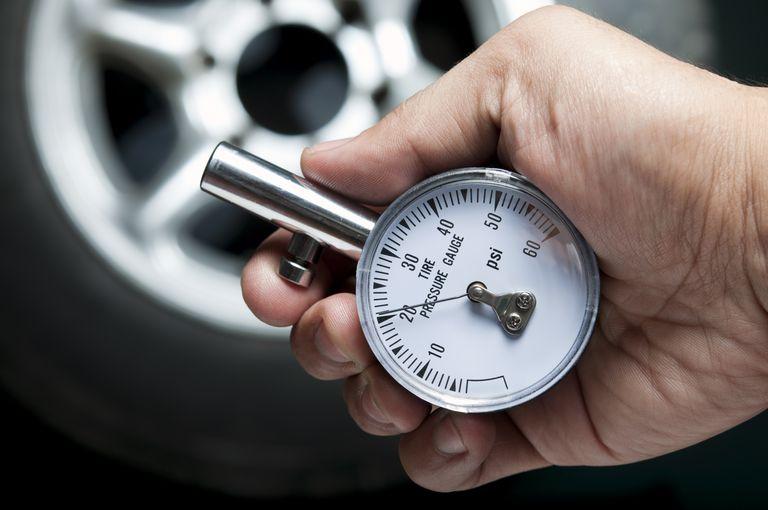
Visually inspect the tire pressure sensors for any visible damage, such as physical impact, corrosion, or loose connections. Ensure the sensors are securely mounted on the tire valve stems. If the tire pressure sensor is found to be faulty and cannot be repaired, it may need to be replaced. Faulty sensors usually require professional assistance to ensure proper installation and calibration. A qualified technician can diagnose the faulty sensor using specialized diagnostic tools and replace it with a new sensor if necessary.
Replace the sensor battery
Generally, the average battery life of the sensor will be 2 to 6 years depending on the sensor valve’s position. After this period, if the sensor valve is not transmitting data to the car’s dashboard, your sensor may be out of battery. When the sensor valve is out of battery, the letter “L0” will appear in the parameter display position corresponding to that valve’s position. A sign that the tire pressure sensor is discharged is that one or more sensors are not sending a signal to the controller. So, if the tire pressure sensor uses a replaceable battery, it may be necessary to replace the battery.