
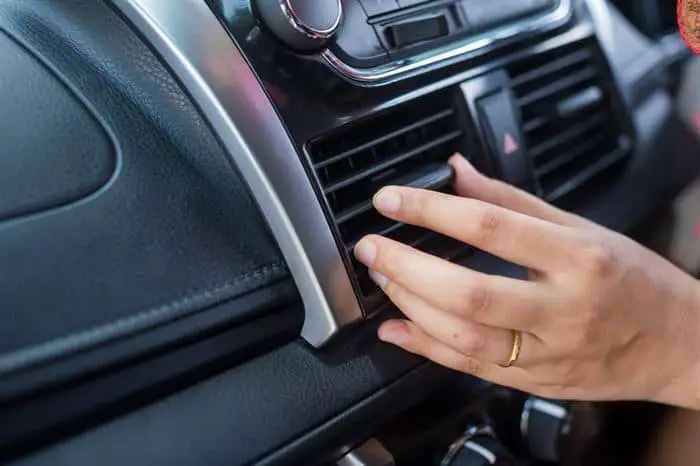
The car’s air conditioner isn’t blowing cold air – this seems like the most terrifying thing to discover during a long trip in the middle of the sweltering summer heat. The truth is, an air conditioning problem is quite common due to the frequency of damaged components and leaks. If the refrigerant level drops despite repeated refills, there must be a puncture somewhere. You need to know how to check the car’s air conditioning for leaks and how to repair car air conditioning leaks.
How to Find a Leak in a Car’s Air Conditioner
Before knowing how to repair air conditioning leaks in a car, you need to learn how to find them. The car’s air conditioner leak can occur in several components. Here are the most common air conditioning leaks in cars and how to find them.
A Visual Inspection
Check the refrigerant lines, condenser, and compressor for any residue of PAG oil or refrigerant. This is an effective method for a slow leak.
Soap Solution
Fill a spray bottle with water and a thick soapy solution. Fully charge the AC system and spray the liquid on all components. Bubbles will form if there is a break. This technique works well except for detecting a crack on the front seal of the evaporator or compressor.
Black Light
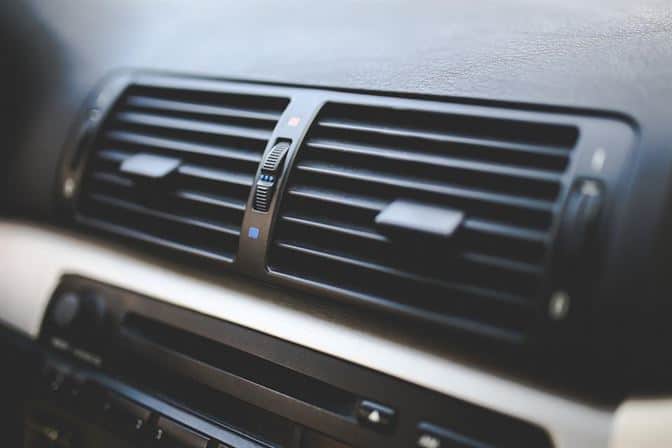
Some refrigerants are pre-mixed with a UV dye that appears under black light. However, this will not work if there is a leak at the front seal or the evaporator.
Use a Sniffer
A sniffer is a device used to detect a car air conditioning leak. It detects the chemical components of the refrigerant.
However, the air conditioning system must be clean, and tests must be performed in an enclosed space. The device is sensitive to dirt and air, and these elements can alter the readings.
How to Repair Air Conditioning Leaks in a Car?
Repairing car air conditioning leaks is a complex and costly process. However, you can still do it provided you have adequate mechanical knowledge, the right tools, and patience. If you are curious to know how to repair air conditioning leaks in a car, these two methods will be useful to you:
Apply a Super Seal
Sealant is an inexpensive and quick way to patch small leaks in the air conditioning system. You can find R-134a Super Seal in almost any auto parts store.
How to use it?
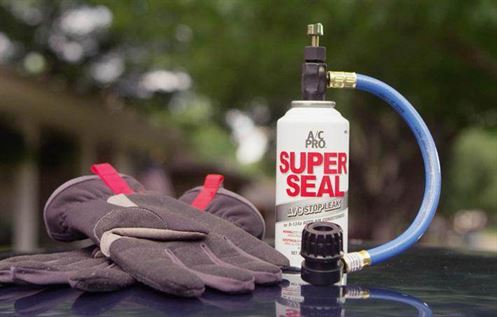
Start the engine and turn the air conditioning and fan knobs to maximum. Attach a hose to the Super Seal can and connect the hose coupler to the low-pressure port.
After transferring the liquid, fill the system with R-134a refrigerant. Run the air conditioner for at least 15 minutes to allow the Super Seal to spread throughout the system.
Work on the Evaporator
No Super Seal can repair an evaporator leak. You must either repair it or replace it completely. You can cut and crimp the tube to repair pinhole-sized breaks. A bit of soldering can help in this regard.
When the puncture or punctures are larger, replacing the evaporator with a new one is the only solution. You must remove the dashboard to access the evaporator. You must also vacuum the system before recharging it.
FAQ on How to Repair Air Conditioning Leaks in a Car
- What are the common signs of air conditioning leaks in a car?
Common signs of an AC leak include a noticeable decrease in cooling efficiency, warm air blowing from the vents, hissing or unusual bubbling noises, or a distinct refrigerant smell inside the car.
- How much does it cost to repair air conditioning leaks in a car?
The cost of repairing an AC leak varies depending on the extent of the damage, the type of repair needed, and the specific vehicle. It can range from a few hundred to over a thousand dollars, including parts and labor.
- Is it safe to use DIY AC leak repair kits?
DIY AC leak repair kits are available, but their effectiveness can vary. It is essential to follow the instructions carefully. However, professional repairs are generally more reliable for long-term results and safety.
- Can I recharge my AC refrigerant after repairing a leak?
If you have repaired the air conditioning leak, it is essential to recharge the refrigerant to the correct levels. It is best to entrust this operation to a professional to ensure proper handling of the refrigerant and optimal cooling performance.
- Can AC leaks be prevented?
Regular maintenance of the air conditioning system can help prevent leaks. This includes checking for worn seals or damaged components during routine maintenance and ensuring the system is well-maintained to avoid unnecessary stress on its parts.
- What should I do if I suspect air conditioning leaks in a car?
If you suspect air conditioning leaks in a car, it is advisable to have it inspected and repaired by a qualified technician. Ignoring the problem can lead to greater damage and reduced cooling performance.
Conclusion
Knowing how to repair an air conditioning leak in a car and addressing an air conditioning leak as soon as possible is essential to maintaining a comfortable and functional air conditioning system.
Although diagnosing and repairing the leak can sometimes be a complex task, it is important to follow a systematic approach. Identifying the source of the leak, whether it comes from the pipes, connectors, or the air conditioning compressor, is the first crucial step.
Always use the appropriate tools and materials recommended for AC system repairs to ensure good sealing and safety!