
How to Find a Coolant Leak If one unfortunate morning, you see blue fluid dripping from under your car, pooling on the ground, it’s an alarming situation. Perhaps your engine coolant has leaked. The reasons for this leak are numerous. And thanks to our experience repairing hundreds of cases, we will reveal the specific causes and how to find a coolant leak and the ways to repair it.
What is Car Coolant?
Automotive engine coolant is a specialized solution that maintains the ideal temperature for car engine operation. With the exclusive formula from manufacturers, the coolant will absorb the heat radiated by the engine, raising the boiling point of water and lowering the freezing point.
The Role and Use of Automotive Coolant
Thanks to this coolant, the car engine can perform better and become more durable over time. If the coolant reservoir is empty, the car engine will overheat, causing an explosion. Therefore, automotive coolant is a solution that car owners must regularly check and inspect.
During car operation, fuel burns in the cylinder, releasing a large amount of heat. And when the heat is too high, the engine’s resistance decreases, leading to damage to parts and thermal stress. At the same time, the lubricating effect of the oil will be reduced. Since then, the friction on the engine surface will increase simultaneously, affecting the performance and lifespan of the car engine.
Even more dangerous, when oil reaches a temperature of 200 to 300 degrees Celsius, it ignites spontaneously, potentially causing a risk of fire and explosion. Therefore, the car coolant acts as a bridge to transfer heat from the engine block to the cooling reservoir to help the car engine temperature not exceed the allowed limit.
Furthermore, one of the indispensable roles of engine coolant is to lubricate and prevent corrosion of components. If it’s not engine coolant but regular filtered water, your car engine will quickly “start up” due to corrosion.
So there is no doubt that a coolant leak over time will lead to serious consequences. Insufficient coolant or low coolant level will directly affect the engine’s ability to cool. An engine operating under prolonged high-temperature conditions with a coolant leak can lead to many serious consequences that may not be announced.

Signs You Might Have a Coolant Leak
If there is a coolant leak in your car’s system, you might immediately notice these signs because they are quite visible and easy to realize.
- A sweet smell/aroma comes from the vehicle after you’ve driven it or when you’re around the car. You can also smell it behind the steering wheel.
- Puddles under the car appear in orange, green, pink, or blue-green colors after you move away from a parking spot. To explain the colors, coolant manufacturers typically use these dye colors to differentiate coolant from other fluids used in cars. Engine oil is gold/dark yellow or black (when dirty) and dark red is for transmission fluid.
- The car gets hot or overheats without a common reason that you’ve checked.
That said, below are 5 common places where you can find the coolant leak that you might want to monitor closely, so let’s follow along.
How to Find a Coolant Leak?
To find the coolant leak, drive the car until the engine is warm. After that, park your car on a clean, dry sidewalk or in a safe, clear driveway if possible.
Next, turn off the car and let it cool down. Be cautious because when the car is heated, the coolant will be hot and under pressure. Do not open the crankcase cap or the radiator cap. And then we are all set under the hood.
Once the car has cooled for 15 minutes, look under the car for any antifreeze-colored water. If no fluid smells like coolant, get on your knees to scan the underside of your car and see if you can spot anything else that is wet or dripping.
1. Cracked/Punctured/Torn Radiator
The radiator is a part that wears out a lot due to the nature of its operation. Over time, radiators corrode. And this can be the frequent cause of the radiator being punctured, causing a coolant leak.
Furthermore, the seal between the radiator and the tank can wear out, causing a leak. There could also be a leak from one of the pipes connected to the radiator. Over time, these tubes become brittle and break easily.
2. Coolant Radiator Cap
The coolant reservoir cap is not only tasked with preventing coolant from escaping but also ensuring stable pressure inside. When the radiator cap functions correctly, it creates a protective shield, keeping the radiator in good working condition at the right pressure.
However, over time, the radiator cap will wear out, unable to create protection as good as the original. From there, the coolant can leak outside. So, the first place you can check for a coolant leak might be the coolant radiator cap.
3. Broken Head Gasket
You might not know that the head gasket is responsible for keeping the engine oil and coolant separate. When a piece of pretzel is underperforming, you might not even know what’s happening because a leak could be inside.
However, you might notice coolant in the engine oil or vice versa. You will also see the engine temperature start to rise. Eventually, the coolant will leak outside the engine, indicating more serious problems.
4. The Pump is Broken
The water pump is responsible for circulating the coolant throughout the system and is monitored by a belt. This belt connects to the engine’s crankshaft, but this part can corrode and leak.
The water pump itself can also be affected by external influences leading to leaks. Regardless, if the pump isn’t working properly, the coolant cannot circulate correctly, which will cause the engine to overheat.
5. The Auxiliary Coolant Reservoir is Faulty
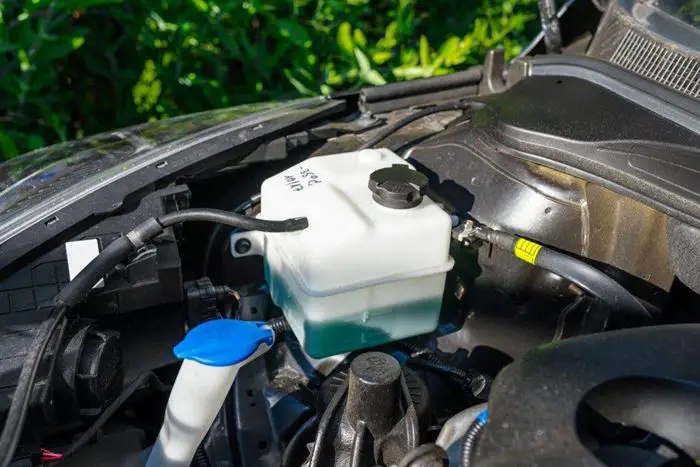
In the car’s engine compartment, you will find an auxiliary coolant reservoir. It is connected to the radiator by a flexible hose. Its main task is to supply coolant to the radiator when needed. However, time causes the auxiliary coolant reservoir to age, which can lead to cracks and leaks.
After checking all the above parts but you still haven’t found the leak, combined with the smell that seems stronger inside your vehicle than outside, the problem might be from inside the heater. Usually, car heaters use a small radiator to warm the cabin. If the car carpet is suddenly wet or the windows seem to fog up faster than usual, the heater radiator might have issues. Heater problems are quite difficult to find and fix because it’s a part of the air conditioning system concealed by the dashboard. If this is your case, unless you are familiar with tools and repair projects yourself, contact technical support.
What Should You Do If You Can’t Find the Coolant Leak Point
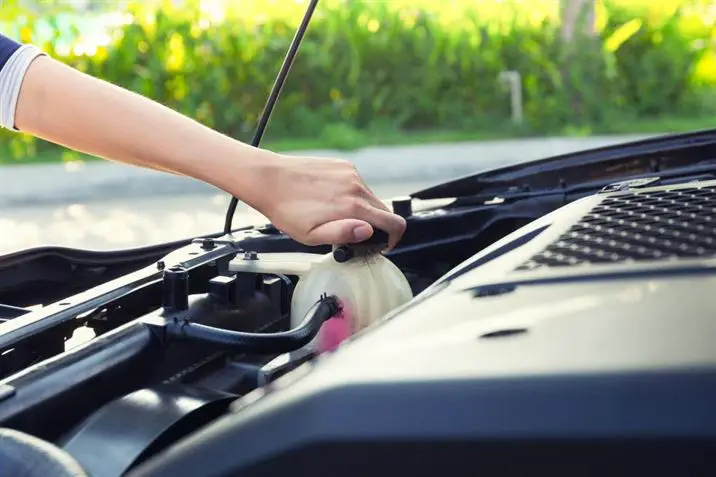
Not finding a coolant leak in the above positions does not guarantee that you won’t have to deal with a hidden leak. Once your engine is completely cooled, check your coolant level to see if it’s low. The coolant level indicator is on the side of the translucent plastic reservoir, and its level should be between the min and max marks. If the reservoir is still full, the smell probably isn’t from a coolant leak.
On the other hand, if the reservoir level is below the minimum mark or if it has been dry for a while, you might have a problem.
How Long Can You Drive With a Coolant Leak?
Have you ever wondered how long you can drive with a coolant leak? If you are facing this issue, we suggest finding methods to resolve it as soon as possible and avoid leaving it intact or ignored. You need to know that any problem related to the cooling system or coolant reservoir will not be solved by self-healing methods and may even erode faster. The early signs of a car coolant leak are not hard to notice. Therefore, one should always pay attention to possible symptoms to avoid being stranded on the road in the middle of nowhere.
If you believe in your luck and have just discovered a coolant leak in your car, driving your car for a few days might be tolerable by filling the coolant reservoir with pure water if it becomes low.
However, it is always ideal with the correct 50-50 mix of coolant and water to fill your cooling system’s reservoir, which is especially suitable in winter. If you add only water to a reservoir on a freezing winter night, it will quickly turn into ice. And ice in any engine system is never a good sign. The expanded area created by the ice can cause the radiator and brake hoses in the cooling system to burst, crack a cylinder head or the engine block, and then slowly damage your car’s engine and cooling system. Generally, car coolant lowers its freezing point between -35°F and -36°F to prevent damage from frozen water. So, have your car inspected and repaired quickly to avoid more severe and costly engine damage.
Note that ethylene glycol coolant is toxic if accidentally ingested. This danger can occur at any time, with the highest risks being for children and pets, as its sweet smell can attract insufficiently aware individuals. Therefore, always keep the solution out of reach of your children and wear protective clothing when using it.
Wrap Up
Above are the most detailed instructions on how to detect a coolant leak that we wish to share with you. Hopefully, the above sharing will allow you to more easily check and maintain your coolant reservoir, cooling system, and your car’s engine as a whole. But if you cannot inspect it yourself, you can take the car to a professional workshop.
For more