

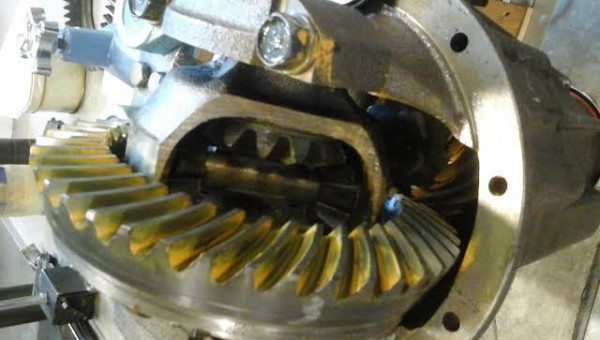
The rear differential is extremely important for the proper overall functioning of your vehicle.
This component allows torque to be generated from the car’s crankshaft to the wheels. Problems with the rear differential are quite rare, but if you’re unlucky, you might have a damaged differential.
Here is an article on how to diagnose problems associated with the rear differential and how much it will cost to repair or replace it.
Diagnosing a Rear Differential
Many people struggle to diagnose problems associated with the rear differential and have difficulty deciding whether the issue is actually a bad wheel bearing or a bad differential.
Even I, after many years of diagnosing these kinds of problems, can struggle with it.
Here’s how I usually proceed when diagnosing problems with the rear differential.
Lift Your Car on Jack Stands
The first thing to do is to lift your car onto jack stands using a floor jack (or a car lift). Lift both rear wheels of your car and make sure your transmission is in neutral.
1. Slowly Turn One Wheel
Check if the other wheel turns backward in the direction you are turning the wheel – This may vary depending on the type of differential your car has, but most cars use an open differential and in that case, they should turn one wheel backward when you turn one wheel forward.
2. Have a Friend Hold One Wheel or Place a Wheel on the Ground
– If your car has a normal open differential and your car’s transmission is in neutral, you should be able to turn the wheel freely. If both wheels turn when you turn the other wheel – you might have a problem in the differential.
3. Start the Engine and Engage It
If your car is equipped with an ABS/ESP system, you must first disable it, usually with a button inside the car. Let the car idle. Make sure the jack stands are securely placed under your car. You never want to go under your car without jack stands!
Keep your arms away from the drive shafts, wheels, and other rotating parts. Listen carefully to see if you can hear any noises coming from the differential. Usually, the differential should be very quiet, and if you hear a howling noise – it is very likely damaged.
At the same time, you can listen for noises coming from the wheels. This could be due to a bad wheel bearing rather than a bad rear differential.
4. Check the Differential Fluid
Drain the differential fluid and check for any signs of metal particles inside. You might find a small amount of metal particles in older cars that haven’t had their fluid replaced for many years – this is not abnormal.
If the fluid looks good, you can refill it with the old fluid, and if it’s dirty or black – replace it at the same time. Check with your manufacturer to find out which oil you should use in the differential.
Rear Differential vs. Wheel Bearing Noise
If you can’t find any noises or metal particles in the differential – it might actually be a bad wheel bearing instead of a bad rear differential. The diagnostic process can be either simple or advanced – depending on the problem.
Take Your Car for a Drive
Drive your car up to about 80 km/h or 50 mph on an empty road. You might hear a howling noise at this point from the rear of the car.
Replacement Cost
Gently turn the steering wheel left and right. If the howling noise changes frequency – you might have a bad wheel bearing. For example, if you turn right and the sound increases, it’s likely the left wheel bearing that’s the problem and vice versa.
This is because when you turn the car, all the weight is placed on the opposite side, which can put much more stress on the damaged wheel bearing, making it louder.
If the noise doesn’t change frequency or level when driving the car at higher speeds, your problem is likely related to your differential or transmission.
Have a passenger sit in the back and let them decide if the problem is coming from the front or the rear to determine whether the issue is in the transmission or the differential.
Avoid Problems with the Rear Differential
There aren’t actually many things you can do to avoid problems with the rear differential. It’s a very compact part that you can’t do much maintenance on. But there are two things you should know about maintaining the rear differential.
Replace the differential fluid at the right time. Check with the manufacturer or in your service documents when you should replace the differential fluid. Many differential fluids should never be replaced if you ask the manufacturer – but it’s never a bad thing to do anyway.
Make sure your differential doesn’t have any leaks. By checking the differential cover and axles for any possible leaks, you know the differential level is good. A differential that doesn’t leak should never run out of fluid. Sometimes, differential fluid can leak through the axles, so you need to make sure there’s no fluid inside the rear brakes. You can also check the differential level through the level plug. Consult your repair manual to find the level plug. Low differential fluid levels can severely damage your differential.