
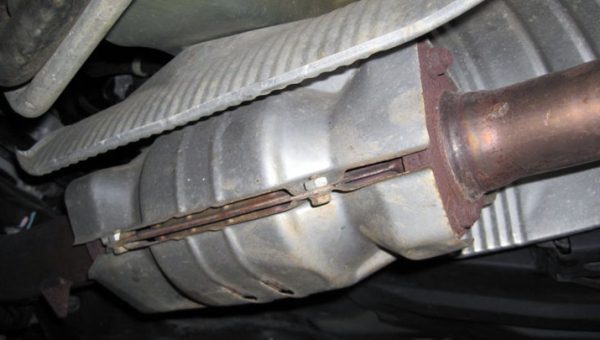
How to Clean a Catalytic Converter
If your vehicle is equipped with a functioning catalytic converter, it significantly reduces pollution and your carbon footprint. Catalytic converters transform carbon monoxide, hydrocarbons, nitrogen oxides, and other engine exhaust emissions into less harmful compounds, so they don’t harm you or the environment.
To keep your car eco-friendly and operating under optimal conditions, you need to know when and how to clean a catalytic converter.
What Causes a Catalytic Converter to Clog?
Over time, catalytic converters accumulate carbon deposits that reduce their efficiency. This is usually due to a rich air-fuel ratio for too long. When this happens, your vehicle will show symptoms such as:
- Error code P0420 indicating the vehicle’s computer detects a catalytic converter problem
- Exhaust fumes that smell like rotten eggs
- Reduced engine performance and acceleration
- Black exhaust smoke
- High temperatures under the vehicle
In most cases, cleaning the catalytic converter will also clear the P0420 code and other symptoms. If you want to do the cleaning yourself, you can use one of two methods. One involves removing the converter first, while the other does not.
Before getting into how to clean a catalytic converter, you can avoid these causes of catalytic converter clogging:
- Driving on rough roads breaks the ceramic catalyst honeycomb in the catalytic converter. The broken pieces can clog the system.
- Oil or antifreeze can leak into the exhaust system. When heated, the leak turns into thick exhaust fumes and soot that clog it. A leak can occur due to the vehicle’s age, broken seals, irregular maintenance, or adding too much engine oil.
- Driving only short distances won’t heat your catalytic converter enough to burn off the engine hydrocarbons that enter it. These hydrocarbons will accumulate until they clog the system.
Can a clogged catalytic converter be cleaned? Yes, and we will help you save time and money by showing you two ways to do it yourself.
Cleaning Method No. 1 (Without Removal)
Our first method for cleaning a dirty catalytic converter does not require disassembling it or getting dirty and is inexpensive. This method also cleans your exhaust system, as well as your fuel system and oxygen sensors.
That said, this technique will not work if the exhaust system is too dirty or if you have a broken catalyst honeycomb.
To check if this cleaning method will work for you, tap the converter with a mallet or wrench. Hit it hard enough to shake it, but not so hard that you dent or break it.
If you hear rattling inside, you may have broken components or heavy sediment, which you can only fix by removing and cleaning the converter.
If you don’t hear any strange sounds, proceed as follows:
- Get fuel and enough catalytic converter cleaner. Purchase fuel in a can and a high-quality catalytic cleaner compatible with your vehicle. Some cleaners only work with diesel or gasoline engines, while others work with both.
- Pour the cleaner into your fuel tank. The cleaner’s label will contain all the instructions you need regarding how much to pour and how much fuel you should have in the vehicle.
- Take a drive. After adding the solution, start your engine and drive your vehicle. Driving will circulate the cleaner to clean your exhaust system. The cleaner’s label will indicate how long you need to drive for the best results.
We recommend driving at an RPM above 3000 so the catalytic converter gets hot enough to burn off blockages and residue.
With an automatic transmission, it’s a good idea to switch it to “Sport” or another mode. With manual shifts, simply keep it in each gear a bit longer before shifting to the next.
Keep an eye on your vehicle’s temperature gauge to ensure it doesn’t overheat. If the cleaning process is successful, you’ll notice less exhaust smoke, faster acceleration, and fewer engine misfires.
Cleaning Method No. 2 (Removal)
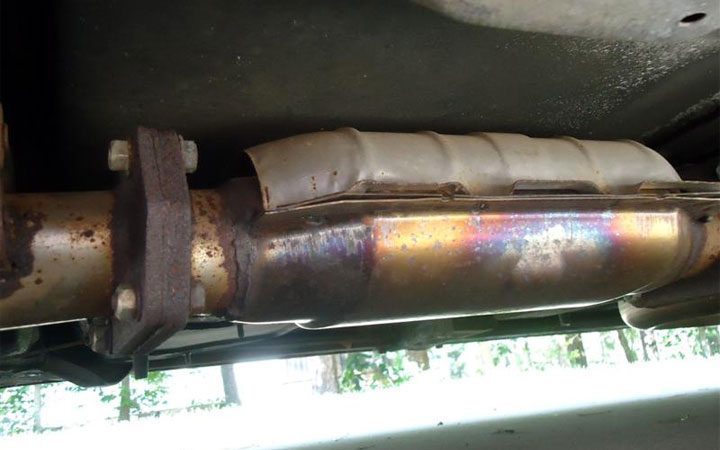
If the first method doesn’t yield the expected results, the dirt in your exhaust system requires removing the catalytic converter to clean it.
The process is simple with the right knowledge and tools, but as with other exhaust components exposed to the elements, loosening the bolts is usually the hardest part of the job.
To get started, you will need:
- Automotive degreaser
- A large container for soaking the converter
- Penetrating oil, such as B’laster or WD-40
- Floor jack
- Jack stands
- A wrench that fits the converter bolts (or better yet, an impact wrench)
- Oxygen sensor wrench
- Pressure washer
Once you have everything you need, proceed as follows:
- Let the vehicle’s exhaust system cool down before starting.
- Lift the car until it’s high enough to slide under easily. Use the jack stands to keep the vehicle in position.
- Remove the oxygen sensor(s) using the oxygen sensor wrench.
- Locate the converter and apply penetrating oil to loosen the bolts. If the catalytic converter is welded or attached to the turbo, let a professional mechanic do the cleaning.
- After loosening the bolts, remove the converter and inspect it. A loud rattle when you shake it means its internal components are in pieces and you need a new catalytic converter.
- If there is little or no rattling, clean the converter body, then pressure wash its interior on low settings.
- After pressure washing the inlet and outlet pipes, fill a container with hot water and degreaser.
- Soak the converter in hot water and degreasing solution for up to one hour.
- After soaking, rinse the device with the pressure washer set to low, then let the device drain until dry.
- Once the system is dry, reinstall it along with the oxygen sensor(s). Then, take the car for a drive to see if it improves.
Does Cleaning Always Work?
If you don’t see improvement after cleaning the catalytic converter with either method, you need to get a replacement converter. Getting a replacement is expensive, but it keeps your vehicle legal and efficient.
Additionally, cleaning may not work in case of internal oil or coolant leaks. These areas will continue to leak into the hot converter and cause thick smoke and soot that clog the system. Signs of leaks include broken valve seals, damaged piston rings, or crankcase ventilation blockages.
What NOT To Do
To avoid damaging your catalytic converter during cleaning, avoid the following:
- Soaking the component in grout-eating gel, bleach, or similar corrosive chemicals that can damage the catalyst
- Pouring lacquer or paint thinner into your gas tank
- Using a catalytic converter incompatible with your vehicle
- Trying to saw off a welded catalytic converter yourself, as you will damage the vehicle or injure yourself
Use these methods to help you learn how to clean a catalytic converter yourself. If you have questions, ask us in the comments.