
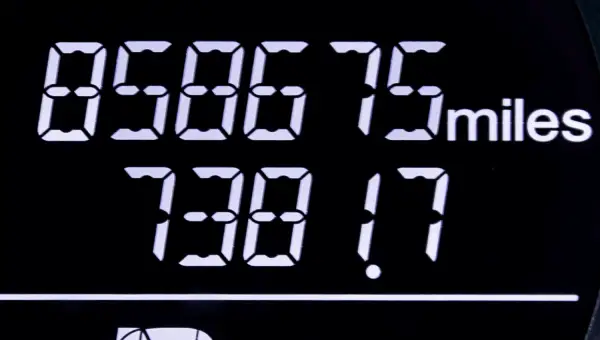

The number of miles on the odometer greatly contributes to determining the value and opportunity of a used vehicle. The higher the number, the lower the value, and the fewer buyers are likely to be interested.
Since it is often difficult, if not impossible, to discover the complete history of a vehicle, the odometer reading becomes a key default factor, along with the vehicle’s appearance.
Depending on who you ask, the average miles driven per year is 10,000 to 15,000, with about 12,000 being the most common benchmark (most leases allow 12,000 miles per year).
So, if you’re looking at a 5-year-old SUV with 124,000 miles on the odometer, should that set off an alarm? Yes, because the value of any used vehicle corresponds to the remaining number of miles. Moreover, if the odometer is already on its second cycle, it means that less than half of the useful miles remain, perhaps much less.
However, with regular maintenance and a bit of luck, vehicles can run reliably for over 200,000 miles, so the odometer reading alone cannot tell the whole story.
A well-maintained vehicle that travels 20,000 miles per year on highways and in sparsely populated areas with fewer traffic lights and stop signs has generally had an easier life than a similar vehicle with half the miles but has endured the daily grind of low-speed city driving. Frequent stops, a lot of idling, and constant pounding on pockmarked pavement increase wear and tear. In comparison, cruising on the highway is like living on Easy Street.
Similarly, an 8-year-old car with only 50,000 miles seems like a safe bet. But if the owner only changed the oil every two years and neglected other routine maintenance and repair work, the engine and other components could be in much worse condition than the odometer indicates.
Having a qualified mechanic perform a thorough inspection of a used vehicle before purchasing it can provide a more meaningful assessment of whether it has too many miles than simply reading the odometer.