
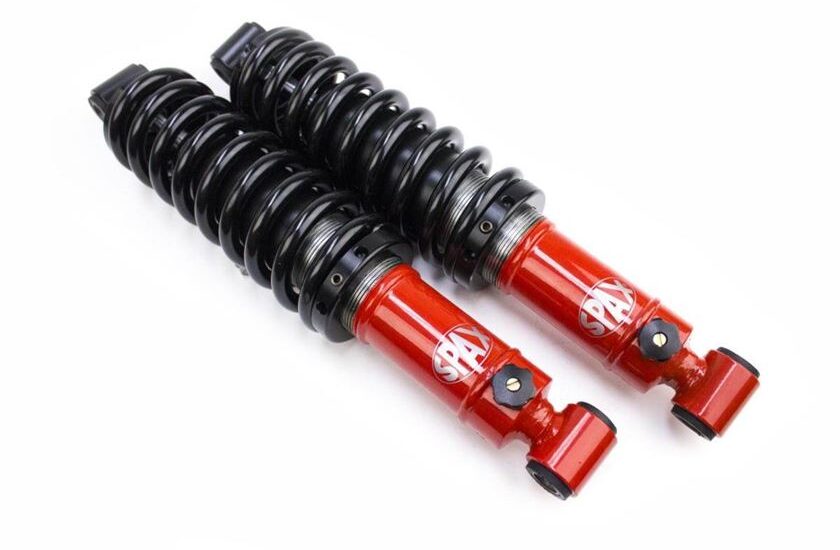
Many drivers are unaware of how essential shock absorbers and struts are to vehicle safety. Like all components of the powertrain, shock absorbers and struts can wear out over time. You need to know how long shock absorbers last and when to replace shock absorbers and struts to detect faulty ones and protect your car’s safety.
What are shock absorbers and struts?
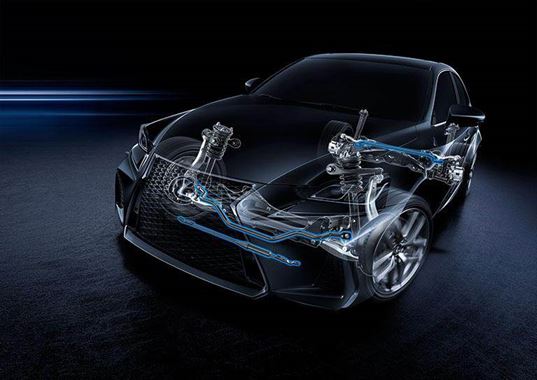
Many people use the terms interchangeably, but shock absorbers and struts are two different parts of a car’s powertrain. They are part of the suspension system that dampens shocks and vibrations when the car is on the road.
The suspension can be of several types, but the most common consists of a combination of shock absorbers and struts. On modern vehicles, shock absorbers remain on the rear wheels while struts are found at the front. They mitigate the vehicle’s lateral movements caused by bumpy roads.

Shock absorber and strut assemblies work continuously, whether the car is moving or not. For this reason, they deteriorate more quickly. But how long do shock absorbers last and what is the lifespan of struts?
How long do shock absorbers last?
The lifespan of shock absorbers, as well as struts, is at least 4 to 5 years. However, this depends on road conditions. The lifespan can extend up to 10 years if you drive the car mainly on smooth pavement. Similarly, it can be less than 5 years if you primarily drive on uneven roads filled with cracks and potholes.
Some experts use mileage to track the condition of shock absorbers and struts. The general rule is that shock absorbers last at least 50,000 miles before needing replacement. But again, it’s difficult to predict an exact figure when it comes to the lifespan of struts or the lifespan of shock absorbers. They might not last as long if the roads the car was driven on were not smooth and flat.
So, how long do shock absorbers last? The regular numbers are either 5 years or 50,000 miles. But it can be more or less depending on the condition of the roads. The same rule applies to strut assemblies.
Symptoms of bad shock absorbers and struts
Once shock absorbers and struts start to wear out, they bottom out quite quickly. The seals around their joints begin to wear out, and the fluid or gas inside leaks.
Watch out for these signs as they warn you of shock absorber and strut failure:
- Moisture on the top of these components or drips on the side in the case of a fluid-based unit.
- In turn, it feels like the rear of the car is a bit “loose.” Furthermore, the rear seems more bouncy than usual.
- Knocking noise coming from the rear suspension.
- Driving on rough and uneven roads becomes tiresome due to excessive shaking and jolting.
- The car does not sit level with the ground.
- Excessive bouncing: If you notice your vehicle bouncing excessively after hitting bumps or dips in the road, it could be a sign of worn shock absorbers or struts. The bounce may be more pronounced, and the vehicle may take longer to regain stability.
- Poor handling and stability: Worn shock absorbers and struts can lead to decreased vehicle stability, causing excessive swaying or leaning of the car during turns or maneuvers. You might experience a loss of control or a floating sensation while driving.
- Fluid leaks: If you observe oil or fluid leaking from the outside of the shock absorbers or struts, it indicates damage or failure. The presence of fluid is a clear sign that the internal seals have deteriorated and the component needs to be replaced.
Regular maintenance and inspections by a qualified mechanic are essential to ensure the proper functioning of your shock absorbers. They can assess the condition of the shock absorbers and determine if replacement is necessary based on factors such as wear, leaks, or reduced performance. Remember that worn shock absorbers can negatively impact handling, braking, and the overall safety of your vehicle. Therefore, it is important to address any issues promptly.