
The Accidental Discovery That Reshaped an Industry
Innovation often strikes in the most mundane moments. In 1973, NASA aerospace engineer Edwin J. Saltzman was cycling to work at the Dryden Flight Research Center when a routine encounter with a passing truck led to a revolutionary insight. He felt the powerful aerodynamic wake first push him toward the shoulder, then pull him dangerously toward the vehicle. This personal experience with drag and turbulence sparked a question: if the effect was this strong on a bicycle, how much energy were trucks wasting pushing air aside on the highway?
From Wind Tunnels to 18-Wheelers
Saltzman brought his curiosity back to the NASA facility. Using the agency’s advanced wind tunnels and aerodynamic expertise—typically reserved for spacecraft and high-performance aircraft—he began testing scale models of tractor-trailers. His research quantified the enormous drag created by the blunt, boxy front of a standard truck cab. He discovered that at highway speeds, over 50% of a truck’s engine power was used just to overcome air resistance. This inefficiency translated directly into massive fuel costs and limited range.
The Birth of the “Aero Truck”
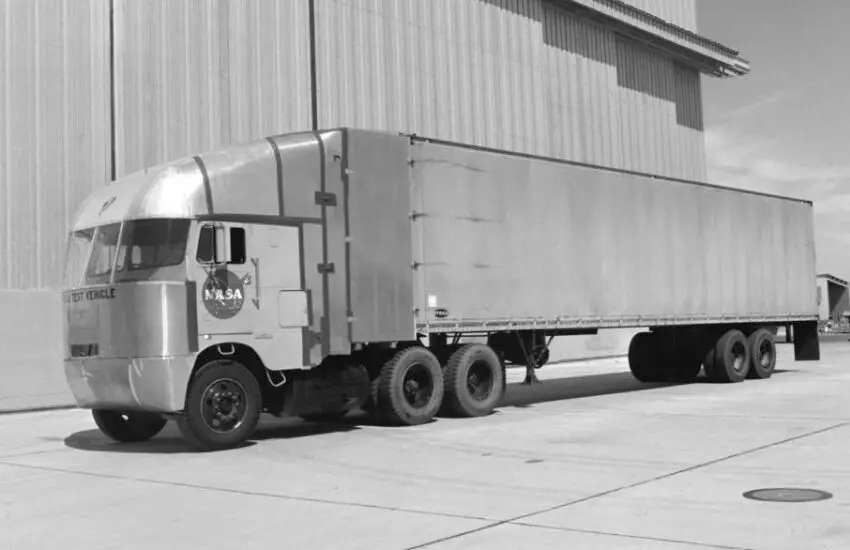
Saltzman’s team developed a simple yet transformative solution: a streamlined, sloping fairing for the roof of the truck cab. This device smoothed the airflow over the top of the cab, guiding it cleanly over the tall, square cargo trailer behind it instead of creating a turbulent, drag-inducing wall of air. The results were staggering. Testing proved that this aerodynamic add-on could reduce drag by up to 25%, leading to dramatic fuel savings of around 15% for long-haul trucks.
A Legacy of Efficiency
This serendipitous discovery, born from a bicycle commute, fundamentally transformed the transportation industry. The basic aerodynamic principles identified by Saltzman became standard. Modern trucks feature integrated, streamlined designs, side skirts, and boat tails as direct descendants of that initial NASA research. The cumulative impact is monumental, saving the global trucking industry billions of gallons of fuel, reducing operating costs, and significantly cutting carbon emissions. It stands as a powerful testament to how cross-disciplinary thinking can solve problems far beyond its original scope.