
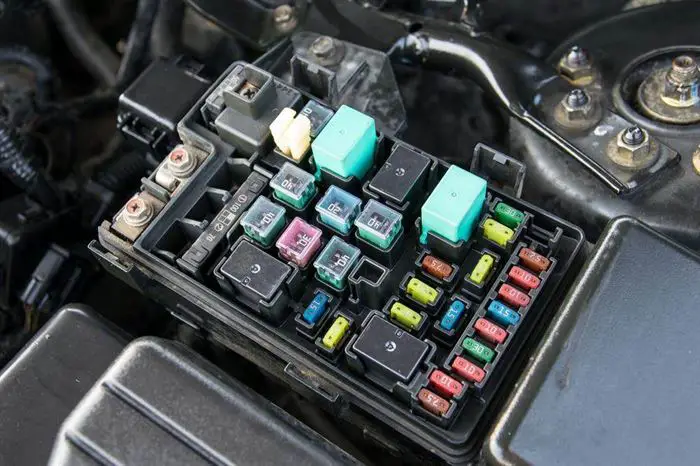
You may be familiar with the fuel pump, the component located inside the fuel tank that creates pressure in the fuel lines to push gasoline to the combustion engine so it can run. The fuel pump can malfunction for several reasons, one of which is less known issues with the fuel pump relay.
The fuel pump relay is the electronic component found on all vehicles equipped with an internal combustion engine. “To relay” means “to receive and transmit.” Whenever the ignition is turned on, the fuel pump relay will provide or “relay” a constant voltage to the fuel pump. Consequently, problems with the fuel pump relay will lead to a malfunctioning fuel pump, which will cause starting issues.
A faulty or failing fuel pump relay will often exhibit symptoms that alert the driver that something is wrong. Learn how the fuel pump relay works, the telltale signs of a failing fuel pump relay, how to diagnose it, replacement costs, and regular maintenance tips.
What is a Fuel Pump Relay?
The fuel pump relay is a component necessary for the operation of the combustion engine model. The combustion engine needs fuel to run, and the fuel pump relay ensures that this engine receives what it needs. It is typically controlled by the ignition or the power control module.
When you turn the ignition key, the fuel pump relay is activated and will provide electricity to start the fuel pump. When you turn off the ignition, the fuel pump shuts off.
Location
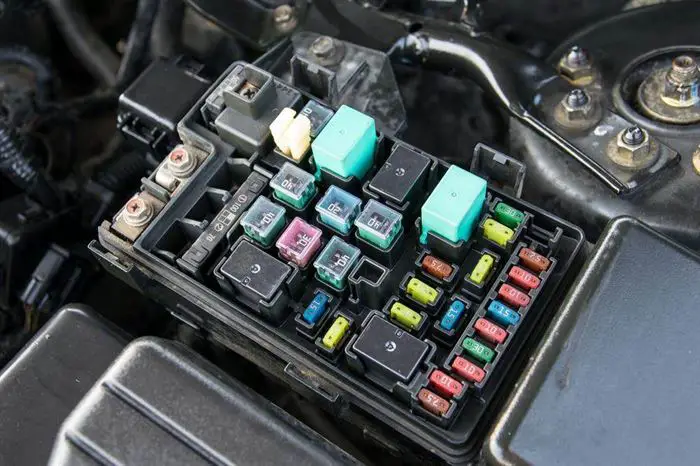
In most vehicles, the fuel pump relay is often located in the engine compartment’s fuse box, which is typically a long black box containing the fuel pump relay along with various other fuses and relays.
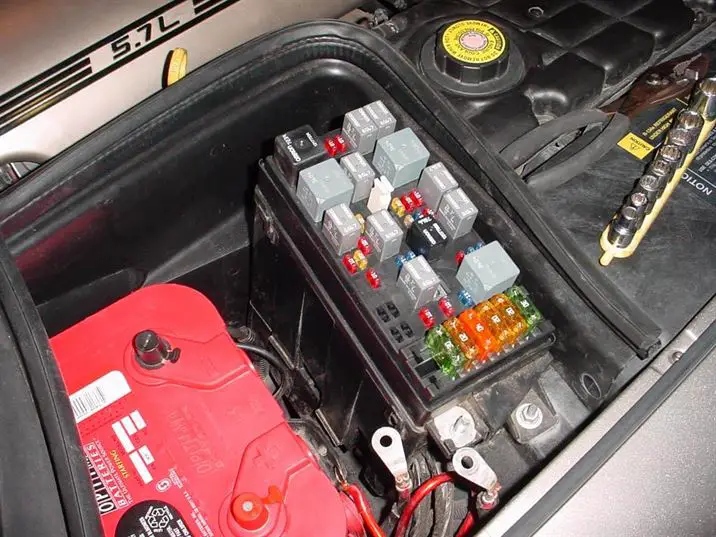
If you cannot find it, consult your owner’s manual. The fuel pump relay may be located in different places on different cars: under the hood, on the firewall, or near the steering column, to name a few locations.
Function
When you turn the ignition key to start your car, the “starting cycle” of the combustion engine begins. The fuel pump relay is activated long enough to provide the necessary current to start the fuel pump. The key here is to produce a small amount of voltage but consistently to the fuel pump.
Once the engine is running, the fuel pump relay turns off. At this point, electricity for the fuel pump is supplied by the oil pressure sending unit.
When you turn off the ignition, the fuel pump relay is triggered again, long enough to shut down and stop the fuel pump.
Symptoms of a Bad Fuel Pump Relay
The Engine Won’t Start
A common symptom of a faulty fuel pump relay is an engine that simply refuses to start, even though it may still crank when the key is turned, because the fuel pump is not receiving power.
Of course, you may know that a no-start issue can also be caused by a host of other problems. In this case, you should therefore perform a thorough diagnosis.
The Engine Stalls
One of the most common symptoms of a failing fuel pump relay is an engine that suddenly stalls. While the vehicle is running, the fuel pump relay suddenly cuts power to the fuel pump, causing the engine to stall.
If your engine stalls and refuses to restart, you have a completely failed fuel pump relay and need to have it replaced. If you are lucky and your car restarts shortly after, your fuel pump relay is faulty and requires immediate inspection.
Loss of Power
The fuel relay may be to blame if the car suddenly seems to lose power while driving or slows down for no apparent reason. This does not always mean the car will stall.
Sometimes the vehicle continues to run normally for a while. However, in case of a sudden loss of power while driving, inspection and repair are highly recommended, as there is always the risk that next time the car stops, leaving you stranded in the middle of the road.
No Noise from the Fuel Pump
Another symptom that may indicate a faulty fuel pump relay is the absence of noise from the fuel pump when you turn on the ignition. The fuel pump is located in the fuel tank, near the rear of the vehicle, and can usually be heard when the engine starts.
A healthy fuel pump and a healthy fuel pump relay will often produce a variation of a low-volume hum or whine that can be heard from inside the vehicle or from outside, near the fuel tank.
If the fuel pump relay fails, the fuel pump will not receive power and will not operate, so it will be silent.
How to Diagnose a Faulty Fuel Pump Relay
Visual Inspection
Always start with a visual inspection before moving on to other tests, which will be detailed below. A fuel pump relay doesn’t have many parts to inspect, so don’t worry.
- Locate the black fuse box located in the engine compartment.
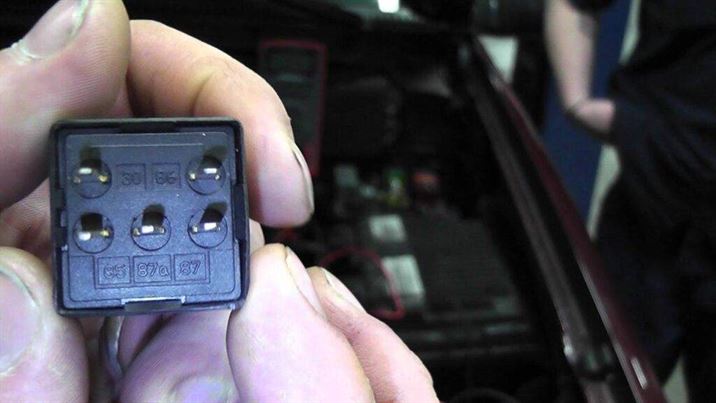
- Locate the relay, which is a cube-shaped object that connects with pins like an electrical plug. If the relay is in the black box, carefully remove it using a flathead screwdriver. Unplug the connector and the relay fuse to remove it.
- Inspect the terminals and the socket for signs of corrosion and overheating. Remember that even though the fuel pump requires low but constant current, corrosion will prevent proper current flow. Meanwhile, overheating indicates problems with the relay or the circuits it connects to.
- Clean corroded terminals and sockets with an electrical contact cleaner. Remember to protect your hands and eyes with gloves and goggles.
- Check the contact and the coil, which are the most common parts that burn out or break.
- Finally, check all fuses.
Testing
After a visual inspection, if you cannot identify a possible culprit, continue testing your fuel pump relay to see if it has failed:
- Set your digital multimeter to the lowest range on the Ohms scale or set it to “continuity.”
- Connect one wire to one of the power circuit pins and connect the other wire to the other power terminal.
- Your meter should indicate infinite resistance.
- If you detect zero ohms or any resistance value instead of infinity, your fuel pump relay has shorted power pins and must be replaced.
Alternatively:
- Set your digital multimeter to “continuity.”
- Connect one wire to one of the power circuit pins and connect the other wire to the other power terminal.
- If you hear a beep, your fuel pump relay’s power pins are shorted. Replace the relay.

Fuel Pump Relay Replacement Cost
You can easily find fuel pump relays online or in any auto parts store. The average fuel pump relay replacement cost ranges from $90 to $150, with $20 to $50 for parts and the remainder being labor costs.
Cleaning a Fuel Pump Relay
Cleaning the fuel pump relay is a simple maintenance job you should learn, as the relay can easily get dirty under many circumstances.
If it is located inside the engine compartment, which can become hot from engine heat, the heat can harm the relay’s performance. Furthermore, in the rare cases where you find the relay placed in the engine compartment but outside the fuse box, it will be exposed to heat as well as dust and dirt. Since any debris will affect the fuel pump relay’s performance, you should inspect and clean it regularly if necessary.
The fuel pump relay is a car electrical part, so be extremely careful when handling a relay. First, remove the relay and use a blower to remove dirt and dust for about 1 to 2 minutes. Never use water, but a bit of ethanol to thoroughly clean this electrical part. Do not use any cleaner unless the relay is free of all debris.
To prevent the relay from getting dirty again too quickly, apply ethanol to the relay and gently scrub to remove remaining dirt. Now that you’re done, let it dry in a ventilated area.