
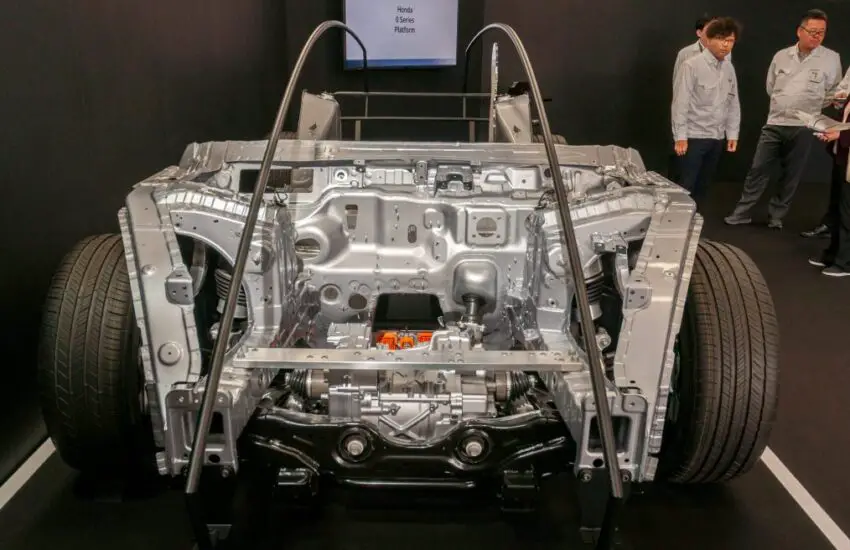
How Honda’s Flexible Platform Works
Honda’s engineers have developed a revolutionary vehicle platform that intentionally allows controlled flex in the front structure during cornering. Unlike traditional automotive design that prioritizes absolute rigidity, this innovative approach enables specific components to deform slightly, creating what engineers call “controlled compliance.” This strategic flexibility actually improves handling characteristics by optimizing tire contact with the road surface throughout turns.
The Engineering Breakthrough Behind the Technology
This represents a fundamental shift in automotive philosophy that challenges decades of conventional wisdom. Where most manufacturers have continuously pursued increased structural rigidity, Honda’s research revealed that strategic flexibility in key areas provides superior results. The platform uses advanced materials and computer-optimized geometries to create predictable deformation patterns that enhance rather than compromise vehicle dynamics.
Real-World Benefits for Drivers
Drivers will experience tangible improvements in everyday driving situations. The technology provides more consistent grip during aggressive cornering, better stability in crosswinds, and improved bump absorption while maintaining steering precision. The system works seamlessly without driver input, automatically adapting to changing road conditions and driving styles.
Future Applications Across Model Lineup
This flexible platform architecture will eventually underpin Honda’s entire vehicle lineup from compact cars to SUVs. The scalable design allows engineers to tailor the flexibility characteristics to each vehicle’s specific purpose while maintaining the core technological advantages. This represents one of the most significant shifts in automotive chassis design in recent decades.
Industry Impact and Competitive Response
The automotive industry is closely watching Honda’s innovation, with many competitors reportedly developing similar approaches. This technology could eventually replace the current industry standard of pursuing maximum rigidity, much like how unibody construction replaced body-on-frame designs for most passenger vehicles.