
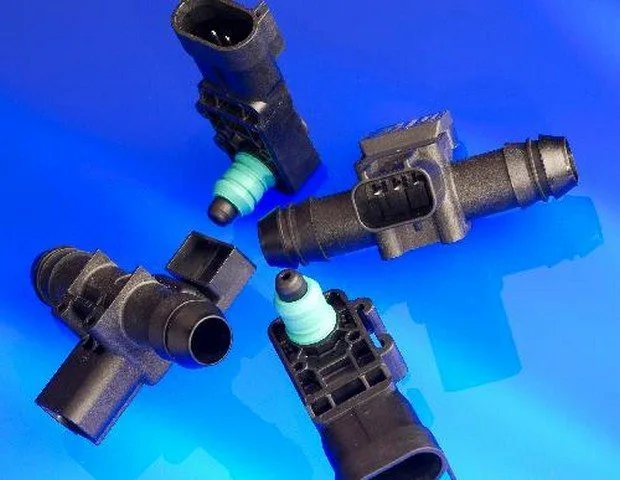
The fuel tank pressure sensor, also known by the abbreviation FTP (Fuel Tank Pressure Sensor), plays a crucial role in a vehicle’s Evaporative Emission System (EVAP). It monitors the pressure of fuel vapors in the tank and detects potential leaks or anomalies in the system.
1. Operation of the FTP Sensor
The FTP sensor is an electronic component typically located on or near the fuel tank. It measures the pressure of fuel vapors and sends this information to the Engine Control Module (ECM/PCM). The latter uses this data to:
- Check the tightness of the EVAP system.
- Control the proper operation of the purge valve and the vent valve.
- Help optimize fuel injection based on vapor pressure.
The sensor works by measuring the relative pressure compared to atmospheric pressure, thus allowing for the detection of leaks and ensuring clean and efficient combustion.
2. Symptoms of a Faulty FTP Sensor
A faulty FTP sensor can lead to several performance and emission issues. Here are some common symptoms:
🔴 Check Engine Light On: A malfunction of the FTP sensor often triggers an OBD-II error code, illuminating the Malfunction Indicator Lamp (Check Engine).
🚗 Difficulty Starting: An incorrect reading of the tank pressure can cause fuel supply problems.
📉 Decreased Engine Performance: A faulty sensor can affect the air/fuel mixture management and cause misfires or a loss of power.
⛽ Increased Fuel Smell: A leak detected by the sensor can cause excessive accumulation of fuel vapors.
3. Error Codes Associated with the FTP Sensor
Certain OBD-II codes may indicate a problem with the fuel tank pressure sensor:
- P0451 – FTP Sensor: Circuit Range/Performance
- P0452 – FTP Sensor: Low Input Voltage
- P0453 – FTP Sensor: High Input Voltage
- P0440 – P0457 – Codes related to EVAP system leaks
If any of these codes appear on an OBD-II scanner, it is recommended to check the condition of the sensor and the EVAP system.
4. How to Diagnose and Repair a Faulty FTP Sensor?
🔍 Diagnostic Steps
1️⃣ Visual Inspection
- Inspect the sensor wires and connector for any breaks, corrosion, or short circuits.
- Ensure the sensor is properly connected to the tank.
2️⃣ Sensor Test with a Multimeter
- Disconnect the sensor and measure the input voltage (typically 5V supplied by the PCM).
- Measure the voltage output with the engine running. An abnormal reading may indicate a faulty sensor.
3️⃣ EVAP System Leak Check
- A smoke test can be used to detect leaks in the EVAP circuit.
- Check the proper operation of the purge and vent valves.
🔧 Repair
✔️ Replacement of the FTP Sensor: If the sensor is confirmed to be faulty, it must be replaced. This usually involves disassembling some parts of the fuel tank.
✔️ Repair of Cables and Connectors: If the problem comes from a damaged harness, repair or replace the wires.
✔️ Error Code Reset: After any repair, clear the error codes with an OBD-II scanner and perform a road test.
5. Conclusion
The FTP sensor is a key element of the EVAP system that helps reduce emissions and optimize engine performance. A faulty sensor can lead to starting problems, fuel leaks, and a Check Engine light. Early diagnosis helps avoid costly repairs and ensures the proper functioning of the vehicle.
If you suspect a problem with your FTP sensor, do not hesitate to perform a diagnosis or consult a professional. 🚗🔧