
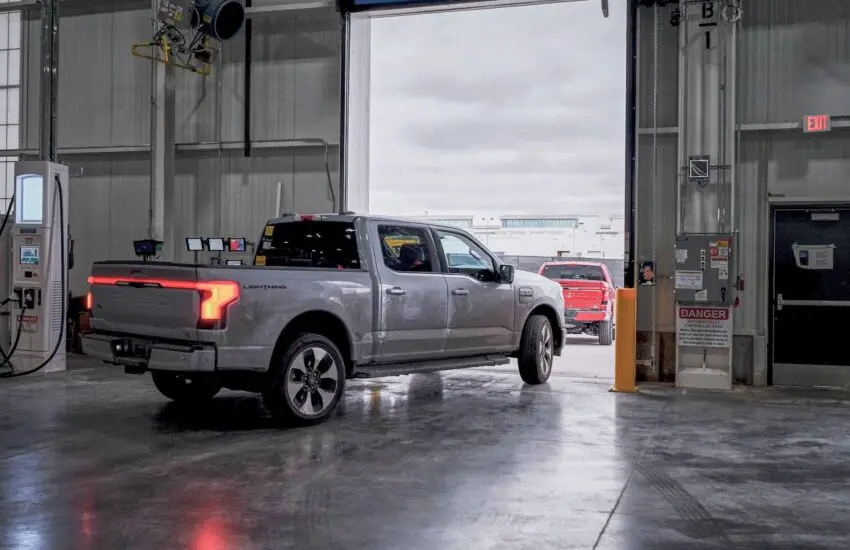
Ford F-150 Lightning: From Electric Aspiration to Production Challenges
Once hailed as Ford’s revolutionary electric vehicle, the F-150 Lightning faces significant hurdles that question its future viability. Initially celebrated as a pioneering electric pickup, this model now confronts production and demand issues mirroring broader industry struggles with electric trucks.
Production Slowdowns and Market Realities
Ford recently scaled back F-150 Lightning manufacturing, citing shifting consumer demand and operational adjustments. This decision reflects a cautious approach to electric vehicle investment amid slower-than-expected market adoption. While early reservations indicated strong interest, actual sales have not matched projections, leading to inventory accumulation.

Charging Infrastructure and Range Limitations
Potential buyers express concerns about charging accessibility and towing range. Unlike conventional trucks, the Lightning’s utility diminishes when hauling heavy loads, with range dropping significantly under load. This practical limitation affects its appeal to traditional truck users who require consistent performance for work and recreation.
Competitive Electric Truck Landscape
The electric pickup market has become increasingly crowded with new entrants. While the Lightning benefited from early mover advantage, recent competitors offer alternative features and designs. This saturation forces Ford to reevaluate its electric truck strategy and differentiation in a evolving marketplace.
Future Prospects for Electric Work Vehicles
Despite current challenges, the F-150 Lightning’s journey provides valuable insights for electric work vehicles. The industry continues to address battery technology, charging solutions, and cost barriers. Ford’s experience may inform future electric truck development, balancing innovation with practical user requirements.