
Did you know that without regular and proper maintenance, a vehicle can consume up to 30% more fuel? Many factors can lead to poor fuel economy, including worn and defective parts as well as your driving habits. Remember that low mileage also means an inefficient engine. Discover the most common causes of excessive fuel consumption today and how to fix these issues to achieve optimal energy efficiency and maximize your engine’s performance and lifespan.
In the first section, you will discover the bad driving habits that contribute to poor fuel economy. This is followed by a list of common causes resulting from poor maintenance and/or defective parts of your vehicle, as well as how to diagnose and repair them.
Causes of Excessive Fuel Consumption: Your Driving Style
Before moving on to potentially worn or defective parts of your vehicle that lead to poor fuel economy, you should do a quick check to see if you have any of the following bad driving habits. Your precious vehicle deserves good handling, so start changing your driving habits today to maximize its lifespan and enjoy many smoother, trouble-free journeys.
Driving with the Air Conditioning “ON”
If you are in the habit of driving with the air conditioning on, fuel consumption will peak. Check how often you use the car’s air conditioning system.
The AC is known to amplify the load on the engine, making it one of the most common causes of high fuel consumption. The same goes for a car heater! Read the maintenance tips to learn more about car heaters and fuel consumption concepts.
Sometimes, using the AC can be better in terms of fuel consumption. This is the case when you are driving at a speed of 80 km/h or more, as open windows are likely to produce aerodynamic drag.
The right thing to do is to open the windows for a few minutes after starting to drive, before turning on the air conditioning. Such a step would cool the car down a bit, allowing for better fuel economy. Another tip is to use the air vents to circulate air instead of the air conditioning.
Heavy Load in the Trunk
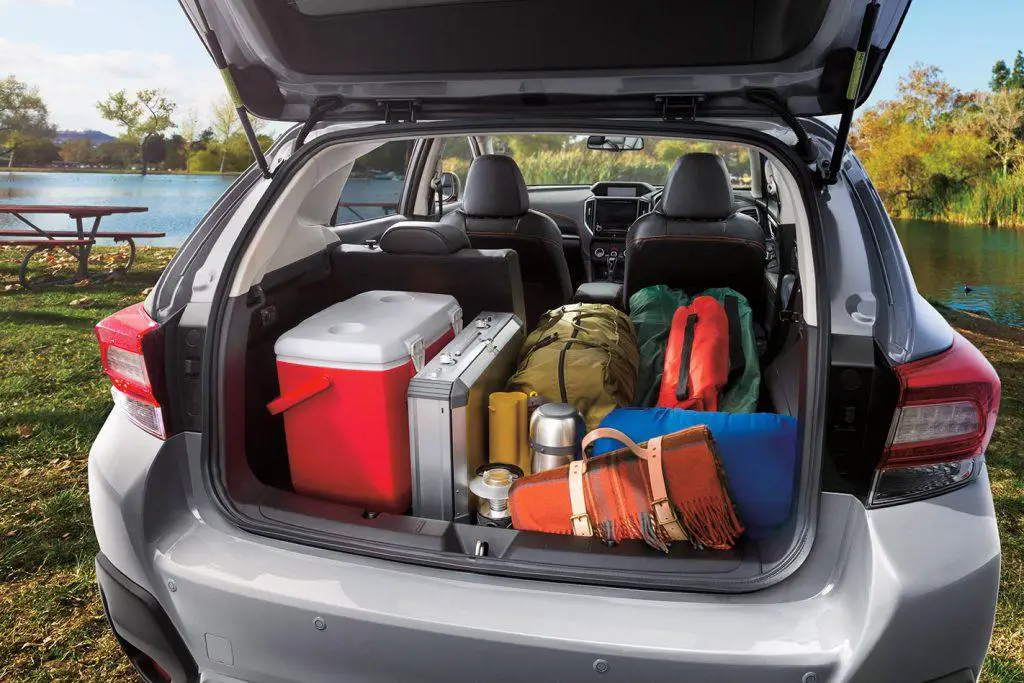
Sometimes the fault lies not with the mechanical unit, but with the load your car is carrying. If you like traveling long distances, you must have a lot of things in your car. This may seem convenient, but you are indirectly increasing fuel consumption. When looking for fuel economy, reducing extra weight is a recommended option.
You can also remove the roof rack or, rightly, the luggage carrier if you don’t use it much. Empty your vehicle by removing unnecessary items so that the load can be reduced to some extent. Once this is done, you will magically notice a change in the amount of fuel consumption.
When You Use the Wrong Gear
If you own a manual transmission car, it’s possible you are using too much fuel. This happens more often when you are an amateur driver. Suppose you are in 2nd gear and moving at a speed of 50 km/h. This, in turn, would require more power to perform movement, hence more fuel consumption.
Simply put, if you are driving in a lower gear and the required speed is higher, fuel will be overused. The key to reducing fuel consumption is to match the speed with gear changes and accelerate up to a limit.
Bad Driving Habits
Cars consume the most fuel during initial acceleration; Thus, if your trip is short or involves many stops, you will inevitably consume more fuel. Furthermore, aggressive driving where you accelerate hard and brake late leads you to flood the engine with extra fuel and thus consume more.
Excessive Idling
Idling consumes fuel. Turn off your engine if you expect to be stopped in traffic for 15 seconds or more.
Speed
Gasoline consumption decreases rapidly above 60 miles per hour, so stick to the speed limit and unless it is safe and necessary, such as when you are on a highway, there is no need to drive too fast.
Causes of Excessive Fuel Consumption: Defective Parts and Improper Maintenance
Fuel is needed to make the car run. A vehicle that consumes little fuel is ideal. Unlike the situation, cars sometimes tend to consume too much fuel, making them “fuel-guzzling.” Continue reading to find out why this happens.
Defective Engine Block
The first thing to check is the engine. This unit could be improperly tuned, or if you have ignored a pending service, fuel economy is likely to suffer. Speaking specifically of gasoline engines, when neglecting to replace spark plugs, air filter equipment, or worn fuel filters; fuel consumption would increase.
If the engine is a diesel engine and the fuel injectors or air filters are clogged, fuel consumption would increase exponentially. Both components are essential elements that contribute to fuel combustion, and if they become clogged, excessive fuel consumption would be observed.
Underinflated Tires
Regular tire inspection and proper inflation seem simple enough, yet it is a maintenance job that many car owners neglect. Underinflated or soft tires are one of the most common causes of excessive fuel consumption, and your tire pressure should be the second thing to inspect when you notice poor fuel economy.
By maintaining proper inflation, your car won’t need to work very hard to compensate for underinflated tires, which would prevent your vehicle from reaching the speed it should.
Keeping your car’s tires properly inflated is an easy and vital maintenance task for your safety. Underinflated tires accumulate excessive heat while you drive, which can lead to premature tire failure. With too low air pressure, tires can also wear out more quickly and unevenly, negatively impacting the vehicle’s braking and handling.
To help keep tires in perfect condition, use a pressure gauge to check your tire pressure at least once a month and before starting a long trip. For an accurate reading, make sure the car has been parked for three hours or more before checking the tire pressure. This handy device is something you will have many uses for, and besides, it is inexpensive, so invest in one.
Dragging Brakes
You may wonder what the connection is between brakes and energy efficiency. Brakes are important not only for stopping but also for the overall efficiency of your vehicle.
Braking issues can increase your vehicle’s rolling resistance, and increased rolling resistance results in a harder-working engine. Anything that makes your engine work harder will consume fuel. If something causes your brakes to only partially apply or not release completely, it harms your mileage by making your engine work harder.
You have dragging brakes or brakes that do not fully release if you notice excessive gray dust on the wheels and tires, or if the accelerator must be pressed further than usual to reach normal driving speeds. That’s why you should periodically check your brakes to ensure everything is properly lubricated to maximize energy efficiency and, of course, safety.
Low Coolant Level
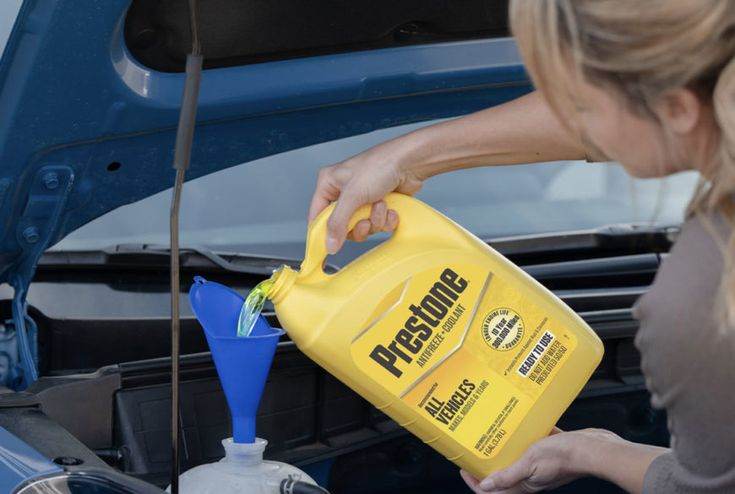
As with all machines, overheating can lead to efficiency issues or, worse, permanent damage. To ensure the engine remains at an optimal operating temperature, your car needs antifreeze or engine coolant. Driving with a low coolant level could cause your engine to overheat and thus run less efficiently, reduce fuel economy, and even cause serious damage.
So be sure to regularly check the coolant level and top it up if necessary. Also check the condition and operation of the cooling fans if you have electric fans to ensure the cooling system is working properly.
Wrong Oil Viscosity
Insufficient oil levels and/or incorrect oil are common causes of excessive fuel consumption. If you find it is low, top it up to the appropriate level and recheck your MPG.
Another thing to consider is changing your oil. Fresh oil lubricates better than old oil. As a result, your engine won’t have to work as hard to do its job.
Another thing to consider is the type of oil you use, which can also affect your gasoline consumption by up to 12%. You want to use engine oils that greatly reduce friction. Use either a synthetic oil or the oil recommended by the car manual.
Synthetic oil has better flow characteristics and better lubrication capacity than conventional oil and, as a result, your engine will run with less resistance when using synthetic oil. However, be aware that synthetic oil can worsen a worn engine: you might see more leaks and perhaps even more engine noise. However, if your engine is in good condition and not leaking, you might consider switching to synthetic for better fuel economy.
Bad Oxygen Sensors
Having bad oxygen sensors can reduce your gasoline consumption by up to 10%. Oxygen sensors help maintain the correct air and fuel mixture, strictly necessary for optimal engine performance. A bad oxygen sensor means a deviation in the air-to-fuel ratio, and this imbalance will cause the engine to run inefficiently, thus reducing fuel economy.
Dirty Air Filter
Air filters hold contaminants in a medium made of paper and synthetic fibers. Over time, this filter fills with dirt and debris, thus reducing airflow and preventing the engine from “breathing” properly.
If your engine does not get the amount of air it needs for combustion, it will not be very efficient and will have to work harder. Anything that makes your engine work harder compromises fuel economy. Professionals state that a very dirty and clogged air filter can reduce fuel economy by up to 10% in the worst cases.
Although dirty air filters are one of the most common causes of excessive fuel economy, fortunately, the remedy is simple, so remember to perform this maintenance job regularly. Air filters must be cleaned and unclogged so the engine can operate at its optimal performance.
Bad Fuel Injectors
As the name implies, fuel injectors are responsible for introducing fuel into the engine. Having bad fuel injectors or a leak can lead to poor mileage because the engine will not receive enough fuel needed for optimal combustion and will therefore run less efficiently.
Worn or Fouled Spark Plugs
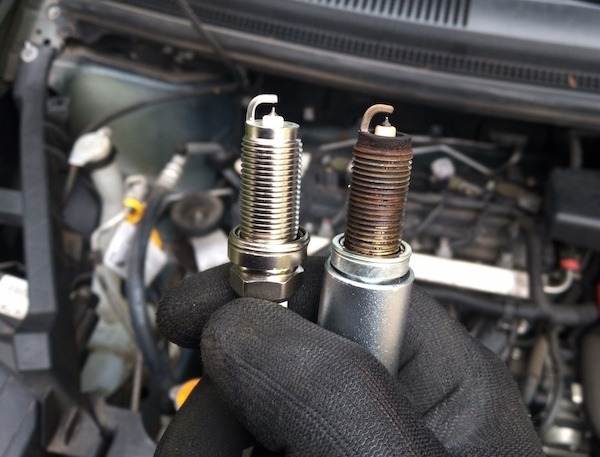
Your engine produces the energy needed to run your car by creating combustion, or an explosion, inside the combustion chamber, hence the name “internal combustion engine.” To generate such combustion, your spark plugs provide the electrical spark that ignites the air and fuel mixture introduced into the combustion chamber.
These small but simple plugs create an electric arc between two wires that do not touch, but are close enough to each other that electricity can jump the gap between them. The electricity is created by the alternator and transmitted through the spark plug, jumping the gap in the firing end of the plug if the voltage supplied to the plug is high enough.
When a spark plug is functioning correctly, it helps burn fuel efficiently during the combustion cycle. It will use the optimal amount of fuel to generate combustion to create the energy needed to run your car. With a functional spark plug and given that everything else is working efficiently in harmony, your car can achieve above-average fuel economy.
If you notice a reduction in fuel consumption associated with one or more of the issues below, it can most likely be attributed to a worn spark plug. Like most other components of your engine, spark plugs wear out over time. The main type of wear here concerns the electrode.
If you look at a spark plug, you will notice that one end is narrow and tapered: that’s where the wire connects to it. The other end is bulbous, with a small metal rod coming out of the center and a metal hook on one side. This central rod is the electrode, from where the electricity travels from it to the hook.
During normal use, the electrode of each spark plug wears out. Eventually, the wear is such that the gap between the two tracks begins to widen. As a result, it does not create as much electric arc, if any, which has a direct and immediate effect on your engine’s operation, including a higher risk of misfires.
If your plug corrodes to the point of breaking, it could cause serious damage inside your engine’s cylinder, leading to an extremely expensive repair to fix it.
When the plug is not operating optimally, it is often because the gap between the plug’s electrodes is either too close or too far apart. Regarding the remedy, many mechanics will remove the spark plugs, inspect them, and adjust the gap to factory settings instead of replacing the spark plug entirely.
Additionally, you should also replace the spark plug wires when you get new plugs. It’s always a good idea to regularly inspect the wires for any fraying, cracking, and even bite marks, as some wires are made from a soy-based material that is a favorite snack for rodents.
Engine Misfire
Are you experiencing engine stalling, rough rides, loss of engine power, and unusual smells and noises from your engine? These are common symptoms of engine misfire, which occur when one or more of the components necessary for engine combustion deviate from their precise and designated operation. Engine misfires are also one of the common causes of excessive fuel consumption.
If the engine is misfiring, it is usually due to a problem in the ignition system. A misfire is what happens when one of the three components – fuel, oxygen, or spark – does not function at the right time. For example, if the air-fuel ratio is incorrect, the mixture may not burn at all or explode prematurely. Besides this incorrect timing, the problem can also come from the mechanical components of the system, such as the cylinder itself.
Engine misfire symptoms should not be ignored, as a misfiring engine will underperform and could be damaged over time. Your car will also experience reduced fuel economy and increased emissions, as the engine is forced to work harder to compensate for the cylinder(s) that are not functioning properly. If the combustion process is interrupted, even for a brief moment, your engine’s performance can suffer.
If you notice your engine misfiring, it is recommended to have a professional inspection done immediately. Usually, the vehicle can continue to run with a misfire in one cylinder, since the others will keep the car moving. However, it will not run normally and it could get worse over time.
Ignoring the problem for too long can damage engine parts such as the catalytic converter and oxygen sensor. Furthermore, the car may lose power and stall in the middle of a very busy road.
Many factors can cause engine misfires. Inspect the following systems and components to find