
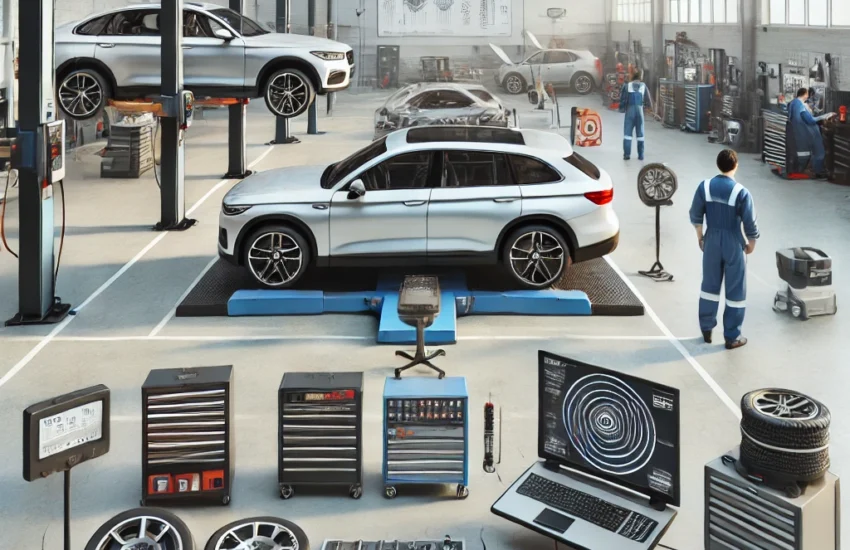
With the evolution of automotive technologies, repair shops must equip themselves with modern tools to meet the needs of the latest generation of vehicles. Here is a list of essential equipment to ensure accurate diagnostics and effective repairs in a modern repair shop.
1. Electronic Diagnostic Tools
On-board electronic systems dominate modern vehicles. These tools allow reading and correcting error codes from the electronic control units (ECUs).
- OBD2 Scanner: Essential for diagnosing electrical and electronic issues.
- Automotive Oscilloscope: For analyzing electrical signals from sensors and actuators.
- Advanced Diagnostic Software: Such as Bosch ESI[tronic], Autel, or Delphi, to access vehicle-specific diagrams and data.
2. Equipment for ADAS Systems
Advanced Driver Assistance Systems (ADAS) require specific tools for calibration.
- ADAS Calibration Kit: Used to adjust cameras, radars, and sensors after a repair.
- Calibration Targets: Essential to ensure that camera and radar sensors function correctly.
3. Lifting and Access Tools
A good workshop cannot operate without equipment that allows safe work under the vehicle.
- Lift (2 or 4 Post): Provides easy access to the underside of the vehicle for major repairs.
- Hydraulic Jack and Jack Stands: For quick and safe interventions.
- Creep Creeper: Comfortable for working under cars without a lift.
4. Tools for Tire and Wheel Repair
Tire services are essential in a workshop.
- Wheel Balancer: Ensures perfect tire balancing to prevent vibrations.
- Tire Changer: Essential for quickly replacing worn tires.
- Pressure Gauge and Electronic Inflator: For precisely adjusting tire pressure.
5. Tools for Engine and Transmission System Maintenance
For the heart of the vehicle, these tools are essential:
- Torque Wrenches: For tightening bolts to the recommended torque.
- Extractors: For removing stuck parts like injectors or spark plugs.
- Engine Compression Test Kit: For diagnosing the condition of cylinders.
- Timing Belt/Chain Setting Tool: Ensures precise installation of timing belts or chains.
6. Tools for Electrical System Diagnostics
Since electrical faults are common, these tools are indispensable:
- Multimeter: For measuring voltage, resistance, and circuit continuity.
- Battery Tester: Allows checking the charge and condition of modern batteries (including AGM and EFB batteries).
- Clamp Meter: For measuring electrical currents without disassembling the circuit.
7. Tools for Air Conditioning Systems
Modern air conditioning systems require specialized maintenance.
- AC Recharging Station: Recharges and checks air conditioning systems.
- Leak Detection Kit: With UV lamp and tracer, to locate leaks in the circuit.
8. Equipment for Bodywork
A modern workshop must also meet the needs of aesthetic repairs.
- Frame Straightener: For repairing damaged frames after an accident.
- HVLP Paint Guns: For repainting vehicles with precision.
- Paintless Dent Repair (PDR) Kit: Allows repairing small dents without repainting.
9. Computer and Digital Tools
Modern vehicles require software updates and online diagnostics.
- Dedicated Computer with Specialized Software: To access manufacturer databases.
- High-Speed Internet Connection: Essential for software and ECU updates.
10. Safety and Ergonomic Equipment
To work in good conditions, safety and comfort must be priorities.
- Fume Extractors: Protect mechanics from toxic engine emissions.
- Powerful LED Lighting: For optimal visibility, even in hard-to-reach areas.
- Personal Protective Equipment (PPE): Gloves, goggles, and safety shoes are essential.
Conclusion
A modern repair shop must adapt to the technological advancements of vehicles. By investing in these essential tools, you will be able to provide efficient and high-quality service, while meeting the needs of customers with increasingly complex vehicles.