
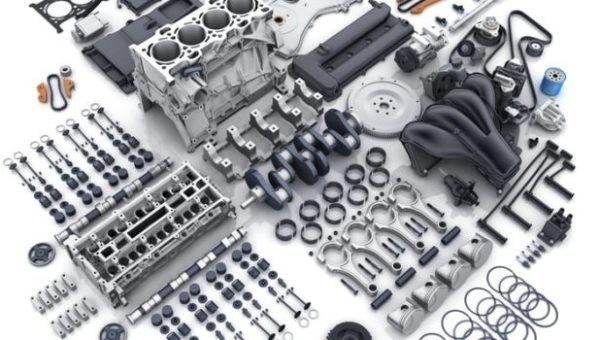

Perhaps you are looking to buy a new car. The brand and model of the vehicle were the only considerations when making this decision. Things have changed. Now you have to choose not only between style and manufacturer but also whether you want to purchase a diesel, gasoline, or even hybrid vehicle. In this article, we will discuss the difference between diesel and gasoline engines.
HOW DOES A GASOLINE ENGINE WORK?
In a gasoline engine with a carburetor or intake manifold injection, the pistons draw an air-fuel mixture into the cylinder (“external mixture formation”). If it is direct injection, which is common today, only air is drawn in. It first mixes with gasoline in the cylinder (“internal mixture formation”). Regardless of how the mixture is formed in the gasoline engine, the finished mixture is always compressed by the upward movement of the piston and then ignited by a spark plug (“spark ignition”), after which the piston is pushed downward. The efficient mixing of air and gasoline before compression is possible because gasoline evaporates quickly, meaning it mixes rapidly with air. Its low flash point ensures that a spark is sufficient to ignite it.
Igniting the final mixture has the advantage that the combustion spreads evenly in the cylinder, making these engines quiet and low in vibration. The more you press the accelerator, the more the throttle valve opens. More air is drawn in and mixed with more fuel, the optimal mixture ratio always remaining the same: for every part of gasoline, there are about 15 parts of air. Since only the quantity of the mixture varies in gasoline engines but not its composition, this is referred to as “quantitative mixture control.” When there is more fuel-air mixture in the cylinder, the compression is greater, and the resulting combustion is stronger: more pressure is exerted on the piston. The power ultimately transmitted to the drive is correspondingly greater.
HOW DOES A DIESEL ENGINE WORK?
Diesel has different chemical properties than gasoline: it is less volatile and therefore does not mix easily with air. Additionally, the flash point of this fuel is higher. Therefore, it must be ignited differently than gasoline. In a diesel engine, the piston draws in air and then compresses it to a high degree, causing it to heat up significantly. Then, atomized diesel is sprayed into the cylinder at high pressure via the injection nozzle. Due to friction with the hot air, the fuel ignites (“auto-ignition”). With diesel, the mixture of fuel and air therefore only occurs during combustion. Since the fuel and air are not pre-mixed, the combustion is uncontrolled, which makes more noise and causes the engine to vibrate more than in a gasoline engine.
As a result, a diesel has more material and is therefore more expensive. For frequent drivers in particular, however, this usually pays off due to fuel savings and lower prices at the gas station. Another point in favor of a diesel is the high torque, especially in the low RPM range, which is most often used. There is no longer a need to downshift when driving in the low RPM range. However, it is also not advisable to run a diesel engine at low RPMs.
DIFFERENCES IN EXHAUST FUMES
Gasoline engines have different exhaust gas profiles because, first, gasoline and diesel differ chemically and, second, higher temperatures are generated during combustion in this type of engine.
In general, exhaust gases must be separated from CO2 (which is harmful to the climate) and other pollutants such as particulates or nitrogen oxides. CO2 is produced during the combustion of carbon-containing fuels. Both gasoline and diesel engines therefore emit CO2. Since diesels consume less fuel than gasoline cars, they tend to be more climate-friendly on the road. However, diesel engines are often relatively powerful, partly because they are often installed in large cars such as SUVs or station wagons.
As a result, many diesels are not low-carbon in absolute numbers. Additionally, a study from May 2019 suggests that, contrary to popular belief, at least gasoline engines in the compact class and other smaller models actually emit less CO2 than comparable diesels. When it comes to nitrogen oxides, however, it is clear who is ahead: the gasoline engine. One reason for this is the three-way catalytic converter, which can only be installed in gasoline cars. Among other things, it reduces nitrogen oxides to nitrogen.
Older diesel engines produce about three times more nitrogen oxide than comparable gasoline engines. The latest models, on the other hand, are equipped with SCR catalytic converters, which convert nitrogen oxides into nitrogen using urea (also called “AdBlue”). This means they can also meet the strict Euro 6 emission standards. Particulates were a problem early on, especially in direct injection (DI) diesel engines. However, soot particle filters have alleviated the situation now that politicians have set limits for permitted particulate emissions from passenger cars. Since more and more gasoline cars also use direct injection, these limit values now also apply to correspondingly equipped gasoline engines.
WHICH VEHICLE IS MORE SUITABLE FOR SHORT DISTANCES AND WHICH FOR LONG DISTANCES?
The area of use is also important when choosing the right vehicle. This also includes whether the car will be used more for short or long distances. Many diesel vehicles are already worth owning from about 9,000 miles per year. For commuters or frequent drivers, a diesel vehicle is a real alternative to a gasoline vehicle. When purchasing a diesel, you should always pay attention to the model, as not all versions are as economical. Some car models only pay off after 18,000 miles.
Since diesel vehicles are equipped with soot particle filters and these become clogged with ash and soot after only a few hundred kilometers, they are less suitable as purely city cars. If you own a diesel vehicle, you should definitely drive on the highway more often. A gasoline car is therefore more interesting for road traffic, but here too, there are still a few things to consider.
The model plays an important role. A small car consumes much less fuel in the city than a station wagon or SUV. However, constant short trips are not good for any vehicle in the long term. For example, the exhaust of a short-distance vehicle rusts faster than that of a car that occasionally covers long distances. Here, engine condensation settles, which does not evaporate because the temperature is not high enough.
INSURANCE
The amount of car insurance you will have to pay depends, among other things, on the type of vehicle you own. Diesel cars are usually a bit more expensive to insure because they cover more miles per year due to their use on long distances and therefore present an increased risk of accidents. This causes them to be rated better in the insurance sector than gasoline vehicles. Whether diesel or gasoline is better depends solely on the needs and preferences you have as a driver and how you plan to use the vehicle. There is no clear difference in overall costs.