
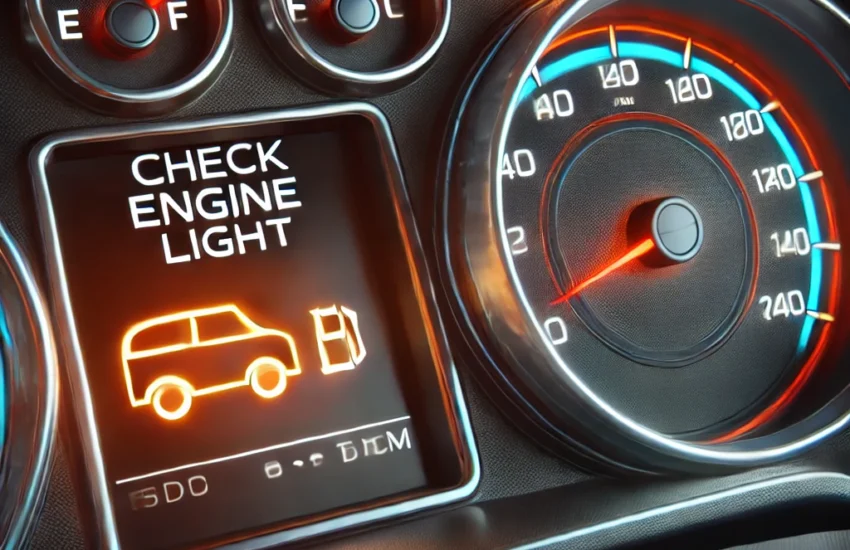
The illumination of the check engine light after refueling can worry many drivers. Several reasons can explain this phenomenon, ranging from a simple fuel cap issue to a more complex malfunction in the emission system.
1. Fuel Cap Not Properly Closed or Damaged
A loose or defective fuel cap can cause fuel vapor leakage, triggering an error code in the OBD-II system. Make sure the cap is properly secured and in good condition.
2. Air in the Fuel System
When filling the tank, air can enter the fuel supply circuit, causing a temporary variation in engine parameters and activating the check engine light.
3. Poor Quality Fuel
Fuel containing impurities or an improper mixture of components can disrupt combustion and generate errors in the oxygen sensors or knock sensor.
4. Problem with the EVAP System
The EVAP (Evaporative Emission Control System) is designed to capture and recycle fuel vapors. A failure in this system, such as a leak or faulty valve, can cause the check engine light to come on.
5. Sensitive Oxygen Sensor
Some vehicles have very sensitive oxygen sensors that can detect a slight change in exhaust gas composition after refueling, temporarily activating the check engine light.
What to Do When the Check Engine Light Comes On?
- Check the fuel cap: Make sure it is properly closed and in good condition.
- Observe vehicle performance: If no other symptoms are present (irregular idling, loss of power, abnormal smoke), the light may turn off after a few driving cycles.
- Use an OBD-II scanner: This helps identify the exact error code and guide the diagnosis.
- Consult a professional: If the light remains on or flashes, it is best to have the vehicle examined by a mechanic.
In conclusion, although the check engine light coming on after refueling may seem alarming, it often results from a minor issue. A quick check can help identify and resolve the problem without difficulty.