


IS THIS CONTROVERSIAL PRODUCT GOING TO DAMAGE OR RESTORE YOUR ENGINE?
To successfully maintain a car, it is essential to know how to keep your engine in order and functioning properly. That’s why there is such a variety of engine oils, degreasers, sealants, cleaners, starting fluids, and antifreezes, to name just a few.
Another product that is quickly gaining popularity among motorists is engine flush. However, it is far from clear whether this product will help improve your engine’s performance and protect it, or if it risks causing serious damage to your engine. Does engine flush work and is it good or bad?
WHAT IS ENGINE FLUSH?
Engine flush is a chemical product intended to remove sludge, deposits, and other dirt accumulated during your engine’s combustion process. Engine flush, like synthetic or semi-synthetic engine oils, contains additives designed to clean the internal moving parts of the engine and improve performance. The basic theory is that running the flush through your engine will clean the deposits left in the engine by the combustion process and thus result in a clean and more functional engine. Engine additives are simple to use: they are added to the car’s oil fill port and the car’s engine is left to idle for 10-15 minutes (many major brands boast that it is effective after just this short period of time). Afterward, you can change the oil and replace the oil filter.

Modern engine oils today already come with sets of detergents and dispersants that perfectly clean lubricated surfaces and keep sludge deposits away. But these additives only last so long. If you do not change your oil as often as you should, it can also lead to oil sludge heading to places you don’t want it. If this is the case, engine flush might be the best option for you.
WHY MIGHT ENGINE FLUSH BE IMPORTANT?
Deposits and sludge accumulate in the engine for several reasons, one of the most common for most drivers being the frequency of short trips. Making many short trips and stop-and-go driving is surprisingly hard on the lubricating oil, as the moisture that accumulates in the oil during the previous rest period will not have time to evaporate and leave the oil. This means the oil dilutes and increases in viscosity, and in the end, it also does not lubricate the engine’s moving parts well, leading to increased wear.
Hot and dusty environments are also harsh on engine oil because airborne dirt particles can be absorbed. Like increased moisture, high heat breaks down engine oil, and deposits of burned oil byproducts can accumulate very quickly. As they settle, all this engine sludge can clog narrow oil passages or the screen on the oil pickup tube, limiting oil flow to vital parts of the engine, especially the upper valve train.
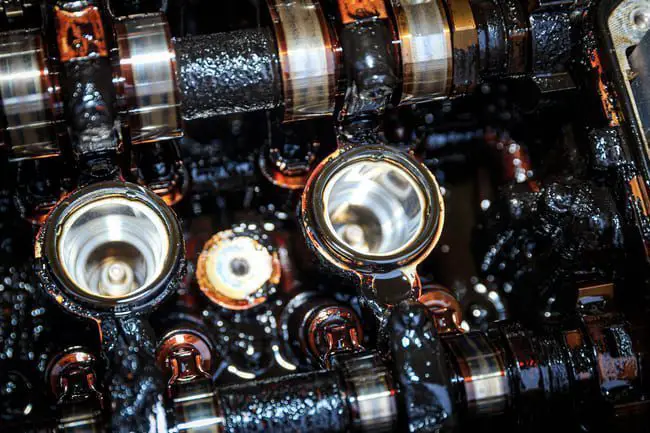
All this sludge and dirt mean a very dirty engine, and that’s not good news for the engine’s thermal efficiency. Since engine oil acts as a coolant for the engine, as the oil turns to sludge, the oil gets hotter, and the engine risks overheating. Deposits on the pistons and in the combustion chambers will also increase hydrocarbon emissions. In gasoline engines, catalytic converters will have to work harder to remove waste and may break down or need to be replaced sooner. Deposits can also cause piston rings to stick, reducing engine compression and overall engine power, which directly impacts the car’s performance.
The real problems of an unclean engine are therefore a more inefficient and ineffective engine in which serious damage could be caused and which risks breaking down. It is truly vital to keep it clean, but will engine flush work in your engine?
BENEFITS OF ENGINE FLUSH
Engine flush companies claim that “engine flush is specially formulated to quickly dissolve harmful engine deposits and maintain effective oil circulation throughout the engine, thus helping to protect the engine’s vital wear surfaces throughout the flush.” In theory, this sounds ideal. A good engine flush can help loosen deposits and dissolve sludge, returning your engine to a like-new condition. So, it could be the first step in helping to restore a previously neglected vehicle to its original state.
Another benefit of engine flush is that it could improve your fuel economy. Contaminants circulating in your engine can lead to oil degradation and increased viscosity. Furthermore, sludge and deposits that build up on engine parts can increase resistance, which wastes fuel. Cleaning your engine with an engine cleaner can help parts move more efficiently, maximizing your fuel economy and saving money.

An advantage that will only increase in the coming years is that engine flush can help minimize emissions. The risk of piston ring sticking that we mentioned earlier means that oil can enter the combustion chamber and burn. The result is harmful deposits, and this will increase exhaust emissions when the burned oil exits the exhaust pipe. The best oil flush treatment helps free stuck rings and minimize oil consumption, thus reducing your emissions.
DANGERS OF ENGINE FLUSH
That said, there are potential dangers associated with using engine flush, and many have claimed that engine flush can damage an engine.
Ford’s view on engine flush products is that they should not be used: “Do not use oil additives or other engine treatments. Under certain conditions, they could damage the engine. If you use one and there is a subsequent engine problem, your warranty will no longer be valid.” This could be one of the most concerning things. Even if an engine is not damaged, your warranty could be voided, and if something else, completely unrelated to your engine, goes wrong with your car, you might have lost your right to have it repaired under manufacturer warranty due to the use of an engine flush.
The reason many car manufacturers do not recommend using engine flush is that they fear the chemicals could react with the engine’s rubber or plastic components at the same time as they remove dirt and sludge, causing degradation and premature engine failure.
Other car enthusiasts worry that engine flushes could dislodge critical chunks and deposits from the engine, forcing them to move to other, even more critical areas and cause greater damage. Some are also convinced that an engine flush treatment may not completely dissolve sludge and instead break it down. The sludge could then be distributed more widely around the engine, rather than being localized only in certain areas, and could lead to an even greater reduction in engine performance.
The real danger of using engine flushes might be when they are used in high-mileage cars. For cars that have already had a long life, the engine seals may be worn and leaking. In these cases, the combination of oil and sludge acts almost like a sealant, essentially keeping them viable and masking their true condition.
If this is the case for your engine, it is certainly not worth using an engine flush. It would be better to leave well enough alone and not disturb the sludge that might be the only real barrier preventing oil from leaking past the old engine’s seals. If you use it in this situation, you could end up with a leaking engine or worse.
SO IS ENGINE FLUSH WORTH IT?
The importance of having a clean engine cannot be overstated, so any product that actively tries to clean the engine’s moving parts is clearly well-intentioned. But, using a product that manufacturers do not recommend is always a risk, especially when it involves something as critical as your engine.
Many drivers report substantial gains when using engine flush products and swear by them, but others claim to have noticed no change in performance. While engine flush cannot replace a regularly well-maintained, regularly cleaned, and oil-changed engine, it might be the right product for an engine that needs some attention.