

A good car engine should run smoothly with little noise.
However, if your car produces a rattling, ticking, or knocking noise, it may be a sign of an engine problem.
Engine knocking occurs when the car’s fuel burns unevenly. Instead of proper combustion, you have a lot of unburned fuel. If you hear a ticking sound, the problem could be a lack of lubrication in the combustion chamber.
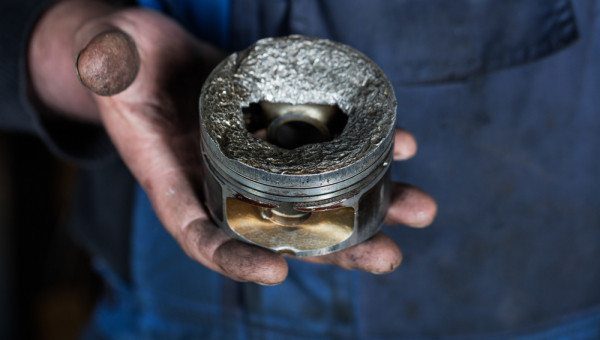
You might also have detonation, meaning the fuel is burned too early, causing the combustion to push the piston down before it has even reached the top. This can be very dangerous for your engine and must be fixed as soon as possible.
Causes of Car Engine Knocking
In this regard, you will need to check your engine for oil leaks. Below is a list of possible causes of engine knocking.
1. High Carbon Deposits
car engine repair
Unburned fuel will lead to high carbon deposits. Fuel has a high carbon content, which often remains after combustion. Over time, these carbon deposits increase, leading to inefficient combustion. You can solve this problem by adding a carbon cleaner to your fuel.
2. Bad Spark Plugs
Spark plugs provide the ignition spark for the air-fuel mixture ignition. However, if you buy the wrong type of spark plug, you will experience engine knocking. In most cases, bad spark plugs have a gap that is too narrow or too wide.
In the first case, the spark is too weak, while in the second case, the spark plug may not be able to produce a spark at all. Ask your mechanic to recommend the right spark plugs for your car.
3. Using Low Octane Fuel
engine knocking
The air-fuel ignition must occur at the right time. If you buy low octane fuel, premature combustion may occur. This will cause the engine to knock. To solve the problem, always buy fuel with an octane rating higher than that recommended by the manufacturer.
If you still have low octane fuel, you can add an octane booster to fix the issue.
4. Poorly Lubricated Cylinders
The combustion cylinder must be properly lubricated for correct operation. If this is not done, the cylinder will hit the walls. The main problem is that the cylinder does not receive the right amount of lubricant due to loose valves or lifters. An oil leak could also cause the cylinder head to receive less oil.
5. Unbalanced Air/Fuel Mixture
The correct amount of air-fuel mixture is necessary for the engine to function properly. Too much fuel will lead to uneven combustion. This results in additional damage to the piston and cylinder walls. You are then forced to replace them immediately to avoid further damaging your engine. Check your injector sensors for dirt buildup.
6. Bad Ignition Timing
If you have an older car with an adjustable distributor, it is possible that the ignition timing is too advanced, which can lead to detonation.
How to Fix Engine Knocking
Getting the Right Fuel
If the fuel has a high octane rating, it burns rather slowly, while low octane fuel burns faster. High-performance cars such as sports cars use high octane fuel, while normal cars tend to use low octane fuel.
If you have a car with a carburetor, energy efficiency is reduced and you might be forced to try high octane gases. Modern cars have the latest fuel injection technologies, so no fuel adjustment is necessary. For most cars, the best fuel octane rating is 87.
Buy the Right Spark Plugs
Cheap items are not necessarily cheap in the long run. You can buy cheap spark plugs hoping to save a few dollars only to find that they further damage your engine. Ask your mechanic to get you the manufacturer-recommended spark plugs.
They often cost around $10, but you will have to pay extra to the mechanic for installation.
Manage Boost Pressure
If you have too much boost in your car, it can lead to premature detonation. In this case, you will need to modify your engine to absorb the boost pressure. If you are using a turbo, it is advisable to modify your hatch to dissipate the overpressure.
Adjust the Air/Fuel Mixture
If your fuel injectors are not working properly, you will experience detonation. A lean air-fuel mixture can result from leaking vacuum lines or worn seals. In this case, if the car is idling, you will notice some hesitation when accelerating. Ask your mechanic to check for clogged carburetor nozzles, dirty fuel injectors, or a clogged fuel filter.
Remove Carbon Deposits
Fuel is made from carbon molecules. These often accumulate in the combustion chambers and thus reduce engine performance. A dirty engine has carbon deposits on the pistons, which can affect the compression of the air-fuel mixture. Too much carbon deposits lead to detonation. A chemical cleaner can be used to remove the deposits.
Repair Knock Sensors
A knock sensor is a modern innovation in many cars. It works by detecting vibrations in the combustion chambers and sending this information to the ECU. If detonation is detected, the onboard computer temporarily stops the ignition. However, over time, the sensors become faulty, meaning you will not be able to control the detonation.
Keep Your Compression Ratio Reasonable
A ratio of 9.0:1 is recommended for most cars. This is not the case for cars equipped with knock sensors, where you can have higher compression ratios. If you need a boost, you can opt for lower static ratios below 8.0:1.
Unless you plan to use racing fuel, it is recommended to keep compression ratios within the recommended range. You can try using cylinder heads with larger combustion chambers or a copper head gasket spacer.
Conclusion
The main cause of engine knocking is when you have a large amount of unburned fuel. This finds its way to the engine exhaust and you will notice a rotten egg smell. Engine knocking can lead to further engine damage if not corrected immediately. To reduce engine knocking, you must ensure that you are using low octane fuel. You should refer to the manufacturer’s manual to find the right fuel for your engine.