
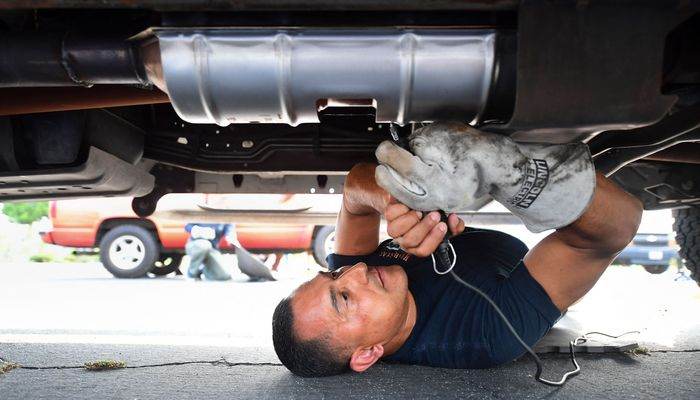
Catalytic converter theft has become a worsening problem in recent years. According to data from the National Insurance Crime Bureau (NICB), an estimated 65,398 thefts occurred nationwide in 2021. This represents a 353% increase compared to all catalytic converter thefts reported in previous years. Even though the surge in catalytic converter thefts appears to be easing in 2023, it continues to concern many drivers significantly. So how can you prevent catalytic converter theft? Let’s explore the solution to this issue.
Why Are Catalytic Converters So Popular Among Thieves?
Have you ever wondered what’s inside catalytic converters that makes them worthwhile for thieves? Required by law in the United States since the 1975 model year, car manufacturers must use precious metals such as platinum, rhodium, and palladium to help reduce vehicle exhaust emissions.

In each catalytic converter, palladium, platinum, or rhodium can control the flow of car emissions by reacting with certain gases such as CO and NOx, thereby reducing the harmful effects of emissions when released into the environment. On the market, the precious metals contained in catalytic converters cost the same as, or even more than, the price of gold. And that’s the main reason for catalytic converter thefts.
After the COVID-19 pandemic, many automotive manufacturer supply chains had to close, leading to a slowdown in the auto parts and accessories market.
Thus, supply is insufficient to meet demand. Thieves take advantage of this opportunity to steal spare parts and then resell the entire unit for profit. They can even be shipped abroad and sold on online black markets…
However, in 2023, as the accessories market gradually recovered, the number of catalytic converter thefts significantly decreased compared to previous years, which is also a good sign for car owners worldwide.
Catalytic converter thefts can occur in garages, at private residences, or even at car dealerships. Be especially cautious when parking on the street. What should we do to stop this problem?
How to Effectively Prevent Catalytic Converter Theft?
The truth is, it only takes a thief a few minutes to slip under your vehicle and cut out the catalytic converter with a battery-powered reciprocating saw. And car owners who rarely drive will often be targets for thieves, and there is no way to completely avoid this issue. In some states, scrap collectors may be required to provide photo identification when purchasing catalytic converters, but in many states, the black market for these items is difficult to track.
Replacing a catalytic converter can cost you several thousand dollars, so how can you prevent your catalytic converter from being stolen? To minimize the risk of falling victim to catalytic converter theft, you can follow some of the tips below:
1. Know the Signs If Your Car Is a Target for Thieves
SUVs, hybrids, and trucks are the vehicles that attract thieves the most, as the catalytic converters on these cars are often easily removable. Below, we want to share some specific car models to help you better understand:
- Ford F-Series
- Chrysler 200
- Chevrolet Silverado
- Toyota Prius
- Toyota Camry
- Honda CR-V
…
One of the main characteristics of these cars is that they all have high ground clearance, which will make it easier for thieves to access your catalytic converter.
2. Paint a Catalytic Converter
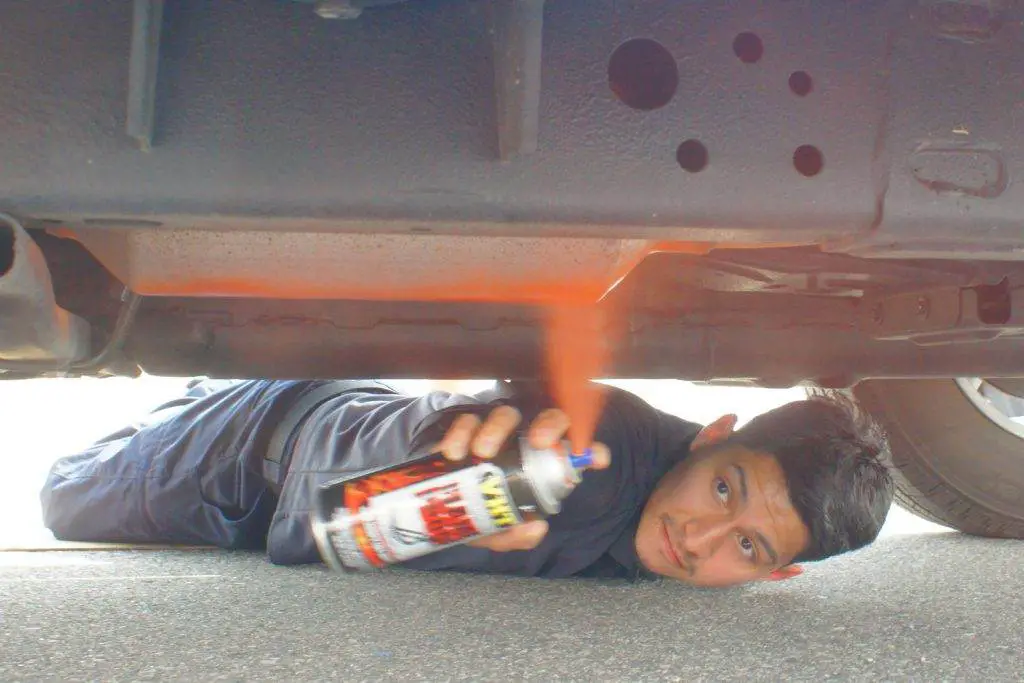
Spray painting your catalytic converter is another way to combat thieves. As recommended by the police, painting can make your catalytic converter a less attractive target, as it’s a sign indicating to scrapyards or auto shops that this part has been stolen. And the idea is that they will be less likely to buy these stolen parts. You can get most of what you need for this painting process at local auto stores.
You should choose a high-temperature bright paint or an exhaust manifold paint, as exhaust components get very hot and normal paints cannot withstand that temperature. Remember to use a scrubbing pad or sandpaper to prepare the surface so the paint adheres better. Additionally, you should engrave the VIN on your catalytic converter to easily check if this part has been sold on the market.
3. Choose a Good Parking Spot
If possible, keep your car in the garage. When you have to park on the street, choose a safe location and park in a well-trafficked area or near the entrance of a building or residents. Furthermore, experts state that drivers should park with their wheels facing the curb. This small trick can make it more difficult for thieves wanting to steal parts from your car. The difficult parking method mentioned above will make thieves quickly abandon their idea because it takes a lot of time and draws attention from those around them.
4. Use an Anti-Theft Device on the Catalytic Converter
Although installing such a device cannot guarantee 100% protection of your catalytic converter, it is likely to reduce theft of this component. Typically, anti-theft devices will be attached to your car’s chassis, making them difficult for thieves to remove. They usually include a metal clip or bracket that surrounds the catalytic converter and require special tools for removal. Catalytic converter locks are widely available and can serve as an obvious deterrent. If your vehicle is equipped with an alarm system, set the alarm to vibrate when the catalytic converters are cut, and the system will trigger the alarm.
Watch more:
5. Car Insurance
The question is, “Does car insurance cover catalytic converter theft?” If, unfortunately, your catalytic converter is stolen and you have comprehensive insurance on your vehicle, the insurance company will handle the replacement of the catalytic converter and necessary repairs, minus your deductible. If you are unsure whether your auto insurance policy covers the loss of a catalytic converter, contact your insurance company for clarification.
I hope that after reading this article, you know how to protect your catalytic converter and travel safely.