
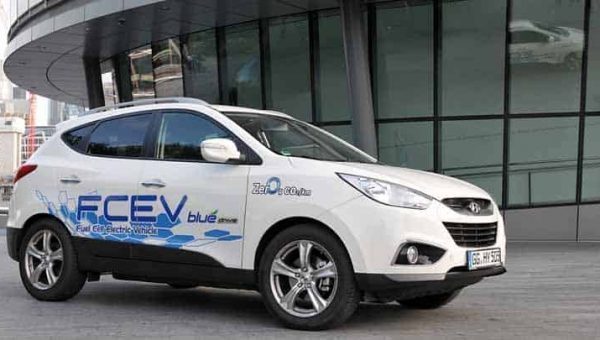

The use of alternative energy for cars is becoming increasingly popular in the modern era. While most people have heard of electric vehicles, many do not think about the available energy sources that can power them. Among all the available electric car options, hydrogen fuel cell cars have proven to be the cleanest on the market. They do not use an electric battery like other electric vehicles do. Furthermore, the emissions coming out of the exhaust pipe are only water vapor and heat. This makes them the most environmentally friendly of all the other options.
Working Principle of Hydrogen Fuel Cell Cars
Hydrogen fuel cell cars produce electricity through the conversion of hydrogen gas. Once this happens, heat and water are the only two things emitted from them. You will not see toxic carbon emissions coming out as with traditional vehicles. There are high-pressure fuel tanks in the vehicle that store the hydrogen gas. Instead of burning the gas as you do with regular fuel, the hydrogen gas flows into the fuel cells which contain oxygen. The hydrogen gas mixes with the oxygen and forms the electrical current needed to power the electric motors. This, in turn, provides power to the wheels and allows the vehicle to move.
The 3 Main Differences Between Hydrogen Fuel Cell Cars and Traditional Cars
If you are considering getting a hydrogen fuel cell car, you need to understand the fundamental aspects of the vehicle. While hydrogen vehicles have many advantages, there could also be major drawbacks for you.
Besides hydrogen producing cleaner emissions, below are the 3 main differences between hydrogen and ordinary vehicles. This will help you better understand the working principle of hydrogen fuel cell cars and how they might affect your lifestyle.
- Small Battery – All vehicles have batteries, but they serve different purposes depending on the type of vehicle. A hydrogen fuel cell car has a small battery that is solely responsible for boosting acceleration. It is not the main source of power for propulsion as in hybrid vehicles. Additionally, hydrogen fuel cell car batteries are capable of recharging themselves using energy from the hydrogen fuel cells. This allows the batteries to last a very long time.
- Less Noise – Hydrogen fuel cell cars are much quieter because there is no roaring petroleum engine emitting exhaust fumes. Furthermore, the power delivery is quite quick as it is fast for electric motors to achieve full torque. This means you can lightly press the accelerator pedal and make the car accelerate quickly. Again, there will be no engine noise when the car accelerates either. The only sounds you are likely to hear come from the outside winds blowing against it.
- Limited Fueling Stations – The only major drawback of hydrogen fuel cell cars is that you cannot simply go to a traditional gas station to refuel. You will need to go to a hydrogen fueling station to fill up the cells. Unfortunately, there are not as many hydrogen fueling stations as there are regular gas stations. In fact, there are only 39 hydrogen fueling stations throughout the United States and the majority of them are located in California. But, as the technology expands to other states, there will likely be more hydrogen stations opening very soon.
The Outlook
You might be wondering why more hydrogen vehicles are not produced if they are so good for the environment. The main argument on the other side is that hydrogen still causes emissions when it is produced. This is technically true because hydrogen currently comes from natural gas. But we have the technology to produce hydrogen from cleaner renewable energy sources. California has currently started this process at 6 of its hydrogen fueling stations. The state requires that any hydrogen station receiving public funding use renewable sources for at least 33% of its hydrogen production. Hopefully, this percentage will increase in the future and expand to other states.