
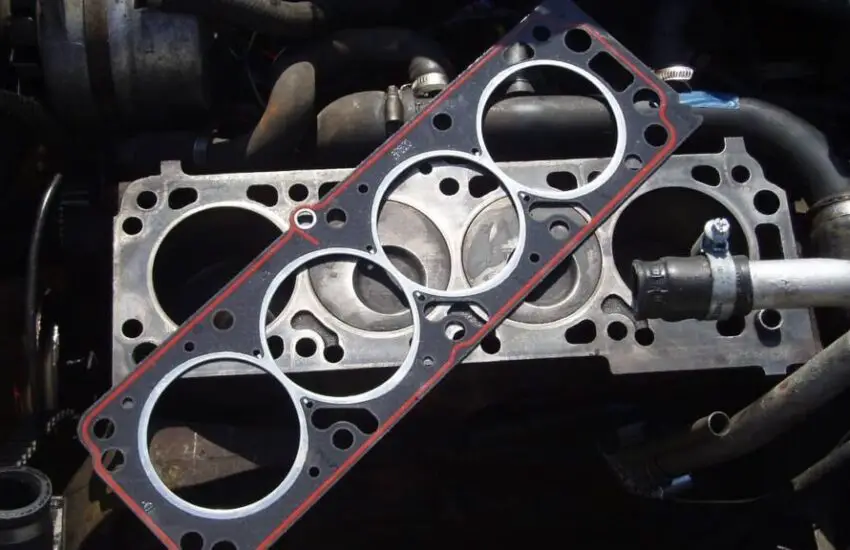
The standard practice for replacing a faulty head gasket is to call a mechanic. But that doesn’t mean you can’t detect problems and solve them at home.
In any engine, the head gasket is an important component. Any problem with the head gasket can be of two types: minor and major. If there is a minor problem or leak, the engine may then consume more oil or coolant. In a more serious case, the coolant and oil can mix. There is a fixed set of techniques to detect if there is a problem with your head gasket. Generally, a compression test is needed to diagnose an engine with a blown head gasket.
Problems with the Head Gasket
1. Coolant Consumption
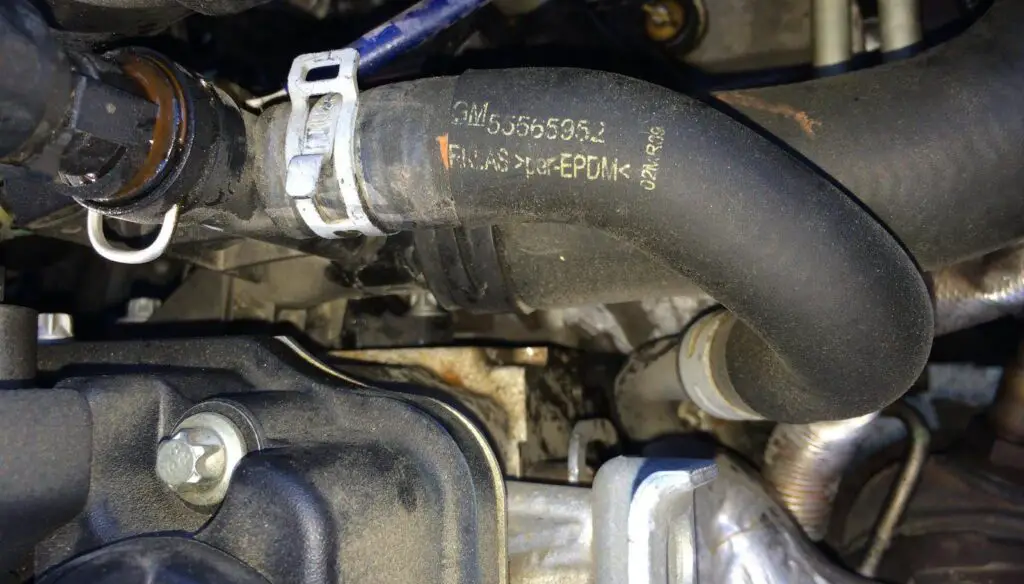
In modern cars, the number of coolant passages is numerous. Through these passages, the coolant flows to rid the engine of excessive heat. The head gasket prevents the coolant from escaping the passages. When the head gasket is broken, the coolant reaches the combustion chamber and the engine consumes it. Check the exhaust pipe when the engine is running to detect a problem. If you notice that excess water or steam is escaping from the exhaust pipe, there may be a problem. Or, you can simply put your hand in front of the outlet to see if it is too wet or damp. After that, check under the hood while the engine is still running to see if there are any accumulated bubbles. One or more of these precisely indicate that you have a faulty gasket.
2. Oil Consumption
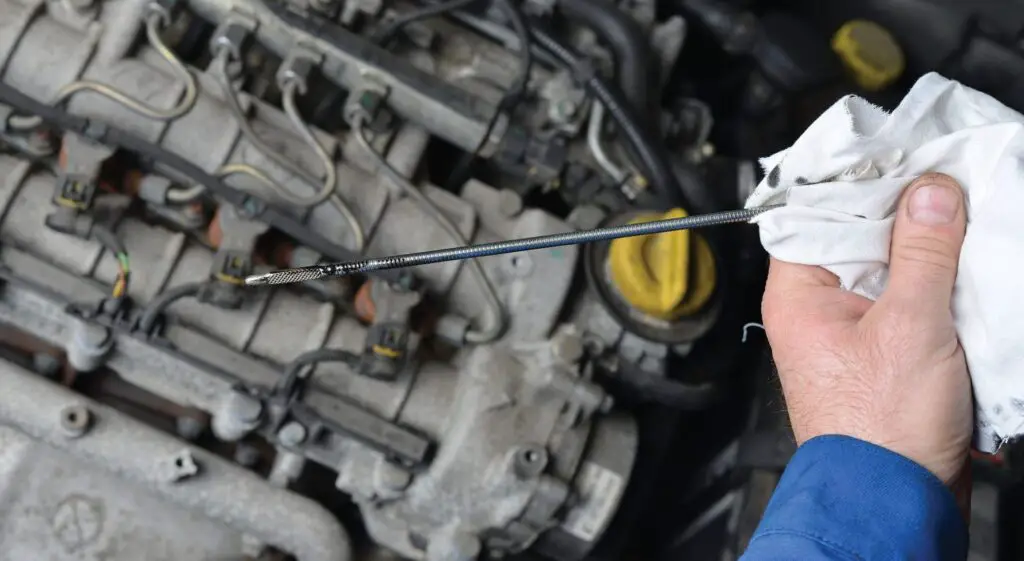
In any engine, the number of coolant passages is the same as the number of cylinder heads. The purpose of the oil passage is to transport the oil. When the oil moves between the cylinder head and the engine block, the head gasket seals these passages. A faulty head gasket can lead to excessive oil consumption. The common symptom is a whitish-bluish exhaust. After detecting any of these signs, you should look for a blown head gasket.
3. Oil Mixing with Coolant
Many people underestimate this problem, and it is one of the most common mistakes: a mix of coolant and oil means your car is in serious trouble. When the coolants mix, they significantly damage the properties of the oil. Gradually, the bearings and other engine parts are damaged.
Any sign of irregularities in the oil gauge means there is a serious gasket problem.
4. Exhaust Problems
A damaged head gasket can allow exhaust gases to leak into the cooling system, leading to the formation of air bubbles in the radiator or coolant overflow tank. This can also cause a noticeable exhaust smell or excessive pressure in the cooling system.
5. Loss of Compression
A failing head gasket can lead to a loss of compression between the cylinders. This can result in reduced engine performance, misfires, and poor fuel efficiency.
6. Overheating
When a head gasket fails, it can disrupt the engine’s cooling system, leading to overheating. This can be due to coolant leaks, restricted coolant flow, or combustion gases entering the cooling system.
Replacing the Blown Head Gasket with a New One
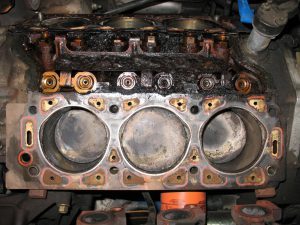
The installation process may vary depending on the specifications of the car you own. But in general, you need to follow the following process to replace a head gasket.
Tools and Materials
- A head gasket that matches your old one
- The vehicle owner’s manual
- A set of wrenches
- A pry bar
- An applicator and RTV
Disconnect the Battery
Make sure the engine is cold, then disconnect the negative battery cable to prevent accidental electrical shorts.
Drain the Coolant and Engine Oil
Locate the coolant and engine oil drain plugs and drain both fluids into appropriate containers. Follow the manufacturer’s guidelines for proper disposal.
Access the Head Gasket
Accessing the head gasket is the most difficult task in this process. To do this, you need to have a good knowledge of the engine and its components. The first thing to remember is that the location of the head gasket is in the deepest part of the engine chassis. This is where the owner’s manual will prove useful. Carefully go through the manual to know how to access the gasket. Special caution is needed when removing the components as they are fragile. Also, keep them in order so you don’t have trouble reattaching them later.
Remove the Necessary Components
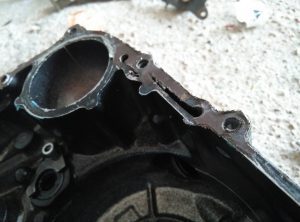
Start by removing the intake and exhaust manifolds, valve covers, the timing belt or chain (if applicable), and any auxiliary components that block access to the cylinder head.
Relieve Fuel System Pressure
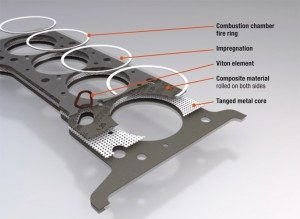
If your vehicle is equipped with a fuel injection system, relieve the fuel pressure by following the manufacturer’s instructions.
Remove the Old Gasket
First, use a wrench to loosen the bolts, then remove the head. Now take the pry bar to disassemble the faulty gasket. Carefully wipe the head underneath (location of the scrapped gasket). This way, the surfaces will be better suited for a new gasket.
Check the Cylinder Head and Replace the Gasket
A visual inspection is sufficient to detect any type of tear, damage, and wear. If everything looks good, carefully fit the new gasket to ensure the seal is tight. Make sure the new gasket and cylinder head are properly installed, without any gaps. Now, press firmly on the corners of the head. If an area remains unsealed, use the RTV to tighten it. When everything is done, carefully reassemble all components and try to start the engine, to see if the problem has been resolved.
Reassemble the Remaining Components
Reinstall all previously removed components, such as the timing belt or chain, valve covers, intake and exhaust manifolds, and any other parts removed during disassembly.
Reconnect the Battery
Reconnect the negative battery cable, start your engine, and check for leaks.