

An alternator plays a very important role in a vehicle’s electrical power system. A faulty alternator can cause many serious problems for your car in several ways. So to help you avoid these situations, here is a list of several symptoms of a bad alternator to know. Stay tuned!
What is the purpose of an alternator?
First, let’s learn some basics about the effect of an alternator on your car. Whenever you start your engine, the alternator works to charge the battery and power the car’s electrical systems. There is a wide range of electrical systems and devices in your car, beyond the MP3 player, stereo system, air conditioning, and lights. New cars are equipped with computers and sensors that all require electricity to function. From GPS systems to lights, the alternator powers all of these. If the alternator is faulty, many electrical devices in your car will stop working.
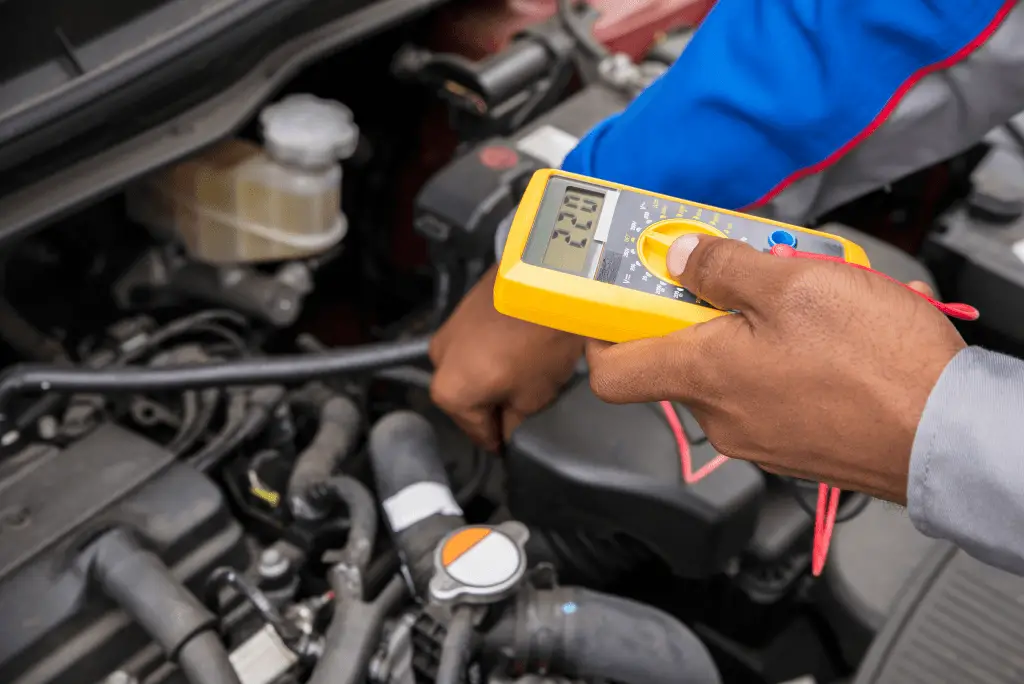
When this happens, it’s time for you to replace the alternator with a new one. The following symptoms will give you an idea of what’s wrong, check them now:
Symptoms of a Bad Alternator
1. Dimming Lights
Normally, a failing alternator causes flickering or dim lights. This is more obvious when you drive your car at night, but also noticeable in the dome light and dashboard lights. If the lights brighten as the RPM increases, it certainly means your alternator is faulty or dead.
2. Strange Noises
The next on the list of bad alternator symptoms concerns strange noises. After running long enough, the serpentine belt could have stretched and not effectively spin the alternator pulley, leading to a lack of charging. Generally, this leads to a strange sound. On the other hand, the internal bearings can also wear out, producing a grinding or growling noise.
3. Engine Stops Running
If your engine suddenly stops running while you’re on the road, it will surely be one of the bad alternator symptoms. Fuel injection requires an appropriate amount of electricity to function, without which the engine will stop running quickly.
4. Check Engine Light
One of the other signs of a faulty alternator appears on the service engine light. This sign varies by brand and model, but basically, when the alternator starts to fail, it may illuminate an “ALT,” a battery icon indicator, or a “Check Engine” light.
5. Electrical Problems
Of course, when the alternator is about to fail, many electrical devices such as MP3 players, the stereo system, power windows, or seats may take time to operate. If there isn’t enough power, the devices sometimes won’t work effectively or will suddenly stop working, like the MP3 player turning off by itself.
6. Dead Battery
Yes, a battery can also fail for other reasons. But a dead alternator is usually the cause of a dead battery because it provides no energy to recharge it. Car batteries don’t hold too much energy in the long term. They provide enough electrical power to start the starter and circulate energy to get the whole job spinning.
How to Diagnose a Failing Alternator?
Preparation:
- Code reader
- Safety glasses
- Multimeter
When your car shows some of the above symptoms, it’s time to diagnose the alternator. Here are some steps to look for:
1. If the “Check Engine” light comes on, connect a code reader to the diagnostic port. If it displays code P0562, it means your alternator is about to die. (Note: this code is different depending on the car’s make, model, and year). Have it checked before it dies.
2. If you think your car has a faulty alternator but there is no clear sign, open the hood and check the condition of the belt. If the belt is slightly burned and glazed, it means it’s slipping. When the belt is too loose, instead of rolling on the pulleys, the belt slips on them. The metal-rubber friction heats the belt and wears it out quickly. In this case, you just need to replace the serpentine belt or adjust the tensioner so the belt is perfect.
3. If everything looks good under the hood, it’s time to use your multimeter and perform the checking process below:
- Park the car on level ground and set the parking brake
- Wear safety glasses
- Set the meter to 15-20V DC and connect the wires to the battery – the negative wire to the negative terminal and the positive wire to the positive terminal of the battery. The number should be around 12.6 Volts.
- Then, start the engine and check the voltage again very carefully. If the alternator is in good condition and is charging the battery, the minimum figure is about 14.2 Volts. If the voltage is good, turn on the radio, heater, interior lights, and any other electrical devices. The meter should show a number above 13 volts. If the figure is below 13 volts, you will need to buy a new alternator for your vehicle.
Questions and Answers
1. Can a faulty alternator damage a battery?
A faulty alternator will lead to a dead (discharged) battery, preventing the car from starting or running. As we know, the alternator is responsible for charging the battery while the engine is running. If the alternator is faulty and fails to charge the battery properly, the battery’s energy reserve will gradually deplete. Over time, the battery will weaken and eventually die.
A faulty car alternator will affect the charging process and the battery’s operation. At the same time, the car’s electrical equipment also operates abnormally and cannot function at its maximum capacity.
2. How long will alternators last?
Car manufacturers recommend replacing the alternator when it has reached 4 to 8 years of operation or traveled more than 150,000 km or 60,000 miles in some special cases. In some special cases, these times or miles may be earlier to avoid excessive depreciation on this part. Several factors can affect its lifespan, including the number of electrical devices the car has, the quality of the part, and the conditions under which the car is driven.
3. What causes a faulty alternator?
Faulty diodes are the common cause of alternator failure. The diodes are part of the rectifier assembly converting the AC output of the alternator to DC. The charging output of the alternator passes through 6 diodes in the rectifier assembly before going to the electrical system and the battery. Therefore, the higher the charging load, the more they heat up. Depending on each alternator failure situation, there will be different repair methods. In most cases, when a part is damaged, you just need to replace it in the alternator. However, if the damage is irreparable, it’s better to replace the car generator with a new one.
Conclusion
So now you know how to tell if the alternator is faulty and how to fix this problem. For other maintenance tips, keep following to be updated daily.