
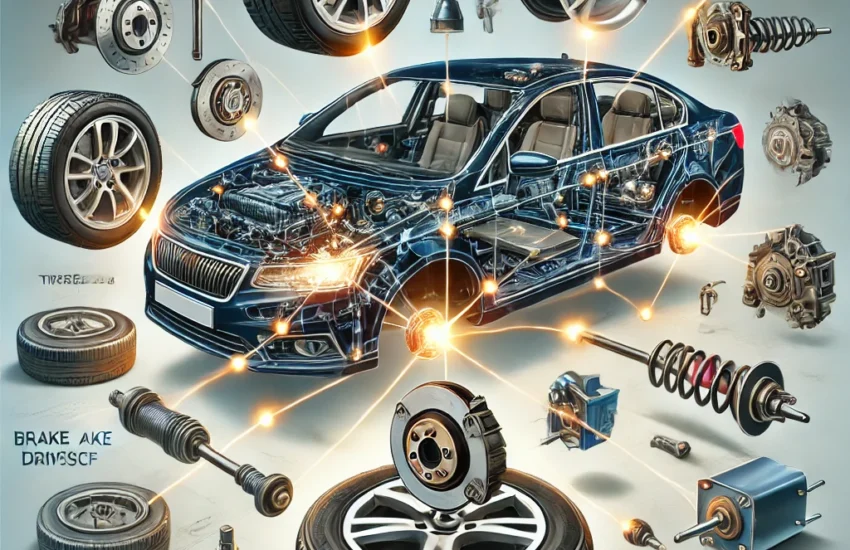
Experiencing unusual vibrations while driving can be frustrating and concerning. These vibrations can come from various vehicle components and indicate a problem requiring immediate attention. Here are the most common causes and tips to resolve them.
1. Tire Problems
- Possible Causes:
- Unbalanced Tires: Poor tire balancing leads to vibrations, especially at certain speeds.
- Worn or Deformed Tires: Uneven wear or a bulge on a tire can cause shaking.
- Uneven Pressure: Under-inflated or over-inflated tires can unbalance the car.
- Solution:
- Have your wheels balanced regularly.
- Check the condition and pressure of the tires. Replace them if necessary.
2. Wheel-Related Issues
- Possible Causes:
- Damaged Rims: A bent or cracked rim can cause vibrations.
- Poor Alignment: Improper wheel alignment affects stability and creates vibrations.
- Solution:
- Have damaged rims repaired or replaced.
- Perform a wheel alignment adjustment.
3. Braking Problems
- Possible Causes:
- Warped Brake Discs: When discs are deformed, they create vibrations during braking.
- Worn or Improperly Fixed Brake Pads: This can cause shaking at the brake pedal.
- Solution:
- Replace or resurface warped brake discs.
- Check the condition of the brake pads and replace them if necessary.
4. Faulty Driveshaft or CV Joints
- Possible Causes:
- Unbalanced Driveshaft: Causes vibrations, especially at high speeds.
- Worn or Damaged CV Joints: Vibrations felt during turns or acceleration.
- Solution:
- Have the driveshaft inspected and replace the CV joints if necessary.
5. Engine Issues
- Possible Causes:
- Worn Engine Mounts: Engine vibrations are no longer absorbed, transmitting them to the chassis.
- Ignition or Injection Problems: Engine misfires can cause shaking.
- Solution:
- Replace damaged engine mounts.
- Diagnose and repair ignition or injection issues.
6. Faulty Flywheel
- Possible Causes:
- Worn Flywheel: Can cause vibrations, especially at idle or during gear shifts.
- Solution:
- Have the flywheel inspected and replaced if necessary.
7. Suspension Problems
- Possible Causes:
- Worn Shock Absorbers: They no longer absorb road irregularities.
- Faulty Bushings: Cause vibrations throughout the chassis.
- Solution:
- Replace worn shock absorbers or faulty bushings.
8. Faulty Wheel Bearings
- Possible Causes:
- Worn bearings produce a dull noise accompanied by vibrations, especially at high speeds.
- Solution:
- Replace damaged bearings.
9. Failing Automatic or Manual Transmission
- Possible Causes:
- Clutch Problems: A worn or misaligned clutch disc can cause vibrations.
- Poorly Maintained Transmission: Vibrations may occur during gear changes.
- Solution:
- Have the clutch inspected and replaced if necessary.
- Perform regular transmission maintenance.
10. Engine Imbalance or Misalignment
- Possible Causes:
- Poor balancing of engine components or faulty accessories (pump, alternator, etc.).
- Solution:
- Perform a complete engine diagnostic and replace faulty components.
Conclusion
Car vibrations should never be ignored, as they can indicate serious problems that may damage other components. By conducting regular inspections and performing necessary repairs promptly, you can ensure a more comfortable and safer drive.