
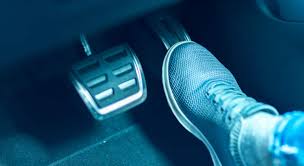
When your car doesn’t respond to acceleration, it could be due to mechanical, electrical, or fuel-related issues. Here are the main causes:
1. Faulty Clutch (Manual Cars)
- Symptoms: Engine RPM increasing without acceleration, burning smell, soft clutch pedal.
- Causes: Worn clutch disc, clutch fluid leak, master cylinder issue.
- Solution: Replace the clutch or repair the hydraulic system.
2. ECU Failure (Engine Control Unit)
- Symptoms: Check engine light on, gradual power loss, misfires.
- Causes: Faulty sensors (e.g., throttle position sensor), software error.
- Solution: Diagnose with an OBD2 tool, replace sensors, or reprogram the ECU.
3. Clogged Fuel Filter
- Symptoms: Engine coughing, jerky acceleration, hard starting.
- Causes: Contaminated fuel, irregular maintenance.
- Solution: Replace the fuel filter (cost: €20 to €100).
4. Misaligned or Worn Timing Belt
- Symptoms: Clicking noises, power loss, stalling.
- Causes: Incorrect installation, high mileage.
- Solution: Replace the belt and check alignment (cost: €300 to €800).
5. Air Intake System Leaks
- Symptoms: Whistling sounds, unstable idle, high fuel consumption.
- Causes: Cracked hoses, faulty seals.
- Solution: Inspect and replace damaged hoses or seals.
Other Possible Causes
- Failing Fuel Pump: The engine doesn’t receive enough fuel.
- Faulty MAF or TPS Sensor: Incorrect reading of air or throttle position.
- Transmission Problems: Slipping (automatic cars), low transmission fluid.
- Stuck Handbrake: Excessive brake pad friction (rare but possible).
Temporary Solutions and Prevention
- Check Fuel Level and Quality: Avoid low-quality fuels.
- Clean the Air Filter: A dirty filter restricts air intake.
- Use a Fuel Additive: Cleans injectors and improves combustion.
- Reset the ECU: Disconnect the battery for 10 minutes to clear temporary errors.
FAQ
1. Why Doesn’t the Car Accelerate Despite High Engine RPM?
- Causes: Slipping transmission, faulty torque converter, worn clutch.
- Action: Check transmission fluid or consult a mechanic.
2. The Car Won’t Exceed 40 km/h: Why?
- Causes: Limp mode activated (due to ECU error), clogged fuel filter, faulty oxygen sensor.
- Solution: Use an OBD2 scanner to identify the error code.
3. The Car Accelerates in Jerks: What to Do?
- Causes: Worn spark plugs or ignition coils, clogged injectors.
- Action: Replace spark plugs and clean injectors.
Average Repair Costs
| Problem | Cost (parts + labor) |
|---|---|
| Clutch replacement | €400 to €1,200 |
| Timing belt change | €300 to €800 |
| Transmission fluid refill | €50 to €150 |
| Injector cleaning | €80 to €200 |
Q1: What to Do Immediately If My Car Stops Accelerating While Driving?
A:
- Stay Calm: Turn on hazard lights and pull over to a safe spot.
- Check Warning Lights: If the check engine light is on, use an OBD2 scanner to read error codes.
- Check Basics: Fuel level, tire pressure, handbrake disengaged.
- Call a Tow Truck if the problem persists.
Q2: Why Doesn’t My Car Accelerate Uphill?
A:
This could be due to:
- Lack of Power: Clogged air filter, weak fuel pump.
- Engine Overheating: Check coolant level.
- Turbo Issue (if applicable): Air leak or turbocharger failure.
- Temporary Solution: Shift to a lower gear (manual) or avoid high RPMs (automatic).
Q3: The Car Doesn’t Accelerate After Refueling: Is It Fuel-Related?
A:
Yes, several possible causes:
- Poor Fuel Quality: Drain the tank if the car coughs or stalls.
- Saturated Fuel Filter: Replace it after contaminated fuel.
- Faulty Fuel Pressure Sensor: Diagnose with an OBD2 tool.
Q4: How Much Does It Cost to Repair an Acceleration Problem?
A:
Costs vary depending on the cause:
- Fuel Filter: €20 to €100.
- Faulty Sensor (e.g., TPS): €80 to €300.
- Clutch: €400 to €1,200.
- ECU Reprogramming: €150 to €600.
Q5: Is It Dangerous to Drive a Car That Doesn’t Accelerate?
A:
Yes, it can lead to:
- Accident Risk: Inability to maintain speed or overtake.
- Engine Damage: Overheating or component deterioration.
- Damaged Transmission: Prolonged slipping in limp mode.
Solution: Have the vehicle towed to a garage.
These Q&As complement the existing FAQ by covering concrete scenarios and emergency advice, enhancing the article’s practical usefulness.
Conclusion
A car that doesn’t accelerate is a serious issue that can endanger your safety. Act quickly:
- Diagnose with an OBD2 tool.
- Maintain Regularly: Oil changes, filters, belts.
- Consult a Professional for complex repairs (ECU, transmission).
⚠️ Never ignore a lit check engine light: It can prevent costly breakdowns or accidents.