

A spare car alarm can give you what you need to make your car safe again.
You’re standing in your living room looking at your brand new car. A warm feeling runs through you and it’s not coming from the central heating. It’s both a machine and a work of art, you think as you turn away and head to bed. This blend of Daimler and Dali is just as appealing to others and there would be nothing worse than coming down the next morning to see just an empty driveway staring back at you. While all cars, whether cheap or high-end, come with a door-locking anti-theft system, these can be easily broken. Even if your car already has a manufacturer-installed car alarm system, an additional car alarm will help provide extra protection for your vehicle and ensure you get that warm feeling every time you look at it (Okay, okay… maybe you just want to get to work in the morning). In addition to dealing with the best car alarms you can add to your car, we’ve also covered common problems for built-in and spare car alarms.
CAR ALARM TYPES AND FEATURES
There are different types of car alarms that your car might already be equipped with or that you might consider installing. In addition to the different ways of activating the car alarm, it can operate in a different way, have different ways of indicating that it is active, and there is a whole range of different capabilities for some alarms.
AUDIBLE ALARMS
The simplest car alarms are audible car alarms. They work using sensors placed in different locations on your vehicle. If something disturbs the sensors, they activate and a hidden alarm in the car goes off. You can adjust the sensitivity levels of the sensors so they detect the slightest movement or they can be reduced to ensure it doesn’t go off at the touch of a feather. While some systems flash the car’s lights and more advanced systems can alert users remotely when the alarm is triggered, almost all systems will operate in conjunction with audible alarms.
ACTIVE OR PASSIVE SYSTEMS
A car alarm can also be active or passive. This refers to how the alarm is activated.
A passive system arms itself automatically once the ignition is turned off and the last door is closed. Active alarms require the user to press a button on the transmitter to arm and disarm their system.
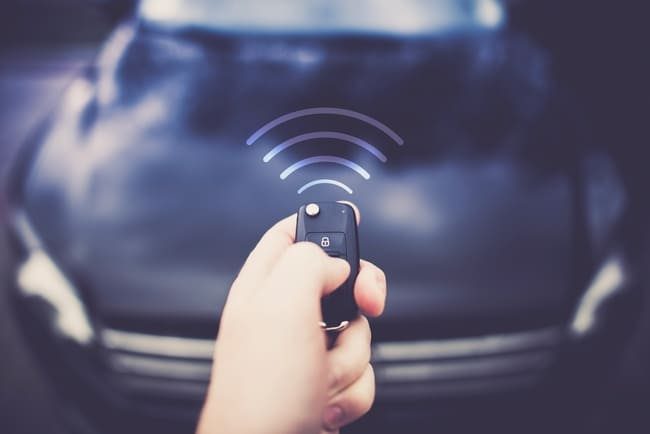
Most alarms can be set up as passive or active and it’s a matter of preference here. It may be interesting to know, however, that you can probably get a discount on your insurance if you use passive alarm systems.
TWO-WAY REMOTE SYSTEMS
A more advanced car alarm system is a two-way remote car alarm. These systems provide two-way communication between the alarm and the key fob on a driver’s keychain. Some more technologically advanced systems will even have small LCD screens on the key fob. Basic and older systems simply trigger an audible alarm and flash the vehicle’s lights to deter potential car thieves (or scare off cats that accidentally set off the alarm). However, two-way remote alarms can communicate their status to the owner sometimes up to a kilometer away. This communication is also not limited to a simple report that the alarm has been triggered. It can include notifying the owner if someone breaks into the car or even if the alarm goes off for any reason. Your system may have a remote start function for the car alarm, which allows you to use the remote control to start the car remotely.
AFTERMARKET CAR ALARMS
There are a few points to keep in mind when buying a spare alarm. The first thing to consider is installation, as this can sometimes be a challenge. There will be a lot of wires and ideally, you need to be familiar with your car’s electrical system. You can of course leave it to a professional to do it. Some aftermarket systems, however, make installation extremely easy. Some alarms can easily be installed on the car roof with glue and others have solar cells, which absorb sunlight and reduce the need to connect the alarm to the car’s electronics.
The range of the alarm is something that could be a deciding factor. Some alarms claim to have a range of one mile, but you are unlikely to ever need to lock the car from that distance. It’s better to think about the strength of the alarm rather than the range. This way, you can be certain that even from a distance, you can secure your car by simply pressing a button.
A car alarm with motion sensors is now a common feature of most new cars. The quality of these motion or shock sensors in your alarm system determines the sensitivity of the system and what triggers it. As mentioned above, this can often be adjusted, but checking how sensitive it can be is a great idea before buying. We recommend using a system with responsive shock sensors capable of triggering the alarm when your car is hit by a significant impact or when someone smashes the car window. As for the power of the alarm, anything over 100 decibels will truly terrify any potential crooks.
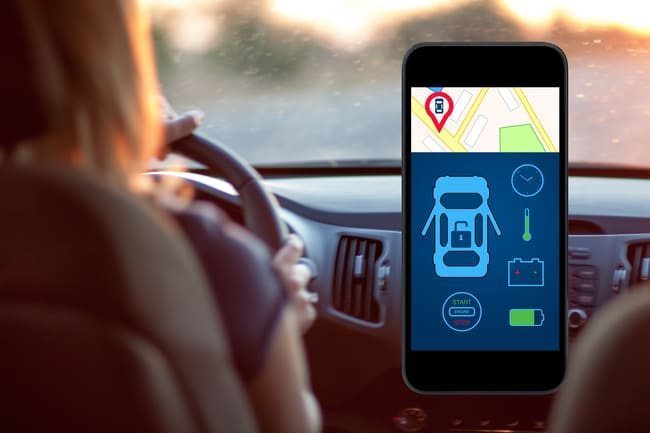
As technology has progressed in recent years, car alarms have kept up well. There is a wide variety of alarm systems accessible and monitored via your smartphone. This adds a level of convenience that allows you to effortlessly control your car and use your phone as an additional remote control. Some units are equipped with features that send you email or SMS alerts in case of a security breach. A smartphone app also comes with a GPS tracking feature that can be extremely useful if your car is stolen. Whether it’s an aftermarket system or a built-in add-on module, however, it will be much more expensive than the standard bog system.
Smartcar alarm manufacturers understand that we live in an advanced digital age and there are bound to be tech-savvy thieves waiting for us.
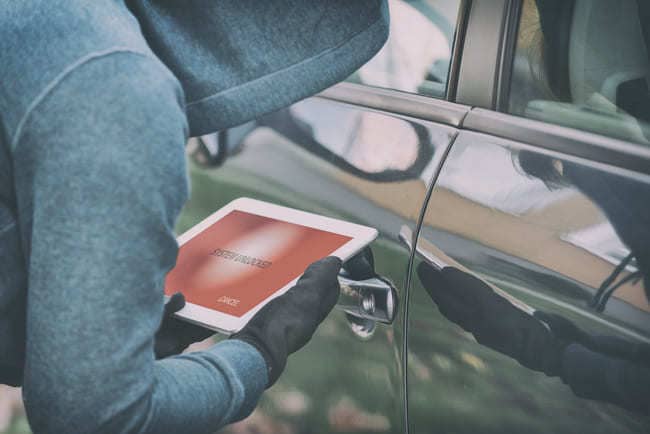
That’s why many offer a system with encrypted transmission. Encrypted transmission simply means that the signals your remote sends to your alarm system can only be decoded by the system and no other device. In most cases, cybercriminals will attempt to intercept the signals sent between your remote and your car alarm system to gain access to your car (no more crowbars needed!). With encrypted transmission, however, the alarm system will be able to recognize what an authentic remote signal is and what a hacker’s signal is, and then block them accordingly.
COMMON CAR ALARM PROBLEMS
There are many common car alarm problems that can drive you up the wall. From your car alarm going off randomly at night to when your car alarm goes off when unlocking it with your key and making the entire supermarket parking lot stare, they can be really annoying. They can even pose a real safety threat if you find yourself with a car alarm that goes off while driving! Here are some of the causes of the most common problems and a few temporary fixes.
Remember: as with any electrical component on your vehicle, if it’s a serious issue, it’s always better to leave it to an expert.
YOUR CAR ALARM GOES OFF RANDOMLY
This could be caused by a wide variety of faults in the internal circuit of the alarm console. By random, we mean the alarm goes off even when there’s nothing around. Normally, you can stop the alarm by simply turning on the ignition or sometimes even by unlocking the car.
If that doesn’t work, you can also try turning off the alarm button, located under your steering wheel. However, if that doesn’t solve the problem, you may need to remove the alarm fuse. You’ll need to locate the fuse box, usually located under the steering wheel on pre-installed systems or under the hood in aftermarket systems. Your car manual or kit will give you the exact location of the fuse box. Remove the fuse using tweezers to disable the alarm. If that doesn’t work, your last resort should be to disconnect the negative terminal of the car battery to disable it. This is the last option because it of course means you cannot start the car when the negative terminal is disconnected. If it keeps happening, take it to a garage to have it checked.
ALARM CANNOT BE ACTIVATED AND DEACTIVATED
Sometimes it’s not the alarm itself that is faulty, but the remote control. If the battery inside a car alarm remote starts to run out, it can mean you cannot activate (or more embarrassingly deactivate!) your car alarm.
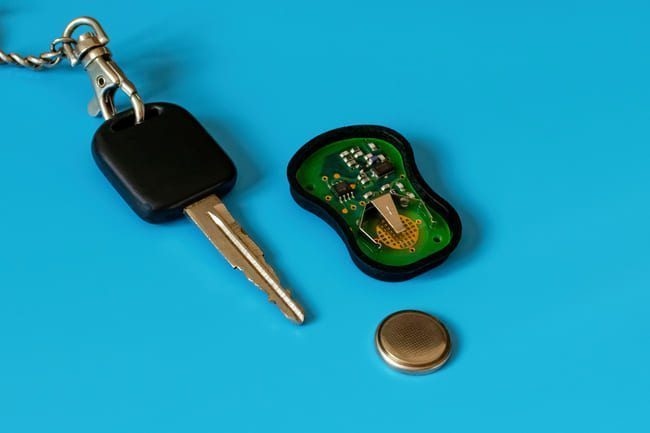
If you find that you cannot activate or deactivate the alarm using the remote, start by replacing the battery and see if that makes a difference. If not, there could be more of a problem with the sensor that connects the two. This will likely require more professional help and you should have it checked at a garage.
CAR ALARM BATTERY PROBLEMS
A car battery can cause all sorts of problems with your car alarm, mainly the fact that your car alarm will go off randomly. In addition to the internal circuit causing problems, if your car alarm goes off in the middle of the night, an old battery is often the issue. Car alarms are actually designed to go off if the battery is too low to alert you to the fact that it is dying. It may not be an accident if the alarm goes off, but as a warning sign that something is wrong with your battery. This will likely happen after about 5 years of using the battery.
The alarm going off randomly when you’re not using the car can also indicate that the battery is dying or that the connections have corroded. This would mean they are sending inconsistent power signals throughout the vehicle.
A corroded or faulty battery can also cause you problems, even if it is fully charged. It can still send the wrong signals to the car alarm. Rusty and worn terminals essentially send the same signals as a dying or discharged battery to the car’s systems. This doesn’t just mean the car alarm might malfunction, but all the electrical systems in your car. The car alarm going off could be a sign that something more serious is going on under your car’s hood.