
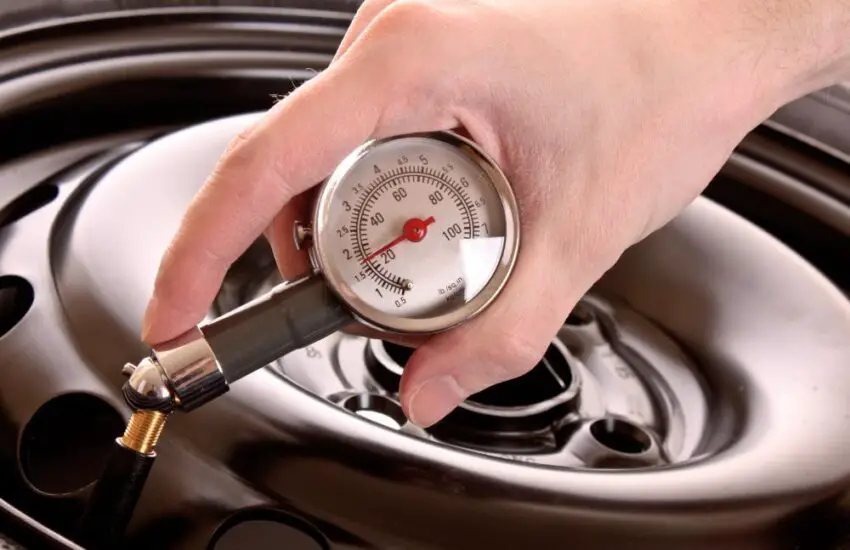
When maintaining a car, calibrating a tire pressure gauge is very important. An incorrect reading can lead to technical problems like a blown-out tire. And when you’re driving at high speed, a blown-out tire can be disastrous.
So, make sure the air pressure in your tires is at the correct level. Calibrating a tire pressure gauge takes a little time.
Required Materials:
- Plenty of water
- 25-meter long hose
- A building 25 meters or taller
- A marker
- Someone to help
- A tire pressure gauge
- 25-meter measuring tape
Step 1 – Mark the Hose
Unroll and straighten the measuring tape for at least 25 meters and place it next to the hose. Then use the marker to mark points indicating each meter and, more specifically, the 25-meter, 20-meter, and 10-meter points.
Step 2 – Go to the Top of the Building
Now, standing at the top of the building, unroll the hose. Try to keep the hose as straight and kink-free as possible. Then connect the end of the hose to the tire pressure gauge on the ground.
Step 3 – Check the Calibration
Gradually fill the hose until it reaches the 1-meter point. The appropriate reading should be 1.4223 PSI.
If the gauge reading seems accurate, continue filling. Each meter of water will increase the PSI by 1.4223. To reduce hassle, you can follow the chart below:
- 10 m – 14.2 PSI
- 20 m – 28.4 PSI
- 25 m – 35.5 PSI
Step 4 – Recalibrate the Gauge
Even after reaching the first meter mark, if you find the value displayed on the gauge is far from reaching 1.4223 PSI, recalibrate and start again from step 2. And if it seems impossible to recalibrate, the tire pressure gauge must be faulty. Replace it.
Step 5 – Shorter Hose
If you use a shorter hose, then it’s possible to do the job without too much water, without tall buildings, and without other people.
The only drawback is that it will significantly reduce accuracy: a 3-meter gauge cannot maintain sufficient accuracy, like the 25-meter one.
Unless you don’t have all the resources needed to calibrate the gauge, don’t use the shortest hose.
Step 6 – Gas Station Gauges
Many people simply rely on gas station gauges, but they are not reliable, as the reading varies. The other option available to you is digital tire pressure gauges.
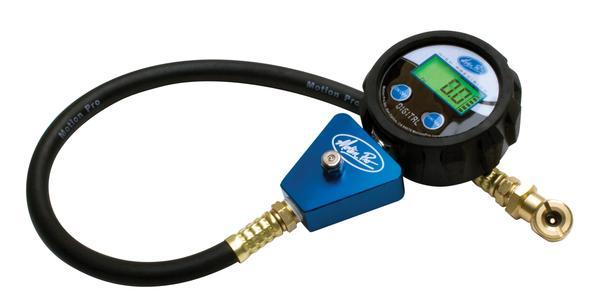
But some of them are accurate, and others are not. Do all the relevant homework online or offline before proceeding to purchase a digital gauge. Finally, you can have the gauge calibrated by a professional for a fee.
FAQ on Calibrating a Tire Pressure Gauge
- What is the cost of professional calibration of a tire pressure gauge?
The cost of professional calibration can vary depending on your location and the service provider. It can range from $10 to $50 or more, but it’s advisable to get quotes from local calibration centers.
- Are there DIY methods to check the accuracy of a tire pressure gauge at home?
You can perform a basic accuracy check of your gauge using a known reference pressure, such as a recently calibrated gauge or a high-quality tire pressure gauge. Compare the readings to identify any discrepancies.
- Can I calibrate a tire pressure gauge myself if I have technical knowledge and equipment?
If you have the necessary technical knowledge and calibration equipment, you can attempt to calibrate some digital gauges. However, for accurate results, professional calibration is recommended.
- How do I know if my tire pressure gauge has been successfully calibrated?
Calibration is successful when your gauge consistently provides accurate measurements matching a known reference pressure. Perform multiple tests to ensure consistency.
- Is there a specific calibration interval recommended for tire pressure gauges?
While there is no fixed interval, it’s wise to calibrate your gauge whenever you suspect inaccuracies or at least every few months to maintain reliable readings.
- Can I use a tire pressure gauge immediately after calibration or is there a waiting period?
In most cases, you can use the gauge immediately after calibration. However, it’s recommended to confirm its accuracy using a few test measurements before relying on it.
- Can I calibrate a tire pressure gauge for different pressure ranges, such as high or low pressure readings?
Some calibration tools are designed for specific pressure ranges. Ensure the calibration tool you choose is compatible with the range you need for your gauge.
- Can I use a tire pressure gauge without calibration and still get reasonably accurate readings?
While a gauge may provide reasonably accurate readings without calibration, it’s best to calibrate it periodically to maintain accuracy and ensure consistent performance.
Conclusion
In short, calibrating a tire pressure gauge is a simple but essential maintenance task that should not be overlooked.
Ensuring the accuracy of your gauge is paramount for maintaining proper tire inflation, which, in turn, contributes to vehicle safety, fuel efficiency, tire longevity, and overall performance.