
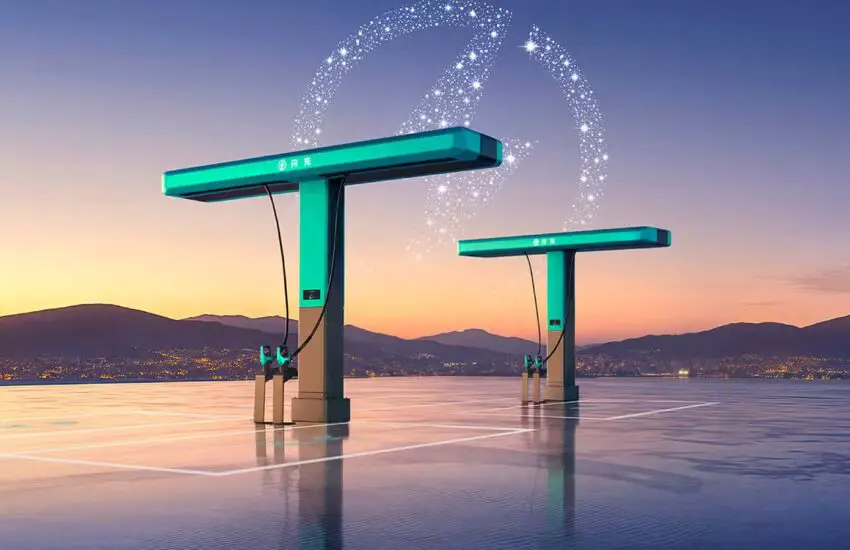
The Next Frontier in EV Charging Speed
BYD, a global leader in electric mobility, has unveiled a groundbreaking advancement that promises to eliminate one of the last major barriers to EV adoption: charging time. The company’s new Flash Charging technology, operating at a staggering 1500 kW, is poised to make refueling an electric car as quick and convenient as stopping for gas.
From Concept to Near Reality
This announcement builds upon BYD’s previous demonstration of megawatt-level charging capabilities. Moving beyond the 1000 kW (1 MW) benchmark, the 1500 kW Flash Charging system represents a significant leap in power delivery. This immense power output is designed to replenish a vehicle’s battery from a low state of charge to a substantial range in a matter of minutes, effectively turning hours of waiting into a brief pause.
Engineering the Ultra-Fast Future
Such extreme charging speeds necessitate breakthroughs in multiple areas. The technology relies on advanced battery chemistry and thermal management systems within the vehicle to safely accept such a high-power influx without degrading battery health or causing overheating. Concurrently, the charging infrastructure itself must be capable of delivering this power consistently and reliably, requiring robust grid connections and cooling solutions for the charging cables and terminals.
Implications for the EV Landscape
The successful deployment of 1500 kW Flash Charging would fundamentally reshape the electric vehicle experience. It would make long-distance travel in an EV far more practical, reducing stop times to match traditional refueling. Furthermore, it could alleviate pressure on public charging networks by drastically increasing station throughput. For commercial fleets, such as taxis or delivery vehicles, this technology could enable near-continuous operation with minimal downtime.
While widespread availability will depend on infrastructure rollout and vehicle compatibility, BYD’s Flash Charging sets a new performance target for the entire industry, accelerating the transition to a fully electric future.