


Brake pads are important components of the braking system, on which the safety of all road users depends. Therefore, their selection requires a responsible approach. We will tell you what to look for when purchasing.
TYPES OF BRAKE PADS
Brake pads consist of a backing plate and a friction lining, for the production of which more than ten components can be used.
The composition of semi-metallic brake pads includes at least 65% metal. The remaining 35% is a mixture of graphite and inorganic materials. The advantage of this type of pad is the ability to effectively dissipate heat, the disadvantage is their excessive hardness, which leads to premature wear of the brake disc.
Low steel brake pads are made from organic materials with the addition of metal (no more than 30%). They have good thermal conductivity and ensure more effective braking. They cost almost twice as much as semi-metallic pads.
Kevlar, glass, and carbon are the base materials for the production of organic brake pads. The composition of these components includes no more than 15% metal. They are soft and quiet in operation but are more prone to wear than other types of pads, so they are not suitable for fans of aggressive driving.
The composition of ceramic brake pads includes ceramic fibers, synthetic rubber, and non-ferrous metals. Such pads provide a constant friction coefficient and are less abrasive. They are the best choice for sporty driving styles. They are more expensive than other types of brake pads.
CATEGORIES OF BRAKE PADS
All pads can belong to two categories:
- original;
- analogues.
The advantages of original brake pads are obvious, but they cost twice as much as analogues. They are sold in their original packaging, manufactured by a trusted manufacturer.
High-quality analogues are only slightly inferior to original spare parts in their characteristics. These pads are cheaper while offering quite sufficient braking performance. However, there are analogues made from lower quality materials. Usually, these pads are not properly tested and do not meet generally accepted standards. It is important to avoid a mistake when choosing parts: a price that is too low should alert you.
THE MAIN PARAMETERS OF BRAKE PADS
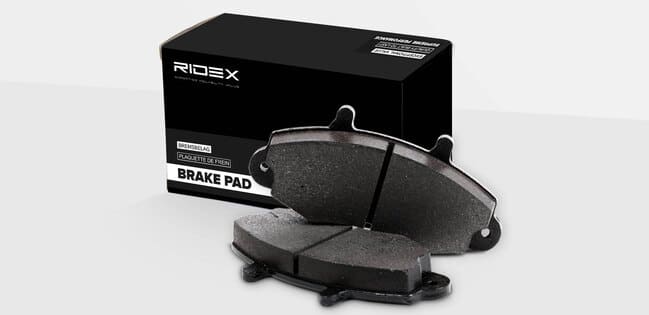
1. Operating temperature. Brake pads resistant to a temperature of 300-350°C should be sufficient for city driving and moderately fast driving. Sports cars are equipped with brake pads that operate at a temperature of 900°C, but they ensure effective braking only when heated above 100°C.
2. The friction coefficient. Pads with a friction coefficient of 0.25 to 0.35 are sufficient to stop the vehicle during moderate driving. These are the values that non-original components usually have. The friction coefficient of original brake pads is slightly higher, about 0.3-0.5. Sports brake pads at an operating temperature of 150°C have a low friction coefficient – 0.2. When heated, it can increase up to 0.5.
3. Service life. The wear resistance of the part depends on the material it is made of. A soft friction lining wears out faster, but a too hard lining leads to premature abrasion of the brake disc.
TIPS FOR CHOOSING BRAKE PADS
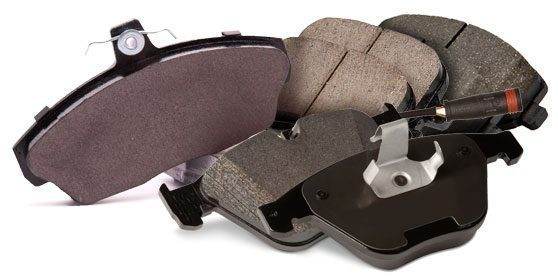
HOW TO DISTINGUISH AN ORIGINAL PART FROM A FAKE
1. Pay attention to the presence of the certification mark. If you do not see R90 or 90R written on the label, it is a fake.
2. The package must contain a product passport, a warranty certificate, a quality certificate, and an installation guide.
3. The surface of the original brake pads must be smooth and even.
4. Check the unique part code number on the manufacturer’s website.
THE BEST MANUFACTURERS OF BRAKE PADS
The main manufacturers of brake pads are:
- Brembo;
- Ferodo;
- Bosch;
- ATE;
- TRW;
- STARK;
- Textar;
- Lucas;
- Jurid;
- Remsa;
- PAGID.
The products of these companies vary in terms of price and operating characteristics. Brembo and Ferodo companies produce brake pads for sports cars. Parts from the ATE company are also capable of withstanding operating temperatures up to 800°C.
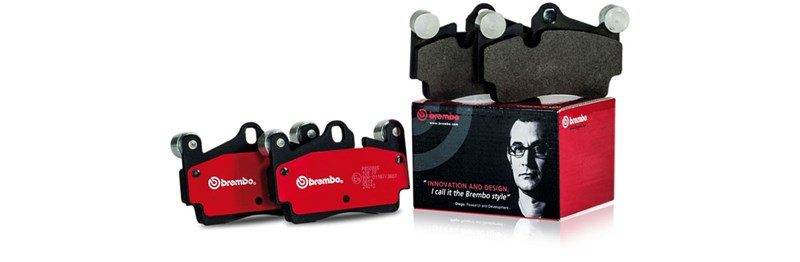
TRW, Lucas, Bosch, Remsa, and STARK brake pads are more suitable for daily city driving. They have slightly lower parameters but are significantly cheaper. The PAGID company manufactures products for luxury cars.
The American company Jurid produces pads that are used as original parts by car manufacturers but can also be supplied as analogues for vehicles of other brands. The products of this company are also known under the brands BendixR, FRAMR, and PrestoneR.
Note: when choosing brake pads, it is important to consider not only the popularity of a brand but also specific characteristics such as your driving style and the vehicle’s operating conditions. Only by taking all these details into account will you be able to choose components that ensure long and reliable operation of your car.