

Do you feel your brake pedal pulsating and vibrating when slowing down? Don’t panic, but don’t ignore it either. The unsettling sensation known as brake shudder likely stems from various causes requiring repairs, but not from imminent brake failure.
However, identifying the root cause is essential to restoring smooth and safe braking. Continue reading to discover the causes of brake shudder, how to fix it, and whether your driving habits allow brake shudder to develop.
What is Brake Shudder?
Brake shudder is perhaps best described as a shaking sensation felt through the steering wheel and front suspension of a vehicle whenever the brake pedal is pressed. In many cases, it feels as if these vibrations occur at different frequencies during slow-speed braking, as opposed to high-speed braking.
The way brake shudder is felt largely depends on the root cause of the condition itself. This comes from the fact that not all brake shudders are caused by the same underlying problem. Even though many would be inclined to believe that any brake shudder is directly related to the condition of a vehicle’s basic brakes, this is not always the case.
Understanding the above principle also helps when attempting to correct brake shudder as a whole. Since not all cases of brake shudder are identical, there is no one-size-fits-all approach to solving this problem. A thorough diagnosis of the current condition is the only real way to avoid unnecessarily replacing otherwise fully repairable components.
Common Causes of Brake Shudder
Brake shudder can be caused by a number of underlying issues, some of which are much harder to isolate than others. Those familiar with the different causes of brake shudder are often able to speed up their repair.
Here are some of the most common reasons why you experience brake shudder.
#1 – Warped Brake Rotors and/or Worn Brake Pads

Most often, brake shudder can be attributed to a combination of worn brake pads and warped brake rotors.
When a vehicle’s rotors and pads warp, an otherwise smooth friction surface is compromised. These irregularities then result in a persistent vibration or shudder when the brakes of the vehicle in question are applied.
#2 – Tire Imbalance
To minimize vibrations and maintain optimal performance, a vehicle’s wheels/tires must be balanced at specified intervals.
When wheels/tires are out of balance, a noticeable vibration can usually be felt at a defined speed. This can be felt in the same way a person would perceive brake shudder when the vehicle’s speed drops to a certain threshold during braking.
#3 – Sticking Brake Calipers
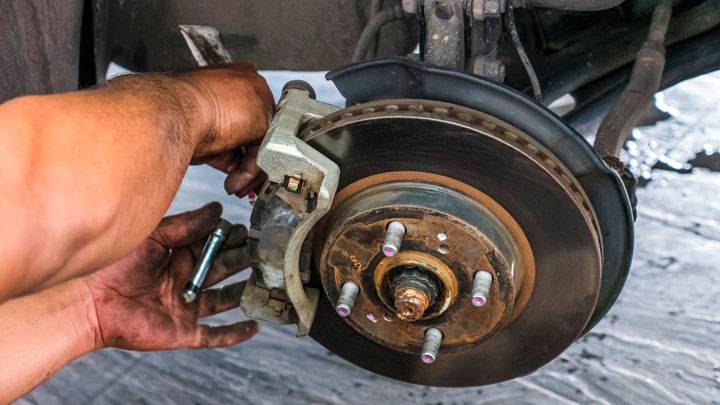
A vehicle’s brake calipers age and deteriorate over time, often leading to a condition known as “sticking.” When a brake caliper sticks, it becomes unable to release in response to the release of a vehicle’s brake pedal.
A seized brake caliper leads to uneven distribution of braking forces, often resulting in a perceptible shudder.
#4 – Poor Alignment
In a number of cases, brake shudder can be caused by irregular tire wear resulting from poor alignment. When the front of a vehicle is out of alignment, it often results in beveled or chopped tread.
The vibration resulting from this irregular wear is usually felt more intensely at a defined speed. This vibration manifests as brake shudder when braking reduces the vehicle’s speed into that specified range.
How to Fix Brake Shudder
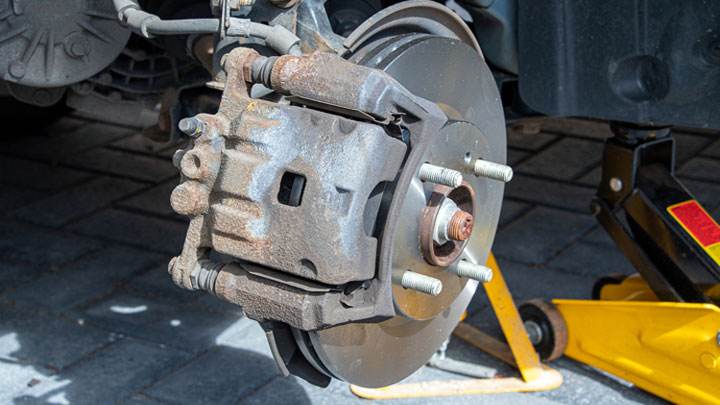
Fixing brake shudder comes down to diagnosing the underlying condition causing the persistent vibration as a whole. In most cases, remedying the current situation will involve replacing a vehicle’s brake pads and rotors. This is especially true when brake shudder occurs at any speed.
If, after new pads and rotors, the brake shudder persists, attention will turn to tire/wheel imbalance, worn steering/suspension components, and/or poor alignment. At this point, a thorough inspection of all front-end components will be necessary.
This should be followed by an alignment of the front end of the vehicle in question and a four-wheel balance. Once these items are completed, a thorough road test should confirm the elimination of the previously persistent shudder.
Is Brake Shudder Dangerous to Drive With?
In itself, brake shudder is not too dangerous. However, this situation will only worsen over time, which could harm overall braking efficiency.
Therefore, you should not delay in resolving the issue in question, especially if you cannot be sure of the exact cause of the brake shudder you are experiencing.
In all cases, the root cause of your vehicle’s brake shudder should be carefully diagnosed and repaired as soon as possible. This will avoid any excessive risk and mitigate the risk of further deterioration of the foundation brakes.
If DIY repairs are not your forte, have a trusted mechanic or service center address the issue as soon as possible.
Can an Alignment Help?
Getting an alignment can indeed help with brake shudder as a whole, assuming, of course, that your vehicle’s brake shudder is primarily caused by poor alignment.
This is the case when irregular tire wear, caused by poor alignment, leads to a noticeable shudder when a vehicle reaches a certain speed. In such cases, an alignment followed by tire rotation is likely to eliminate the underlying shudder.
Can Bad Driving Habits Cause Brake Shudder?
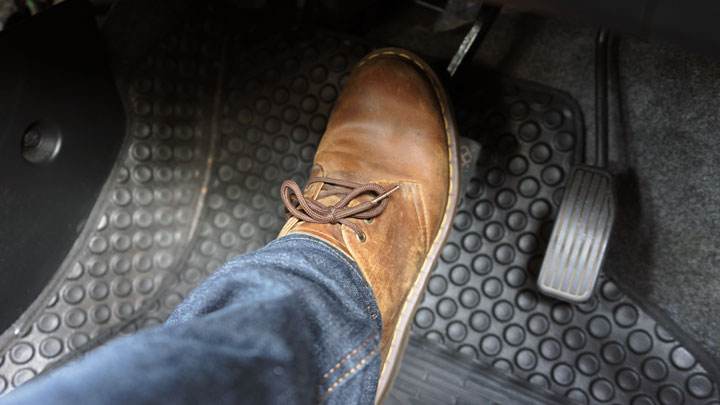
Even if not always the case, bad driving habits can actually cause brake shudder in some instances and worsen it in others.
This is especially true in cases where drivers frequently panic-stop or heavily rely on their brakes repeatedly. This heavy brake usage can easily overheat key brake components, leading to rotor warping.
This, in turn, triggers a sort of vicious cycle, in which continued overly aggressive braking only further compromises a vehicle’s already warped rotors. As a result, brake shudder rapidly worsens to a much more noticeable degree than it otherwise would.