

Is your “Check Engine Light” flashing on your dashboard and does the engine power seem suddenly reduced?
Then your car’s engine may have gone into Limp Mode and the issue should be resolved as quickly as possible. Boost leaks can damage your turbocharger and engine, which can lead to even higher repair costs.
In this article, you will get all the information on how to detect and repair a boost leak and finally restore your car’s optimal performance. Let’s get started!
Boost Leak Information
A boost leak is a type of air leak that occurs in the intake path just before the engine cylinders. It is essentially a loose clamp that cannot handle the boost pressure.
Turbo engines are more prone to boost/intake leaks than non-turbo engines, due to the additional number of pipes and hoses connecting the turbo to the engine equipment and the pressure that a turbo provides. These hoses and pipes are directly exposed to heat inside an engine compartment, which can cause cracks in them and lead to leaks.
Sometimes, leaks in a pipe can occur due to a loose engine mount, which can twist a pipe simply with torque. Although the loss of power is not harmful – unless you are in a race – it can become harmful if neglected for a long time.
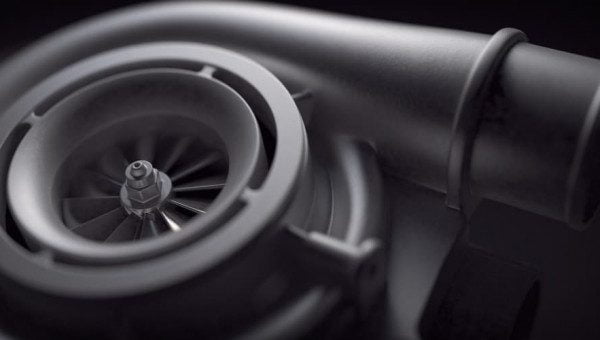
Ignoring a boost leak will eventually reduce the lifespan of your turbo and, consequently, the car engine’s lifespan. Understanding how a turbo works is easy because there are two components at work; fuel and air. The car engine runs on a mixture of fuel and air.
The ECU determines the fuel/air ratio; however, if there is an air leak along the way, the ratio is miscalculated, causing your car’s turbo to work harder than usual. Diesel engines are accommodating in this regard because they are more tolerant of a high fuel/air ratio. However, gasoline engines are sensitive, therefore, a boost leak inspection is necessary for your car’s optimal performance.
Signs of a Boost Leak
A boost leak can lead to many different symptoms. There are a few that are worth looking into more closely to identify a boost leak. Here are the most common symptoms:
1. Slow Spool
turbo boost leak
The turbo works by increasing the amount of air and fuel that can be inserted into a cylinder; thus, increasing power and performance. However, before the turbo “kicks in,” the turbine must spin very fast. Until that happens, the turbo plays no role in boosting the car.
This issue, commonly called turbo lag, occurs when the turbo sends air and fuel into the cylinder. If this process is slower than usual, you are experiencing a boost leak. The concept is simple; due to a leak, the turbo takes longer to spin at its maximum capacity.
2. Loss of Power
While you are accelerating, the turbo gives a boost to the engine, motivating it to run faster and better. If there is a boost leak, you will feel a sudden loss of power during acceleration.
3. Check Engine Light
If you have a boost leak on your car, you will likely get a flashing check engine light on your dashboard. If your check engine light is flashing, the best method is to read the fault codes with an OBD scanner.
4. Rough Idling
This is only true if you have a car with a Mass Air Flow sensor or MAF. The MAF detects the amount of air leaving the turbo and entering the engine. If there is a boost leak – which usually occurs in the MAF area – your car will have perfect idling issues. It could stall and shut down as a result of the leak.
5. Inconsistent Timing
Your engine’s timing will run poorly as soon as you have a boost leak. Therefore, any inconsistent sound in your engine is essentially due to a boost leak.
6. Excessive Smoke from the Exhaust
The irregular operation of a turbo will disrupt the process inside the engine cylinders. More than the usual amount of fuel will be used and you will see more than the usual amount of smoke escaping from your exhaust.
7. Poor Fuel Economy
This may not be distinguished very easily, but if you keep an eye on your car’s average fuel consumption, you will easily detect a boost leak. If the car is consuming more fuel than it should, you have a problem. A boost leak test can prove useful in such situations.
Problem Symptoms Causes Solutions
Boost Leak Symptoms Poor acceleration
Check Engine Light
Rough Idling
Black Smoke from Exhaust during Acceleration
Poor Fuel Economy
Faulty Boost Pressure Pipes
Faulty Intake Plenum
Faulty Intake Pipes Replace/Repair the Boost Leak
How to Find a Boost Leak
The easiest way to find a boost leak is to use an EVAP smoke machine, but you can also use compressed air or, in some rare cases, visually inspect the boost pipes and hoses. Here are some tips for finding a boost leak.
1. Check the Clamps and Coupler
A boost leak can occur where there are clamps, so it is natural to look for leaks in all the couplers and clamps connecting the turbo to the engine. Perhaps a clamp was not properly tightened or it was left loose after the previous modification of your turbocharger.
To start your inspection, first take a look at the compressor housing, then move towards the vacuum lines and head towards the wastegate controller. Check all the clamps along the way and make sure they are tight and in place and also check for scratches or cuts on the housing.
2. Use a Boost Leak Tester/Compressed Air
Still haven’t found anything? No worries, some brilliant minds invented a device called a boost leak tester. This device does exactly what it is supposed to do; it tests for leaks for you, so you don’t have to. It is a great tool for anyone without experience in car work and also for those of you who don’t want to spend money to take their car to the nearest mechanic workshop. Therefore, if you can afford one, you can save valuable time.
Using a boost leak tester, you don’t need to start the car or spool the turbo. In fact, the machine does all the work by itself by pressurizing the system like a turbo spool. All you have to do is remove the turbo inlet and attach the tester in its place. Alternatively, attach an air compressor to the system and watch the machine’s pressure rise. Now, just listen for air leaks and mark them.
Boost leak testers are an amazingly cheap and essential tool for any turbo car owner.
You can also go to a mechanic workshop and use their leak tester for a small fee.
Repairing a Boost Leak
Once you have found the leak, it is time to repair it. As we learned from the information above, leaks are usually found in loose clamps or couplers. Start by tightening them, then check again until you find all the leaks. If you need help, hire a mechanic, but the problem with mechanics is that they charge a fairly high price for such easy work. Keep in mind a bill of around $100, give or take, if you choose to opt for a mechanic.