
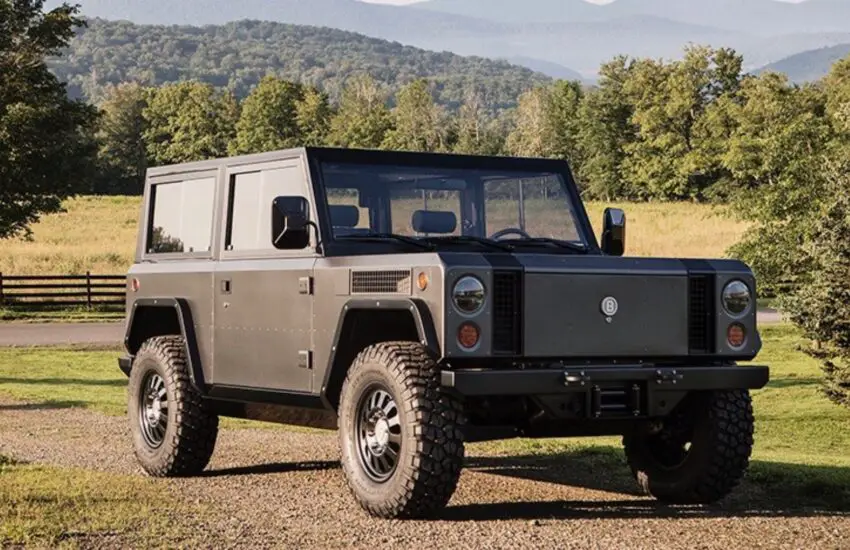
Contrary to appearances of an imminent shipwreck, Bollinger Motors is making a decisive strategic shift. The electric vehicle manufacturer, based in Oak Park, Michigan, is reinventing itself by focusing on the commercial market, a bold pivot that could well secure its survival and future.
Promising Beginnings Against the Backdrop of the American Dream
Founded by Robert Bollinger, the company was born from a simple vision on his organic farm in New York State: to design an electric truck that is both powerful and enjoyable to drive. The project, which began in a garage before moving to the cradle of the American automobile industry, Michigan, promised robust and “purpose-built” vehicles, entirely designed around an electric architecture.
Abandoning the B1 and B2 Models in Favor of Utility Vehicles
The ambitious B1 and B2 SUVs, with a design inspired by the Defender and equipped with innovative features like a full pass-through in the chassis, were intended to appeal to the general public. But the COVID-19 pandemic and economic realities put an end to these projects. Their limited range (200 miles), significant weight, and high cost became prohibitive. Bollinger had to put them on hold to focus on a priority: generating revenue with commercial vehicles, such as the B4 delivery van, which can be quickly delivered to corporate fleets.
The B4, Spearheading a New Era
Today, the B4 van embodies this new direction. Based on an 800-volt platform designed from the outset to be “future-proof,” it is constantly improved through customer feedback. Its tight turning radius (42 feet) and efficient design make it an ideal work tool, more pleasant and quieter than a comparable internal combustion vehicle. Bollinger is betting on its agility, an advantage over large established manufacturers, to quickly adapt its products.
The Challenges and Strengths of the New Bollinger Motors
The path remains fraught with obstacles. The current political climate, sometimes hostile to electrification, and the complexity of obtaining state subsidies (which can reach up to $120,000 per vehicle in New York) are significant challenges. Despite partially empty facilities and the departure of its founder, the company, now under the umbrella of Bollinger Innovations and partnered with Mullen Automotive, remains hopeful. Its major strength? A 71% American-made manufacturing process, a powerful argument for winning government tenders. The pivot is underway, and for the first time in five years, the path to the future seems clear.