
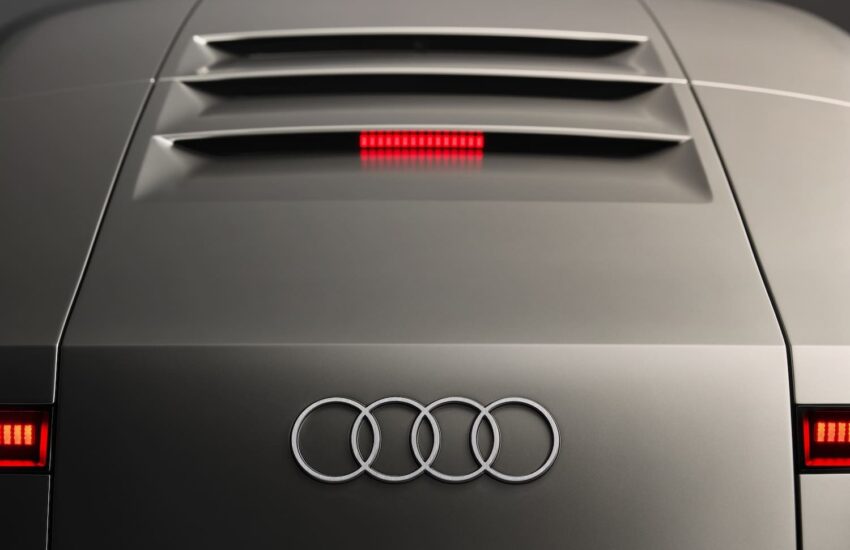
Future Audi A4 e-tron: A Major Technological Breakthrough
The electric vehicle industry is about to experience a decisive turning point with the upcoming arrival of the Audi A4 e-tron. Scheduled for 2028, this premium sedan represents a true strategic shift for the brand with the four rings, directly targeting the new all-electric BMW 3 Series on its home turf.

A Revolutionary Technical Platform
Audi is deploying its most ambitious electric strategy to date with the A4 e-tron. The sedan will be based on the PPE (Premium Platform Electric) developed jointly with Porsche, guaranteeing unprecedented performance and range in this segment. This modular architecture allows for high-capacity batteries while optimizing interior space and driving dynamics.
Premium Electric Performance
Initial technical estimates suggest impressive characteristics. The A4 e-tron is expected to offer several motor configurations, with front-wheel drive, all-wheel drive, and even sportier S-line models. The targeted range exceeds 600 kilometers on the WLTP cycle, while ultra-fast charging will recover 300 kilometers of range in less than 20 minutes.
Design Inspired by the Iconic TT
Audi’s design department draws inspiration from the legendary TT to shape the lines of the A4 e-tron. This design language is evident in the compact proportions, dynamic waistline, and surfaces with sharp edges. The Singleframe grille, a signature element of the brand, evolves into a fully digitized version integrating display functions and communication with the environment.
A Silhouette Between Tradition and Modernity
The silhouette retains the codes of the premium sedan while adopting the most advanced aerodynamic solutions. Exterior mirrors give way to cameras, door handles are flush with the bodywork, and the fastback rear optimizes airflow. The result: one of the lowest drag coefficients on the market, significantly contributing to the range.
The Next-Generation Digital Ecosystem
The A4 e-tron will debut the fourth generation of the MIB (Modular Infotainment Platform) system. This software architecture enables comprehensive over-the-air updates, an evolving onboard artificial intelligence, and seamless integration with the occupants’ digital ecosystem. The user interface is based on a suite of three high-definition screens, including an augmented reality head-up display.
The Reinvented Driver Experience
The driver’s cockpit adopts a minimalist approach where physical controls become optional. Natural voice recognition, gestures, and haptic touchscreens constitute the primary interfaces. The system learns the driver’s habits to anticipate their needs, whether for navigation, comfort, or entertainment.
A Strategic Positioning Against Competition
Audi clearly positions the A4 e-tron as the premium alternative to the electric BMW 3 Series. With the Bavarian manufacturer having announced its Neue Klasse for 2025, Audi responds with a vehicle benefiting from three additional years of technological development. This strategic timing could prove to be a decisive advantage in the premium electrification race.
A Rapidly Transforming Segment
The premium electric sedan market is experiencing unprecedented acceleration. Mercedes is working on its future electric C-Class, Volvo is developing the ES60, and Tesla is refining its Model 3. In this hyper-competitive context, the A4 e-tron stands out with its Audi heritage combined with a technological approach resolutely focused on the future.
Impact on the Traditional Audi Lineup
The arrival of the A4 e-tron marks a turning point in Audi’s product strategy. The combustion-engine version of the A4 will continue its career in parallel for several years, creating a unique dual offering in the market. This approach allows Audi to satisfy all customer bases while accelerating its electric transition.
The future Audi A4 e-tron thus promises to be much more than just an electric variant. It embodies Audi’s vision for the 2030s: vehicles combining automotive prestige, technological innovation, and sustainable performance. Its arrival in 2028 could redefine the standards of the premium segment and accelerate the mass adoption of electric vehicles among demanding drivers.