
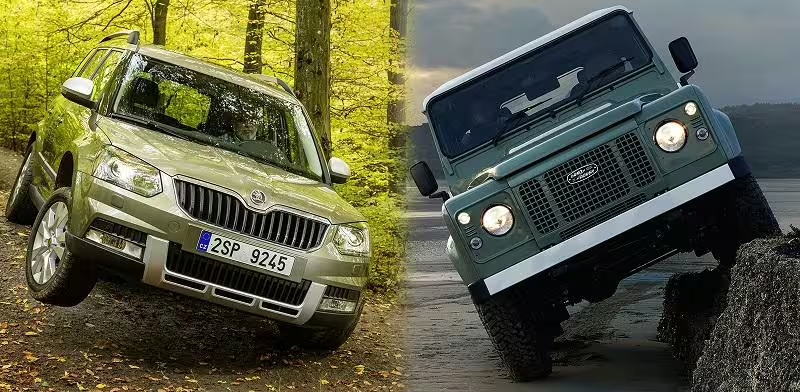
Four-wheel drive (4WD) systems have gained popularity over the decades, becoming a key selling point for car manufacturers. This demand has led to a proliferation of vehicles equipped with 4WD or all-wheel drive (AWD), suitable for all segments (SUVs, sedans, etc.). Yet, despite their omnipresence, the distinction between 4WD and AWD remains unclear to many. Are these transmissions identical? Or do they hide fundamental differences? Let’s explore their specificities.
What is a 4WD Transmission?
Also called Four by Four, 4WD is the preferred system for off-road vehicles. It comes in two types:
1. Part-Time 4WD
- Operation:
- Under normal conditions, the vehicle runs in two-wheel drive (usually the rear wheels).
- The driver can manually activate 4WD mode to distribute torque evenly to all four wheels.
- Limitations:
- No center differential: The lack of a differential between the front and rear axles makes its use on paved roads risky (risk of “binding” or component damage).
- Low Range: An essential option for extreme terrain (mud, rocks), it multiplies engine torque for climbing steep slopes.
2. Full-Time 4WD
- Operation:
- All four wheels are always driven, with a center differential allowing independent axle rotation.
- Ideal for switching between roads and rough paths without manual intervention.
Vehicle Examples: Jeep Wrangler (Part-Time 4WD), Toyota Land Cruiser (Full-Time 4WD).
Key Takeaway: Part-time 4WD requires judicious use – reserved for difficult terrain, it avoids transmission overheating on pavement.
👉 Curious to learn more about AWD? Discover its features in the next section!
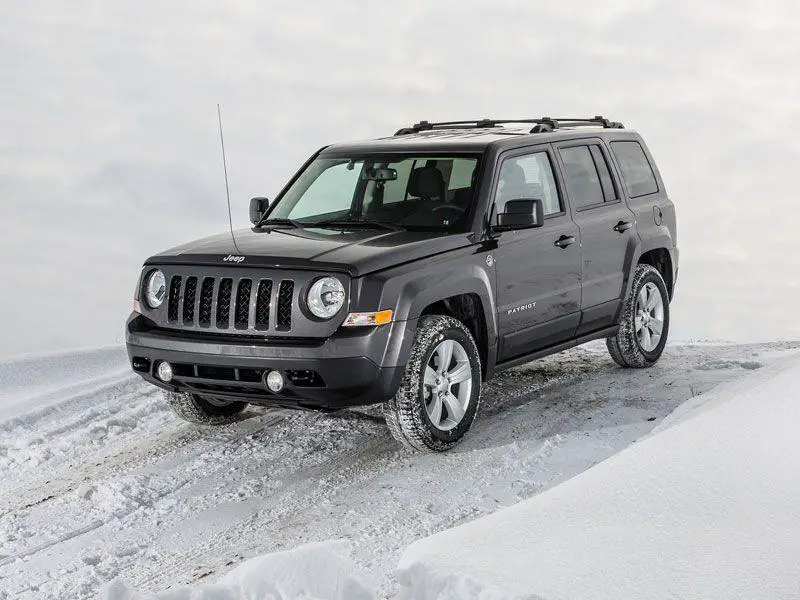
Full-Time 4WD Transmission: Operation and Characteristics
Vehicles equipped with a full-time 4WD transmission send torque to all four wheels permanently, regardless of the surface (road, mud, snow, etc.). Unlike part-time systems, this configuration includes a center differential that allows the front and rear axles to rotate at different speeds, thus avoiding mechanical stress on pavement.
Key Features
- Center Differential:
- Allows for independent axle rotation, ideal for cornering on roads.
- Can be locked manually or automatically in extreme conditions (e.g., sand, rocks) to synchronize the wheels and maximize traction.
- Differential Lock:
- Locks the differentials (center, front, or rear) to eliminate rotational differences between the wheels.
- Useful in case of traction loss (e.g., a wheel in the air or on ice).
- Low Range:
- Reduces vehicle speed while multiplying torque for climbing steep slopes or overcoming obstacles.
- Present on dedicated off-road 4WDs (e.g., Jeep Wrangler, Toyota Land Cruiser).
All-Wheel Drive (AWD): A Versatile Alternative
Unlike full-time 4WD, AWD (All-Wheel Drive) is designed for primarily on-road use, with automatic adaptations.
Major Differences from 4WD
- No 2WD Mode: AWD cannot completely disengage one axle.
- No Differential Lock: Traction management is entirely electronic (sensors, ECU).
- Dynamic Torque Distribution:
- On models like the Porsche 911 Turbo, up to 100% of torque can be sent to the front or rear axle depending on grip.
- On roads, torque is often distributed asymmetrically (e.g., 40/60 front/rear) to optimize stability.
When to Choose Full-Time 4WD or AWD?
| Criterion | Full-Time 4WD | AWD |
|---|---|---|
| Primary Use | Technical off-road, extreme terrain | Urban driving, light snow, sport |
| Manual Control | Yes (diff lock, low range) | No (automatic) |
| Examples | Land Rover Defender, Mercedes G-Class | Subaru Outback, Audi Quattro |
| Fuel Consumption | High (weight, mechanical resistance) | Moderate |
Why Do These Transmissions Exist?
- Full-Time 4WD:
- For adventurers and professionals (agriculture, mountain rescue).
- Resists shocks, water, and terrain deformations.
- AWD:
- Improves safety and performance on roads (acceleration, handling).
- Meets the demand from drivers seeking a compromise between versatility and comfort.
Myths to Debunk
- ❌ “AWD/4WD makes you invincible on ice”: Only winter tires or chains guarantee optimal grip.
- ❌ “Full-time 4WD is useless in the city”: Some premium SUVs (e.g., Range Rover) use it for comfort and status.
Conclusion
Full-time 4WD remains the king of off-road, while AWD appeals for its intelligence and daily adaptability. The choice depends on your needs: explore the trails or dominate the pavement! 🚙💨

All-Wheel Drive (AWD) vs Four-Wheel Drive (4WD): Why Do These Systems Exist?
AWD (All-Wheel Drive) and 4WD (Four-Wheel Drive) systems meet distinct needs in terms of traction and control. Here is an analysis of their purpose, mechanisms, and applications.
1. Why Do Manufacturers Develop These Transmissions?
Responding to Driver Needs
- Traction Improvement:
- AWD: Optimizes grip on slippery roads (snow, rain) and during acceleration (e.g., Audi R8).
- 4WD: Dominates off-road (mud, rocks) thanks to robust mechanical features (e.g., Jeep Wrangler).
- Market Diversification:
- Urban SUVs (AWD) appeal to families, while 4WDs target adventurers and professionals.
Technological Innovation
- AWD: Intelligent electronic systems (sensors, ECU) for real-time adaptation.
- 4WD: Proven mechanics (differential lock, low range) for durability.
2. Compared Operation
AWD (All-Wheel Drive)
- Automatic Torque:
- Sends power to all four wheels permanently, with variable distribution (e.g., 60% rear, 40% front).
- No Low Range: Designed for pavement, not for extreme slopes.
- Concrete Example:
- Audi R8: AWD instantly sends torque to the front wheels in case of rear traction loss, reducing wheelspin and improving acceleration.
4WD (Four-Wheel Drive)
- Mechanical Options:
- Low Range: Reduces speed and multiplies torque for technical obstacles.
- Differential Lock: Forces wheels to rotate at the same speed, ideal in case of total traction loss (e.g., a wheel in the air).
- Concrete Example:
- Jeep Wrangler: In 4WD Low mode, the vehicle climbs 45° slopes thanks to multiplied torque.
3. Comparison Table
| Criterion | AWD | 4WD |
|---|---|---|
| Torque Distribution | Automatic, adjusted by ECU | Manual or fixed (50/50 front/rear) |
| Low Range | Absent | Available for extreme terrain |
| Differential Lock | No (electronic management) | Yes (mechanical or electronic) |
| Fuel Consumption | Economical (light systems) | High (weight, mechanical resistance) |
| Target Audience | Urbanites, sports enthusiasts, families | Adventurers, off-road professionals |
4. Concrete Applications
AWD
- Sports Cars: Audi R8, Porsche 911 Turbo (optimized acceleration).
- Urban SUVs: Subaru Outback, Volvo XC90 (all-weather safety).
4WD
- Off-Road Vehicles: Toyota Land Cruiser, Mercedes G-Class (shock resistance).
- Utility Vehicles: Ford F-150 Raptor, Jeep Gladiator (heavy loads, towing).
5. Myths to Debunk
- ❌ “AWD is enough for deep snow”: Without winter tires, even AWD will slip.
- ❌ “4WD is useless in the city”: Premium SUVs (e.g., Range Rover) combine comfort and off-road capability.
6. Why Do These Transmissions Proliferate?
- Consumer Demand: Search for safety and versatility.
- Marketing: The terms “AWD” and “4WD” reassure and enhance vehicle image.
- Technology Evolution: Hybrid and electric systems integrating AWD (e.g., Tesla Model Y).
Conclusion
AWD and 4WD transmissions coexist because they meet complementary needs:
- AWD: For daily life, on-road performance, and difficult weather conditions.
- 4WD: For adventure, work in hostile terrain, and robustness.
The choice depends on your usage: do you prefer to tame the pavement or explore the unknown? 🚗🏔️

Difference Between All-Wheel Drive (AWD) and Four-Wheel Drive (4WD)
Here is a clarification of the key differences, myths to avoid, and advice for choosing between these two systems:
1. Comparison Table
| Criterion | AWD (All-Wheel Drive) | 4WD (Four-Wheel Drive) |
|---|---|---|
| Power Reception
|