
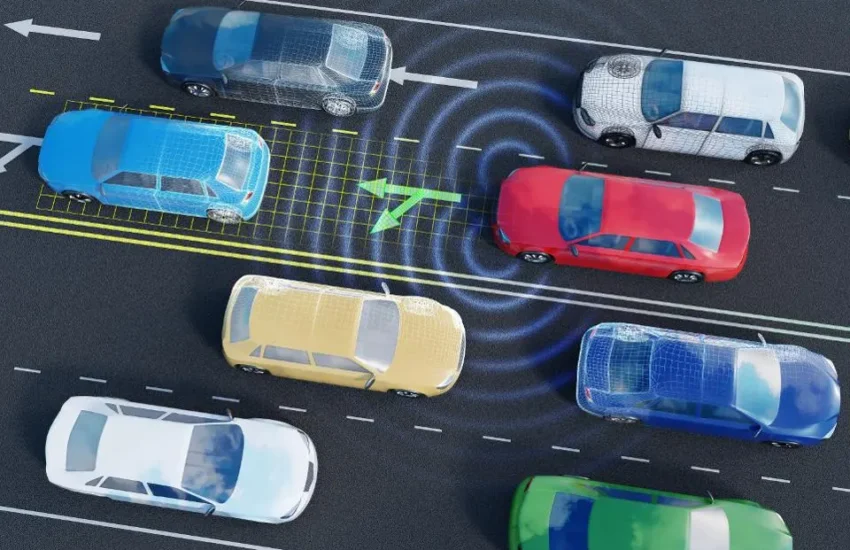
The amount of technology built into a vehicle can turn buying a vehicle into a confusing experience. Automakers have invested millions of dollars in high-tech safety systems designed to protect vehicle occupants, but without a universal naming convention, consumers have to sift through an alphabet soup to develop an understanding of the technology.
The first concept to decipher is ADAS, which stands for Advanced Driver Assistance Systems. The basic definition of ADAS is technology that assists the driver when driving or parking. In a broader sense, ADAS enhances automotive and road safety by minimizing human error. It is also acceptable to refer to ADAS as advanced safety technology. Advanced safety technologies fall into two categories: active and passive.
Seat belts and airbags, once innovative safety devices, fall into the passive category. These systems spring into action as soon as they are called upon – often at the moment an accident occurs – and do not actively work to prevent a collision.
Conversely, active safety systems work proactively to prevent collisions. Some active safety technologies are not new either. Electronic Stability Control, which helps drivers keep their cool during extreme maneuvers, has been mandatory on all new cars in the United States since 2012.
Active safety systems work in different ways, but all rely on sensors (like radar or LiDAR detecting light) to communicate two essential pieces of information: what is happening outside the car and the state inside the cabin. The sensors can see what other vehicles and pedestrians on the road are doing relative to their own position, as well as detect driver distraction or inattention.
It’s in the “advanced” part of advanced safety technology that things get complicated. Many systems are automated and, when activated, can give the impression that the car is acting independently of the driver. Advanced driver assistance systems also come with a host of new terminologies. To add to the confusion, most automakers use brand names for their versions of these technologies, similar to how manufacturers do for their infotainment systems (Toyota’s Entune, Fiat Chrysler’s Uconnect).
These elements create a barrier to consumer adoption that only time and familiarity can solve. However, armed with the right information, car buyers can make more informed decisions about the benefits of these technologies.
To kick-start the acceptance process, here is a list of some common advanced active safety features, their function, and their acronyms.
Staying in the Lane
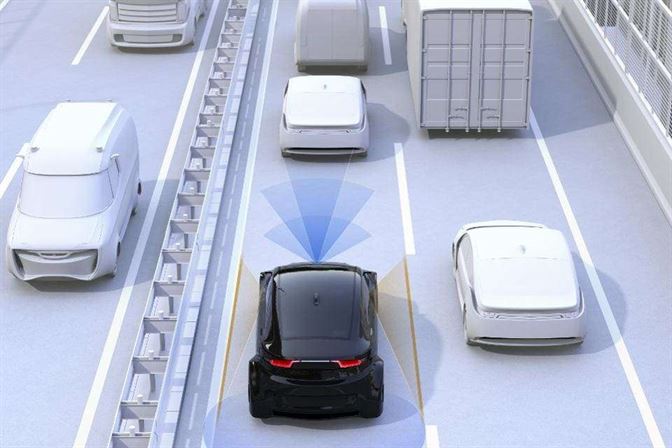
Lane Departure Warning (LDW) is a passive technology that looks for painted lane lines on the road and warns the driver if they are crossing them (sometimes called lane departure alert). The sensors used for LDW can also be used for Lane Centering Assist (LCA) or Lane Keep Assist (LKA). Both are active technologies that automatically adjust steering to keep the vehicle centered in the lane (LCA) or relative to crossing lane markers (LKA).
It’s Called a ‘Blind Spot’ for a Reason
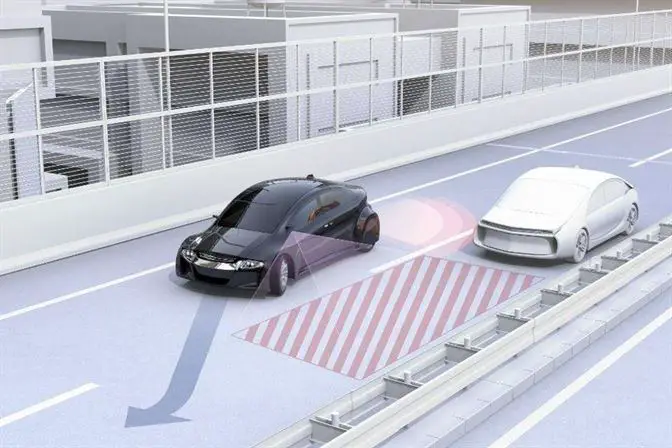
Seeing behind the vehicle is an important part of advanced safety technology (rearview cameras have been mandatory in new cars since 2014). A blind spot monitor looks for other vehicles to the side or rear of the vehicle. Alerts from this technology can be audible, visual, or haptic (vibrations in the steering wheel or seat cushion). Rear Cross Traffic Alert or Rear Cross Traffic Alert is a warning that sounds when it detects vehicles or objects approaching from the side or rear when the vehicle is in reverse. Rear Automatic Emergency Braking (Rear AEB) automatically applies the brakes when it detects approaching vehicles or objects (including pedestrians). Cameras that display a 360-degree view of everything surrounding the vehicle are also commonly used to prevent accidents in all directions at low speeds.
Preventing Frontal Collisions
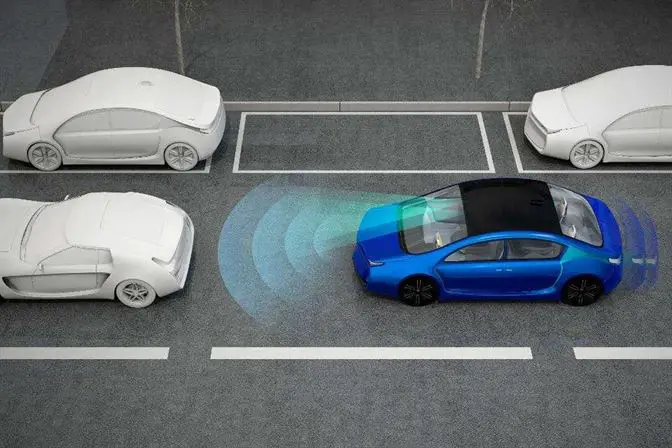
Systems such as Forward Collision Warning (FCW) look ahead of the car when forward movement is intended or occurring. FCW calculates if the car is getting too close to another vehicle directly in its path and sends an alert to the driver. Automatic Emergency Braking (AEB) responds by automatically applying the brakes. AEB systems can vary by speed (some only work at “city” speeds while others will engage at highway speeds).
Adaptive Cruise Control (ACC) is another system that looks ahead. ACC has many unique names (dynamic cruise control, radar, or intelligent), but they all have the same functionality. Regular cruise control requires driver intervention to adjust the travel speed; ACC automatically slows the travel speed and maintains a respectful distance at the adjusted pace. For example, if ACC is set to 60 mph but the lead car is traveling at 45 mph, ACC will not exceed 45 mph.
Combating Driver Fatigue
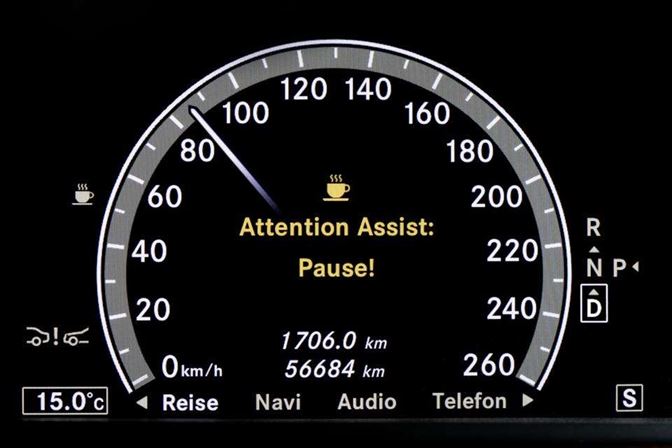
Some safety systems monitor trends inside the vehicle. Driver Drowsiness Detection tracks the driver’s gaze or steering wheel movement to detect drowsy, distracted, or inattentive behavior. Some cars equipped with LKA or LCA leverage the steering wheel sensors to detect a lack of human interaction. Many systems use an icon that lights up on the dashboard to get the driver’s attention. Others use a bright light accompanied by a tone.
Current research indicates that systems such as ACC and LKA work harmoniously to create a safer driving environment through technical automation. Nevertheless, there is a school of thought that drivers may develop a false sense of security due to over-reliance on technology. Despite the current hype, it is important to remember that modern cars do not drive themselves. And, as almost every owner’s manual states, “the operator is responsible for the safe operation of the vehicle.”