
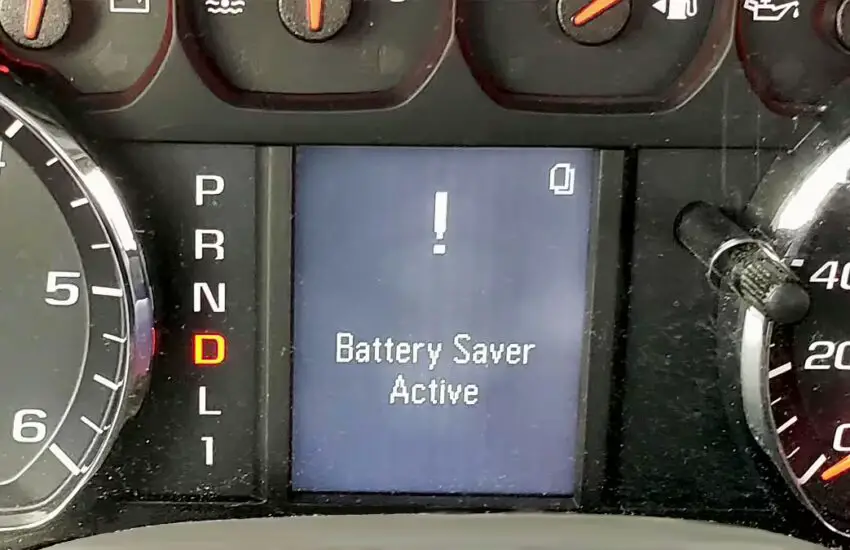
While driving on the highway, your car’s dashboard lights up and displays an unusual warning message: “Battery Saver Active.” Although this alert is often a source of confusion and concern, it’s usually a simple fix.
But what exactly does this message mean, what causes it, and what should you do immediately after seeing this warning appear?
What is “Battery Saver”?
“Battery Saver” mode is a state where the computer shuts down peripheral electrical systems to prioritize the power you need to keep driving. This happens when the battery or alternator has a problem and the supplied voltage is low.
When you’re driving on the road, your alternator is your vehicle’s primary power source. If your alternator cannot meet the vehicle’s electrical demand, you risk seeing a “Battery Saver Active” warning appear on your GM vehicle. GM brands include Buick, Chevrolet, Cadillac, and GMC.
This warning light is similar to the battery warning light found on most vehicles. The battery warning light is more generic and is not specific to General Motors.
Meaning of “Battery Saver Active”
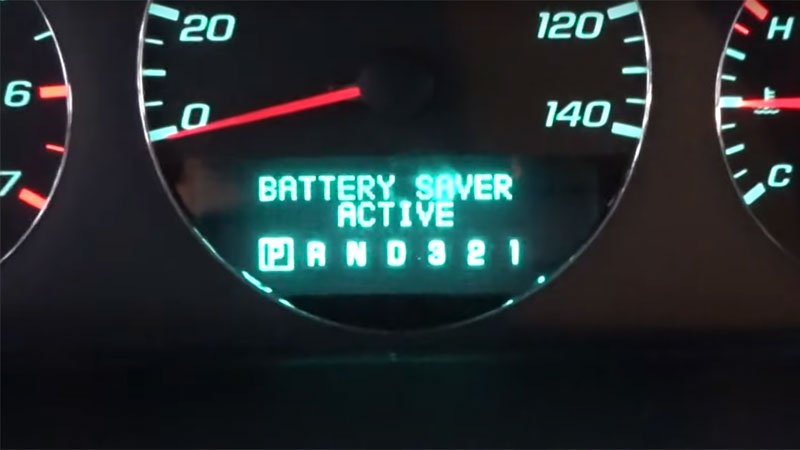
The “Battery Saver Active” warning means the charging system is unable to properly charge the battery or the electrical consumption exceeds the alternator’s capacity. In both cases, Battery Saver mode will activate to prioritize the vehicle’s electrical needs.
In other words, Battery Saver mode allows you to keep driving for as long as possible.
If you see a “Battery Saver Active” warning, you should get to a repair shop as soon as possible. You can even test the battery voltage at an auto parts store if you cannot get to a shop quickly enough.
Causes of the Battery Saver Active Light
The battery saver system is caused by an electrical problem. The main cause is often the battery, the alternator, or a connection between the two.
1) Corroded Battery Terminals
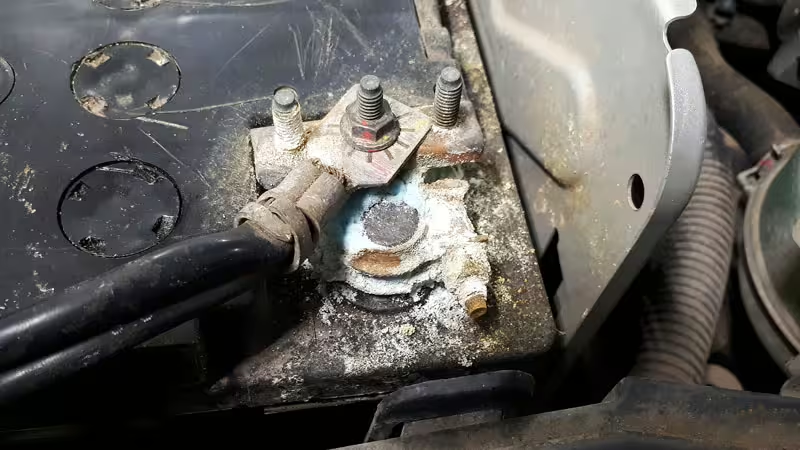
Corroded battery terminals are often the cause of charging problems. Check the battery cables where they attach to the battery. If you notice a brown, white, or green powder, you have corrosion or battery acid on the battery terminals.
ADVERTISEMENT
Cleaning this corrosion will give you a better connection to the battery and allow the charging system to work more efficiently. In extreme cases, corrosion can prevent you from starting the vehicle.
2) Loose Battery Cables
Just like corroded battery terminals, if your battery cables are loose, you will have a poor connection to the battery. This will impact the alternator’s charging ability, slowing down the process. It can also make starting the vehicle difficult.
3) Faulty Battery
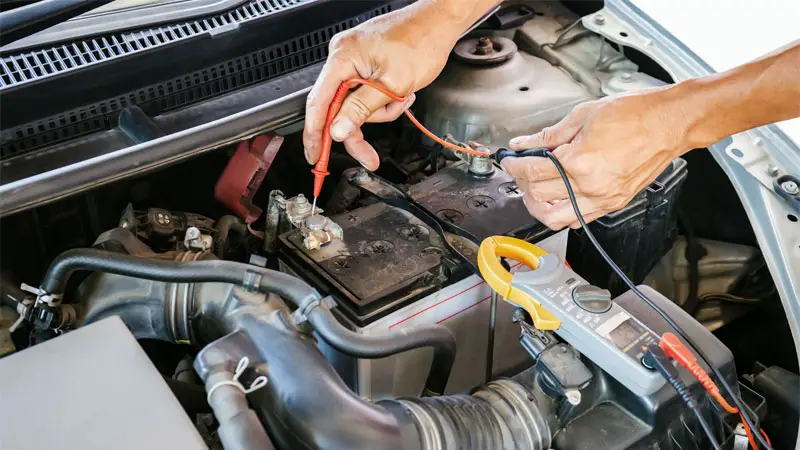
Lead-acid batteries age over time and with use. If you think your battery is faulty, you can test it with a multimeter. In extreme cases, a faulty battery will prevent you from cranking the vehicle to start it. Once your battery is completely dead, it may never regain its full power.
Sometimes, a good car battery can seem faulty due to a parasitic draw. A parasitic draw is a constant drain on the battery when the vehicle should be off.
4) Bad Ground
A bad ground can behave the same way as a faulty battery or alternator. The negative terminal on most vehicles is a ground, but you will also have ground cables throughout the engine bay for various engine components.
If there is a grounding issue, you might end up with an open circuit or a situation where a system works intermittently. Check for loose or missing ground connections when troubleshooting the “Battery Saver Active” warning light.
5) Faulty Alternator
Alternators (also called generators) allow your vehicle to run while you’re driving and also charge your battery while the vehicle is moving. The alternator has a pulley that attaches to the serpentine belt. When this pulley spins, it generates electricity.
Faulty alternators are less common than faulty batteries and battery connection problems, but alternators do sometimes have issues. If you want to test a faulty alternator, consider using a multimeter to perform a voltage drop test.
6) Aftermarket Audio System
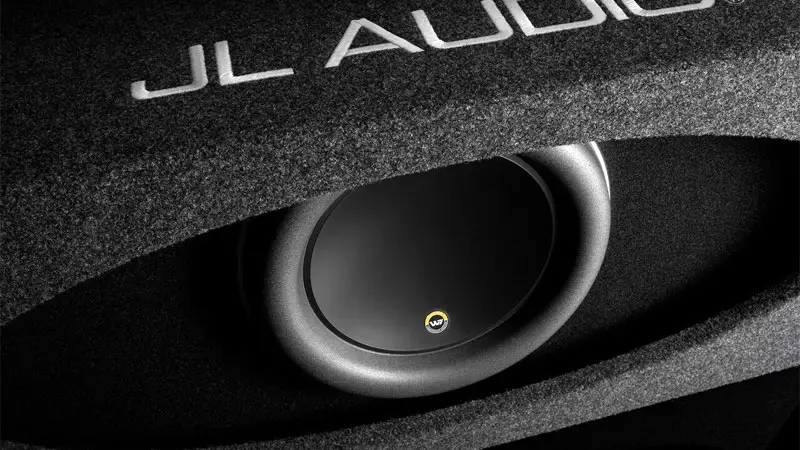
While this is a less common cause of electrical problems, it’s still worth mentioning. If you’ve added a high-power aftermarket audio system to your vehicle without upgrading your alternator, you might find yourself in a situation where your amplifier is drawing more power than the alternator can supply.
When upgrading your audio system, it’s wise to check the specifications of your amp and alternator to ensure they are compatible. Consider upgrading to a higher-output alternator if you have a high-power amp or a large subwoofer.
Can I Drive with the Battery Saver Light On?
While it is possible to drive for a short time with this light on, you should not drive any longer than necessary.
Electricity from the battery or alternator is needed to power the ignition coils, which send an electrical arc across the spark plugs. If you run out of electricity, your car will stop running and you’ll be stranded.