
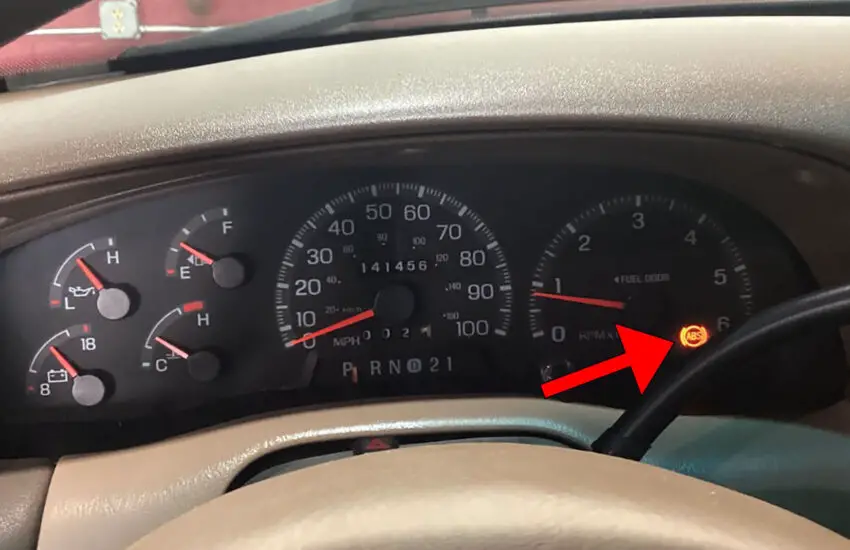
The illuminated ABS warning light on your dashboard is an alert signal that should not be ignored. This crucial system, constantly active during braking, turning, or acceleration, ensures that your tires properly grip the road. Its role is to maintain a consistent relative speed between the wheels and prevent them from locking up in emergency situations.
How the ABS System Works
The Anti-lock Braking System (ABS) relies on a network of sensors located at each wheel. These sensors, equipped with a magnetic element, monitor the rotational speed via a tone ring housed in the hub or bearing. This data is transmitted in real-time to the Engine Control Module (ECM) or Powertrain Control Module (PCM).
If the computer detects an anomaly, such as a wheel slowing down abruptly during braking (for example, dropping from 40 km/h to 22 km/h), it activates the ABS modulator. This component pulses the brake fluid to release the wheel and prevent it from locking, allowing you to maintain steering control.
Why Does the ABS Light Come On?
Several malfunctions can trigger the ABS warning light:
Main Causes
– Low brake fluid level: An insufficient level is a common cause, especially on certain models.
– Wheel sensor failure: A faulty or dirty sensor sends incorrect information to the computer.
– Tone ring problem: A damaged or corroded tone ring cannot be read correctly by the sensor.
– ABS computer fault: A failure of the electronic module itself.
– Connection issues: Oxidized connectors, damaged wires, or a blown fuse.
Other Possible Origins
The system can also be deactivated by a problem related to traction control, with which it is often inseparable. Sometimes, excessive corrosion around a sensor can slightly displace it, moving it away from the tone ring. The computer then interprets a signal that is too weak as an “unrealistic” situation and illuminates the warning light.
How to Diagnose an ABS Problem?
Diagnosis always begins with checking the basics: battery voltage, condition of connections, and cleanliness of terminals. A technician then uses a diagnostic tool to read the fault codes recorded by the computer. These codes serve as a starting point for investigating in the right direction: testing sensors, inspecting tone rings, checking modulators, etc.
If your vehicle’s ABS warning light is on, it is essential to entrust the diagnosis to a professional to ensure your safety and the proper functioning of the system.