


Flat tires: not only can they ruin your day, but they can also make a dent in your wallet when the problem can’t be solved with a simple puncture repair. And if you own a four-wheel drive (4WD) or all-wheel drive (AWD) vehicle, you might need to replace not one, but two or even all four tires.
Why would you need to replace other tires that still have good tread when only one tire is bad? The answer is that tire size variations can have a major effect on the durability of modern 4WD and AWD systems.
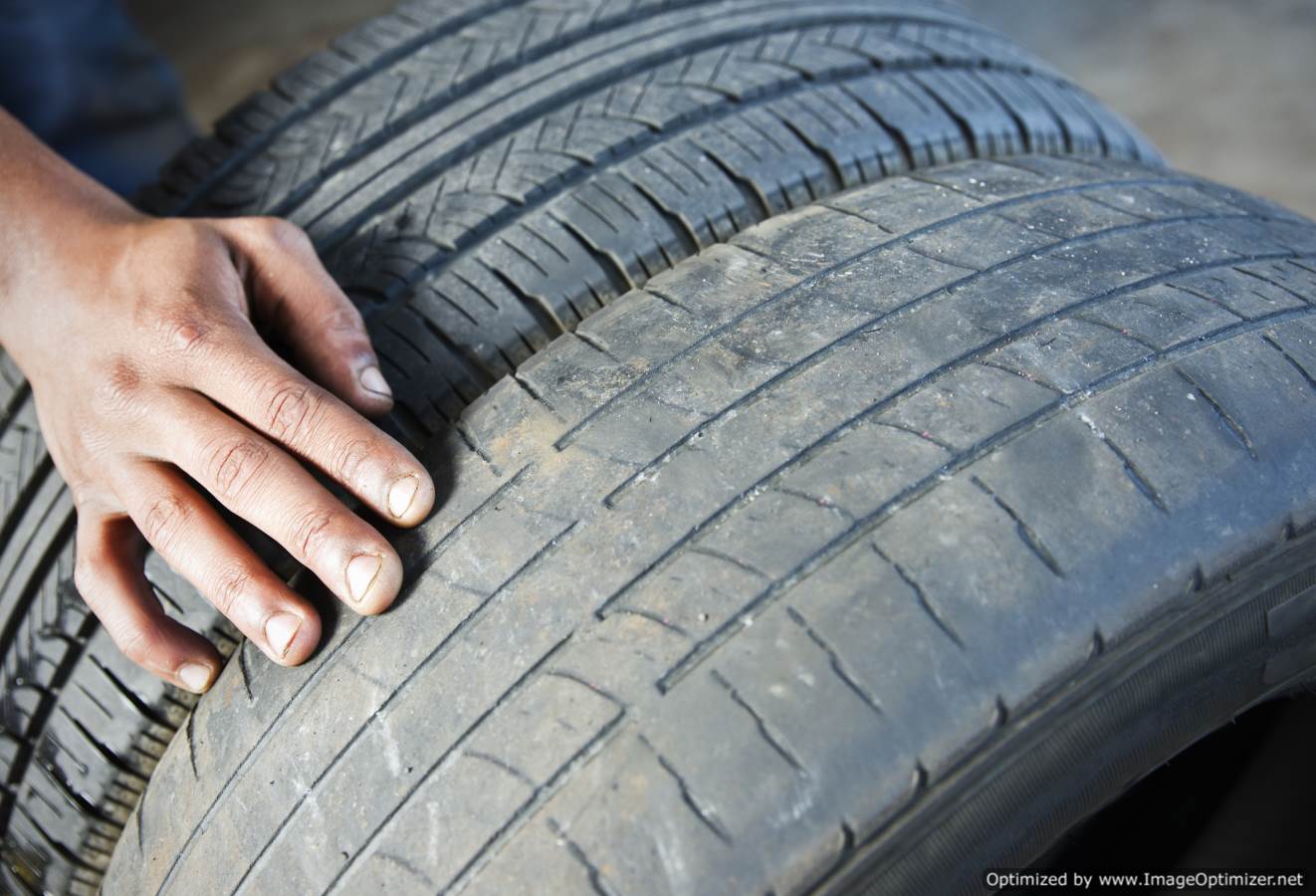
The size of a tire, or more precisely its circumference, is important because a larger tire travels farther with each rotation than a smaller one. Although such variations may seem insignificant to the naked eye, they cause various 4WD and AWD drivetrain components to spin at different speeds, increasing wear and tear.
But that’s not the only issue. On some AWD cars, a circumference variation of more than a quarter inch between the four tires will lead to costly transmission or drivetrain failure in a short time.
There are also potential safety issues. Most modern 4WD and AWD systems are computer-controlled and are installed on vehicles also equipped with anti-lock brakes, traction control, and stability control. These safety systems require accurate information about wheel rotation speed to function properly; if tire size variations cause conflicting wheel speed signals, the systems could malfunction or be disabled.
To reduce your risk of tire-related problems on 4WD and AWD vehicles: