

When purchasing a vehicle, whether it’s a new Mercedes-Benz or a used Toyota Camry, you need to understand the type of engine it has and how it is better or worse than other types. The most popular categories are four and six cylinders. Having a thorough knowledge of 4 cylinder vs. 6 cylinder will help you make an informed purchase decision.
What is a 4-cylinder engine?
A four-cylinder car engine is a type of internal combustion engine with four cylinders arranged in a straight line, V-shape, or horizontally opposed configuration. Each cylinder contains a piston that moves up and down, converting the energy from fuel combustion into rotational energy that drives the vehicle’s wheels through the transmission.
Four-cylinder engines are commonly used in smaller, more fuel-efficient cars because they are lighter, more compact, and require less fuel than larger engines with more cylinders. They can also be designed to produce high levels of power and torque, making them suitable for performance-oriented vehicles as well.
Despite these advantages, 4-cylinder engines still have some drawbacks: higher emissions and lower efficiency when driving at low speeds.

What is a 6-cylinder engine?
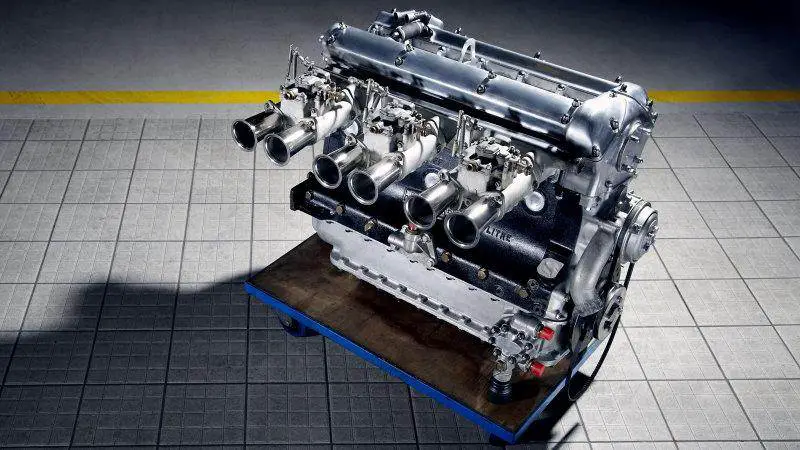
6-cylinder engines have the same displacement, all else being equal, as 4-cylinder engines. A 6-cylinder engine has 6 pistons inside the engine mechanism. However, there are differences between an inline six-cylinder engine and a V6 engine. The former offers excellent driving balance and easier access for maintenance, while the latter is more compact and better suited for front-wheel drive applications. Nowadays, supercars are full of V6 engines. You’ll find them in public favorites like the Acura NSX, Nissan GT-R, and more. Like other types of engines, 6-cylinder engines also have advantages and disadvantages:
Advantages:
- Power: Six-cylinder engines tend to produce more power and torque than four-cylinder engines, which can provide better acceleration and towing capabilities.
- Smoothness: Six-cylinder engines generally run more smoothly than four-cylinder engines because they have more cylinders firing in sequence, which can result in less vibration and noise.
- Refinement: Many six-cylinder engines are designed with advanced technologies such as variable valve timing and direct injection, which can improve fuel efficiency and reduce emissions.
- Performance: Six-cylinder engines are often used in high-performance and luxury vehicles because they can offer a balance of power, smoothness, and refinement.
Disadvantages:
- Fuel Economy: Six-cylinder engines tend to consume more fuel than four-cylinder engines, which can lead to higher operating costs.
- Cost: Six-cylinder engines are generally more expensive to manufacture than four-cylinder engines, which can increase the vehicle’s cost.
- Weight: Six-cylinder engines are typically larger and heavier than four-cylinder engines, which can affect the vehicle’s handling and balance.
- Maintenance: Six-cylinder engines may require more maintenance than four-cylinder engines, including more frequent oil changes and tune-ups.
4 Cylinder vs. 6 Cylinder – The Differences
The number of cylinders only refers to the number of pistons inside the engine. So, when trying to understand the concept of 4-cylinder and 6-cylinder engines, the first thing you need to understand is that the different names refer to the number of cylinders. However, this difference in the number of cylinders also influences performance factors.
Performance
Six-cylinder versions are more powerful than their four-cylinder counterparts. They are larger, faster, and better suited for race cars. The four-cylinder engine is smaller and cannot produce as much power. However, modern 4-cylinders have more power than their predecessors due to technological advancements.
For example, an old 6-cylinder from a 2007 Hyundai produces 185 horsepower. You’ll get the same power from a Hyundai Santa Fe Sport with a 2.0-liter engine. The turbocharged model can provide even more power – 240 horsepower. So, it’s always better to buy a new 4-cylinder rather than an old car model equipped with a 6-cylinder engine.

Fuel Consumption
A four-cylinder will always be an economical purchase because it consumes less fuel and is suitable for smaller cars. If you don’t imagine yourself as Michael Schumacher every time you drive on an empty highway, buy a 4-cylinder car and save a significant amount on your car budget.
Carbon Dioxide Emissions
If you are thinking about the environment and are conscious of your carbon footprint, a hybrid car is the best option. But if the budget doesn’t allow it, buy a 4-cylinder car instead. It’s a good alternative since it emits fewer pollutants into the air. The turbocharged version offers even better fuel efficiency and lower carbon emissions.
Applications
Six-cylinder models are better suited for vehicles with larger engines because the extra power makes it easier to move their heavy structures. In contrast, smaller, more compact cars use 4-cylinders.
To learn more about the differences between 4-cylinder and 6-cylinder engines:
Final Thoughts:
The choice between a 4-cylinder engine and a 6-cylinder engine depends on various factors such as the intended use of the vehicle, performance requirements, and fuel efficiency goals. Four-cylinder engines are generally lighter, more compact, and more fuel-efficient, making them suitable for smaller, more economical cars. On the other hand, six-cylinder engines typically offer more power, smoother operation, and better towing capabilities, making them suitable for larger, higher-performance vehicles. Ultimately, the decision depends on your personal preferences, and it’s essential to consider all factors before making a choice.