
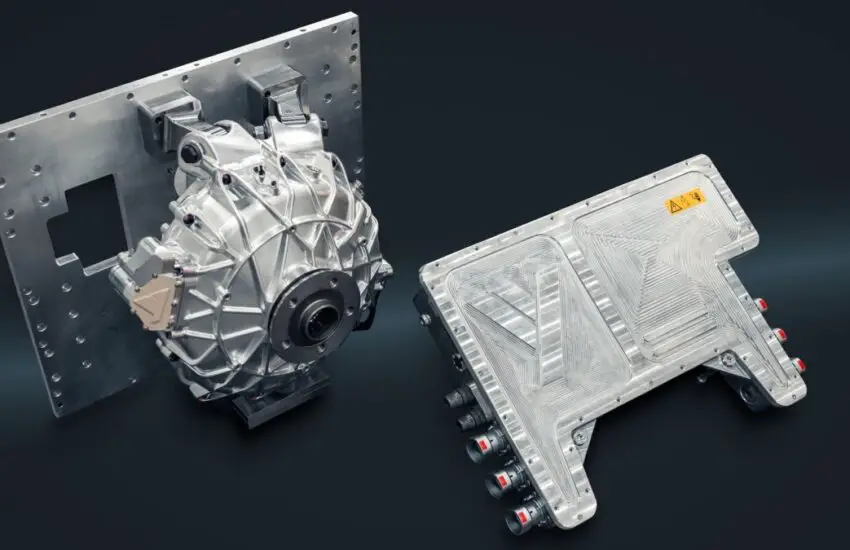
How 1000-Horsepower Motors Are Replacing Rear Brakes
The future of high-performance braking may not involve brakes at all. A groundbreaking shift in electric vehicle (EV) design is seeing ultra-powerful electric motors, capable of delivering 1000 horsepower, take on a dual role. Beyond propulsion, these advanced motors are being engineered to function as highly efficient rear braking systems, potentially rendering conventional brake components obsolete.
The Power of Regenerative Braking
This revolution is powered by regenerative braking technology. In an electric vehicle, the motor can also act as a generator. When the driver lifts off the accelerator or applies the brakes, the system reverses the motor’s function. It captures the vehicle’s kinetic energy, converts it back into electrical energy, and feeds it into the battery. This process creates significant deceleration force directly at the wheels.
For internal combustion engine vehicles, slowing down wastes energy as heat through friction brakes. In contrast, regenerative braking recaptures that energy, extending range and reducing wear. In high-performance EVs with exceptionally powerful motors, the regenerative force can be so substantial that it handles the majority of everyday braking demands.
Axial Flux Motors: The Key to Braking Performance
The enabling technology behind this is the axial flux motor, championed by companies like UK-based YASA. Unlike traditional radial flux motors, axial flux designs are lighter, more compact, and offer superior torque density. This means a relatively small motor can produce immense power and, crucially for braking, generate very high levels of regenerative torque almost instantaneously.
This capability allows a 1000 HP axial flux motor to provide deceleration force powerful enough to manage most braking scenarios for the rear axle. The conventional friction brakes are relegated to a backup role for emergency stops or holding the vehicle at a standstill. This leads to reduced brake dust, lower maintenance, and significant weight savings—a critical factor for performance and efficiency.
Implications for Future Vehicle Design
The integration of motor and brake system opens new avenues for automotive engineers. With smaller or no traditional rear brake calipers and discs, designers can reimagine suspension geometry, wheel design, and aerodynamic underbodies. It represents a fundamental step toward more integrated, efficient, and simplified vehicle architectures, where one sophisticated component replaces multiple conventional ones.