


The horn is an essential detail in the vehicle’s signaling system; it helps the driver signal to other cars when you want to overtake. However, after a period of use, the car horn can become damaged and the sound is weak. This may not be a big problem, but the weak horn sound can be the source of accidents and dangerous traffic. Today’s topic will find the answer to 2 questions: Why does my car horn sound weak and how to solve this problem? Follow us in the next part!
Why does my car horn sound weak?
How do car horns work?
A car horn is an essential feature of every vehicle – one of the parts belonging to the signaling system. Drivers often honk to warn other vehicles or pedestrians of the presence of vehicles or the direction of the vehicle’s movement to ensure safety. It is one of the most applicable signaling systems and is important when you travel on the road and avoid unfortunate accident situations.
Like other parts of your car, there will be a certain lifespan when it comes to the car horn’s durability. Depending on usage conditions, car horns can last from 6 to 10 years before needing replacement. Some signs you can easily notice when the car horn is damaged, such as a horn that doesn’t work, a low pitch, or a car horn sometimes not sounding… However, a car horn sounding weak is a common problem encountered by many drivers.
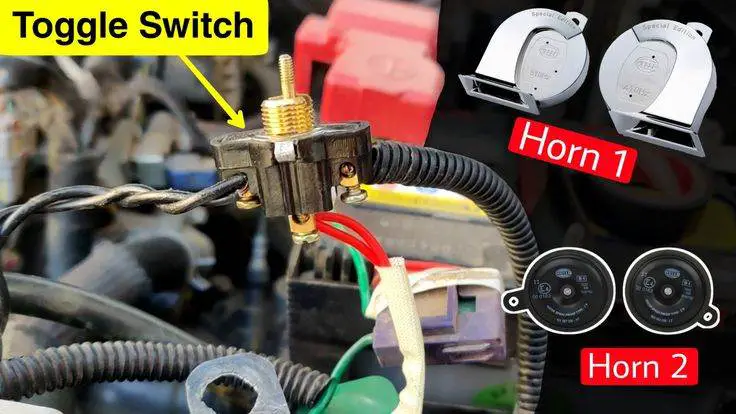
If you detect that the horn sound is not as loud as normal. It’s time to repair and find the reason for this phenomenon. Normally, each car will be equipped with 2-3 electric horns. They have a low-pitched horn and a high-pitched horn, so if one of them goes bad, the horn sounds really weaker. Furthermore, there are other causes you cannot ignore:

5 reasons why my horn sounds weak?
Blown Fuses
The first thing you’ll want to check if the horn sound is weak is your fuse. Sometimes the fuse is located on the panel inside the car or under the hood. You can consult the owner’s manual to find the location of your fuse box. Car horns work with electrical power; therefore, if there is a blown fuse, electricity cannot pass through and, eventually, the horn will stop working or emit a weak sound. Possible reasons for a faulty fuse include damaged wiring or a short circuit. You can check your car’s fuse box for further confirmation.
A Bad Horn Relay
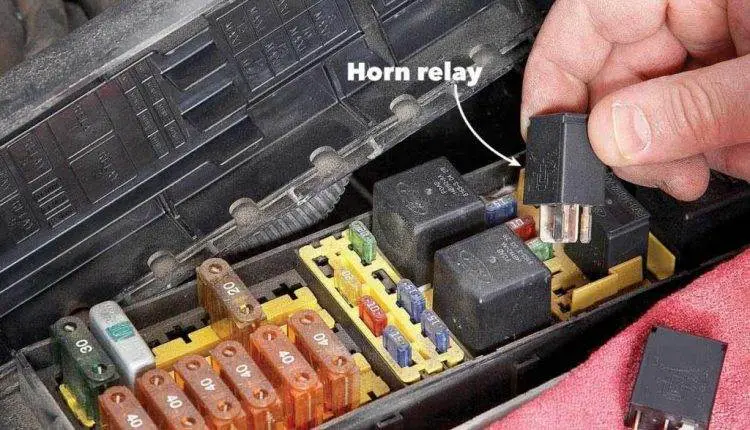
A relay is a switch that opens or closes circuits when activated by an electrical signal. The horn relay transfers high current to the horn based on the signal from the low-current horn button on the steering wheel. In most modern cars, relays are designed in the fuse box under the hood. When the relay is not working or short-circuited, it can cause your vehicle’s horn not to work or sound weak. Because the relay plays an important function in transferring power to the car horn circuits.
A Broken Clock Spring
Clock springs are made of flat wires wrapped in a small round box and placed inside a steering wheel. Whenever you press a button on the steering wheel, the wires send a signal to the vehicle’s control modules. When you control the steering wheel, the coil inside the clock winds and unwinds. This helps maintain the electrical connection between the steering wheel controls and the airbag.
What will happen when the clock spring deteriorates? If there comes a time when you honk the horn but realize there is no sound or a small sound. This could be the result of a bad clock spring. When you turn the steering wheel and still hold down the horn button. If you hear a break, replacing the clock spring is the best way to go.
Faulty Horn Button
The horn button is the electrical part used to activate the horn. In most road vehicles, the horn switch is integrated into the vehicle’s steering wheel for quick and easy access by the driver. Thus, drivers only need to press this switch to activate or deactivate the horn. Over time, the horn switch may eventually show signs of wear and tear, and the consequence is that your horn does not work.
Wiring Problems
Finally, the reason why a horn sounds weak can come from the wiring system. After checking all the above parts and finding they are in good working condition. It’s time to check the wiring system. If the wiring is old or loose, it may not be able to ensure the transmission and power supply to the horn.
How to fix when your car horn sounds weak?
Fixing different horn sounds that occur in your car is not too complicated if you are an experienced repairer. However, you must first find exactly the cause of the weak sound, then take steps to handle it! We will list a few simple ways you can follow to keep your car horn in good condition:
Identify the car horn damage problem: Detecting the cause of the car horn emitting a weak sound will help you give the most accurate repair direction.
Check the Fuse Box
Step 1: First, you need to locate the fuse box; you can read the manual to know the exact position of your fuse box. Look at the diagram on the back of the fuse box and find the fuse number that corresponds to the horn.
Step 2: Remove the fuse: The fact that the car horn doesn’t make a loud noise is likely because the fuse has been broken or damaged. Remove it with a needle-nose pliers or a flat-nose pliers.
Step 3: Fuse Test – To check if the fuse has a problem, you need to check if the fuse has blown. If the internal wire is broken, the fuse has blown and needs to be replaced.
Step 4: Install a new fuse – If you find a damaged fuse, install a new fuse of the same amperage. To do this, simply push the fuse back into its correct location. You remove the old fuse, install the new one, and then try honking again. After replacing the fuse, check if the airbag light comes on. If you are not sure of your ability to repair, it is best to entrust your vehicle to a service center.
Inspect a Horn Relay
If the fuse checks out fine, the next thing you’ll want to do is check the horn relay. The relay location will be listed in the owner’s manual. Usually, it will be in the main fuse box.
The easiest way to check that the relay is working properly is to swap the horn relay with another identical one on the vehicle. Often, the same relay design will be used on several different circuits, allowing relay swapping in cars. If the buzzer works with a replacement relay installed, this indicates a problem with the horn relay and it must be replaced.
Don’t Forget to Check the Horn Switch
If there is no power at the horn switch, it will not respond when the button is pressed. The horn switch is part of the steering wheel. In modern vehicles, this means it is part of the airbag system. Improper impact on the airbag system can result in accidental airbag deployment and/or damage to the airbag system. So, if you think the horn switch is faulty, you should have it repaired by a professional.
Check the Wiring – If everything has been checked so far, but the horn still doesn’t work, you will need to have the wiring checked. Inspect the circuit and the ground source for current and voltage.
How to adjust the car horn sound?
If when using a car horn, the user feels that the volume of the sound when emitted is still not appropriate, it can be easily adjusted at home. The horn sound mainly depends on the frequency and amplitude of the horn diaphragm. These two factors usually change if the clearance distance between the two contacts is altered. Furthermore, the tension of the leaf spring and the gap between the steel core and the steel frame are also a cause affecting the ability of the contacts to open and close. Therefore, when users want to change the car horn sound. They need to adjust the adjustment screw to be able to affect the two factors mentioned above.
Final Thoughts: Why my car horn sounds weak.
If the horn emits a weak sound, it will cause many problems for the driver and lead to insecurity when participating in traffic. Therefore, as soon as you notice that the car horn is no longer working properly or is at risk of damage. You should learn to identify the reasons and fix them immediately. You can avoid this problem by cleaning or scraping the oxidized part of the horn mount for better cooling or by connecting a piece of cold wire to the car horn system.