
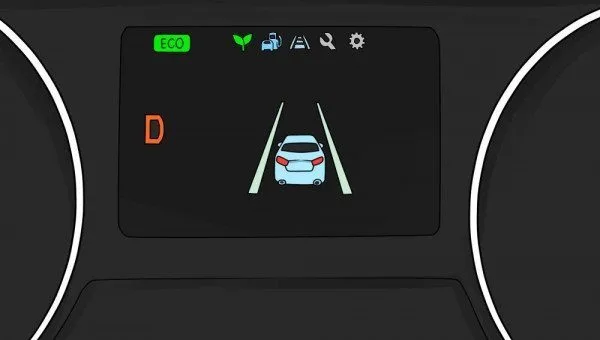
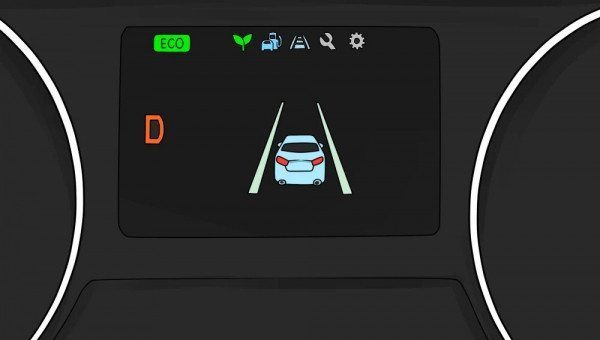
Adaptive Cruise Control (ACC) automatically responds to changes in traffic speed and adjusts your car’s acceleration accordingly.
During commutes and long drives on open highways, cruise control is your best friend. It allows you to set a specific speed and take your foot off the accelerator for a while, resetting it when you press the brake pedal. However, when speed constantly changes due to traffic fluctuations and overtaking, it can seem like a useless feature.
Adaptive Cruise Control (ACC) is a semi-autonomous function in some cars that automatically slows down and speeds up based on traffic. The driver sets the maximum speed, just like with regular cruise control, and a radar sensor monitors the traffic ahead, focusing on the car directly in front and instructs their vehicle to maintain a specified distance behind – the “following distance” selected by the driver.
Adaptive Cruise Control reduces driver stress by functioning effectively in daily rush-hour commutes. It can automatically switch from 65 mph to a crawling pace without driver action. Nowadays, many ACC systems also include a pre-crash function that can start braking in an emergency. There are 3 basic types:
Partial ACC: Partial ACC cars tend to be less expensive, but they only work at speeds above 20-25 mph.
Full Speed Range ACC: The full range can bring cars to a complete stop, but the ACC system will need to be reactivated to reach the following distance again.
Stop and Go ACC: Also known as Traffic Jam Assist, these ACC systems will automatically restart after a full stop.
How Adaptive Cruise Control Works
Also known as active cruise control, autonomous cruise control, or intelligent cruise control, the adaptive cruise control system measures distance using a small radar at the front of the car, a laser, or even stereoscopic cameras. It works at any time of day but loses some functionality in poor weather conditions.
To engage ACC, the driver performs the following 4 actions:
- The driver turns on ACC and presses the set button once the desired speed is reached.
- The speed can be adjusted in small increments of 1 to 5 mph using the “+” or “-” buttons.
- The driver sets the gap between them and the car ahead, usually differentiating between short, medium, and long distances indicated by icons or numbered feet.
- A dashboard shows a display of the cars it detects ahead, adding others as they appear. It continuously detects vehicles or obstacles that arise.
It is recommended to start with the longest following distance. Beginner ACC drivers tend to get nervous when the car gets closer to the one ahead without having their foot on the brake pedal. Most of these systems are also equipped with accident avoidance and collision warning functions, such as emergency braking and alert lights, to help the driver maintain a safe distance.
Benefits of Adaptive Cruise Control
Although it can be a disconcerting system to engage at first, adaptive cruise control offers 3 compelling advantages over normal driving:
Convenience: On long trips, adaptive cruise control can help the driver relax and rely on their car for a while – without completely taking their eyes off the road. If you have Traffic Jam Assist, ACC can also make your daily commute significantly less stressful.
Speed Consistency: ACC can keep your car moving at a constant speed within the legal limit. This can be particularly useful on road trips, when an open highway and other distractions might tempt you to press harder on the accelerator pedal.
Energy Efficiency: Driving style is one of the main contributors to fuel economy. Constantly readjusting speed consumes more fuel. ACC will only use the accelerator and braking system when absolutely necessary.
Adaptive Cruise Control is an important feature in the development of autonomous cars. Fully autonomous vehicles will need ACC to follow cars ahead as well as those on the side that begin lane changes. Although it is essential for the cars of the future, current drivers have much to gain from cars that already use ACC. Today, car manufacturers with ACC include Acura, BMW, Chevrolet, Ford, Subaru, Toyota, Volvo, and many others.
Although ACC is an innovative feature advancing automotive technology, the human driver remains responsible for all actions at the wheel. Drivers can rely on adaptive cruise control when the situation allows, but must always keep their eyes on the road.