
There’s nothing more thrilling than when your car starts giving you trouble while you’re driving. A small issue is fine, but what happens if your car battery dies while driving?
By “car battery dies,” we mean the battery discharges beyond the point where it has enough power to operate the car.
The list of problems that can drain your battery is endless. Some of the most common reasons include faulty alternator diodes, charging issues, persistent electrical leaks, loose or corroded battery connections, and even extreme weather conditions.
Now let’s explore exactly what happens when your car battery dies while driving.
Problems Encountered When Your Car Battery Dies While Driving
Even if you buy the best car batteries on the market, there’s always a risk that your car batteries will die. This is due to various reasons. Some of them can be resolved easily while others may require a visit to the mechanic.
But what happens if the battery dies while driving due to a faulty alternator? Things can gradually worsen until you slowly stop on the side of the road. You might notice the lights are dimmed and the cabin ventilation fan is running slower.
Furthermore, when your car battery runs out while driving, you don’t have enough power to operate the spark plugs or injectors because the parasitic load of the electrical system drains it further.
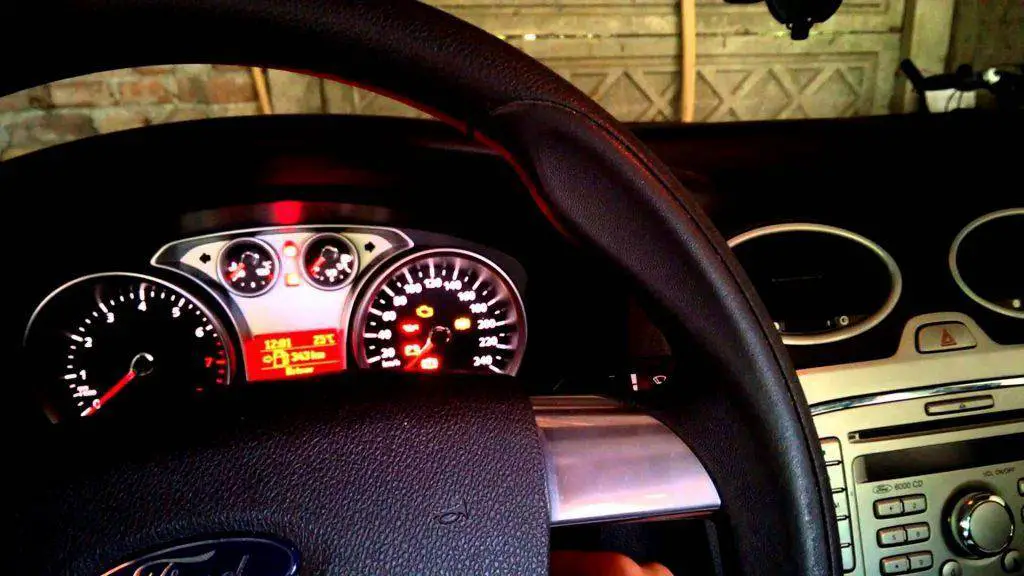
Eventually, the car will stop running properly and all the dashboard lights will start flashing. That’s when you’ll pull your car over to the side of the road and ask for help.
Well, batteries don’t die immediately; they get sick at first, then sicker and sicker. But most people don’t notice the signs. Slowly and steadily, the car turns over slower at startup or the headlights dim more when sitting at a light.
It’s important to know that a car dies even with a gradually weakening battery and a good alternator. This usually happens when dying car batteries place a huge load on the alternator, thus destroying it.
What to Do When Your Car Battery Dies While Driving
So what happens if your battery dies while driving? Here’s what you can do if your car battery dies while driving:
Restart Your Car
The best thing to do in such situations is to restart your car. First, remove the key from the ignition, give your car a few seconds of rest, and start it. If your car starts, that’s great, but if not, you need to go to a repair shop to fix the problem.
Try to Jumpstart Your Car
If it doesn’t restart, you might need to take a big step forward to get home. Plug in your portable jump starter and start charging your battery gently.
This charge won’t last long because the alternator is dead. The goal is for you to have enough power to get home safely and continue from there.
If you’re still far from home, ask people who wouldn’t mind helping you jumpstart your car. Because a dead alternator won’t replenish your battery, you can only use the amount of power created by the jump.
Try Calling for Help
Most people don’t prepare much for this situation; you should always keep this question in mind: can a car battery die while driving? And then you’ll have a specific step to solve this problem yourself.
First, take a deep breath and don’t panic. Driving with a dead battery is risky. Keep your cool and proceed with caution at all times. Then, try to get help from someone who can tow your car to a repair shop.
Furthermore, you can call roadside assistance. A specialist from a repair company is always available to help you. Sometimes, expert advice on car maintenance is available.
However, keep in mind that you need to find a solution to the problem as quickly as possible.
Turn On Your Hazard Lights
Don’t forget to turn on your hazard lights because your safety is the most important thing. Let other drivers give you and your vehicle some space by activating your hazard lights.
FAQ on Car Battery Death
- When should you replace your car battery?
It’s essential to understand if a car battery needs to be changed. Don’t wait until the battery is depleted. If your car battery is depleted, you can replace it.
- How can you tell if your vehicle’s battery is too old?
All car batteries have a specified lifespan. However, there may be differences between some units.
Read the printed code or take a look at the label to determine a battery’s age. The date it left the factory could potentially be the date the code was produced.
- How long do most car batteries last?
Between three and four years
Batteries in some automobiles can last up to five or six years, while others need to be replaced after just two years.
Generally, your car battery should be replaced every three to four years. Routine maintenance also includes replacing your automobile’s battery.
- What’s the fastest way to drain a car battery?
Increasing the heating or air conditioning while driving consumes more power from the battery. Controlling the cabin temperature and the battery is the one that consumes the most electricity, just behind operating the car.
Electric vehicles, unlike ICE vehicles, cannot extract heat from the engine to warm the interior.
Watch this video from Nathans BMW Workshop to learn more about the most common causes of battery drain and solutions for all cars!
- What would drain a vehicle’s battery in 3 days?
Stereo components (subwoofers), phone chargers, and anything you leave connected to the vehicle’s sockets that continue to be powered by the battery after the car is turned off can drain your car battery over time.
Interior and under-vehicle LED lighting is also a source of power consumption. Loose or rusty connections.
Thus, your car battery died while driving for many different reasons. It’s important to have it checked either by yourself or by a quality service workshop.
You can follow some maintenance tips given by automotive experts to handle this situation with ease!