
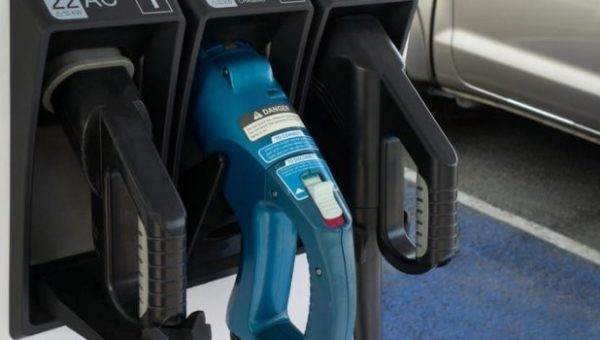

With the depreciation of fossil fuels, new ways of converting energy into locomotion are multiplying. Whether it’s hydrogen fuel cells or electric batteries, the share of modern cars using alternative means to propel themselves is increasing. Electric cars and vehicles in particular are seeing an expansion of infrastructure to support them. EV charging stations are becoming more common, and the era of worrying about finding a place to charge an electric car is over. In 2021, how much it cost to charge an electric car became a more pressing concern than where to find an electric car charger in the first place.
DIFFERENT TYPES OF CHARGERS
There are several ways to break down EV charging types: by the equipment used, the charging rate of the device, the type of current used, and whether the device is public or private.
ELECTRIC CAR CHARGING EQUIPMENT
Electric vehicle power devices come in different forms, but the automotive industry has generally defined charging equipment as follows:
Socket – This is the charger’s interface for inserting the cable.
Plug – This is the car charger’s plug that connects the cable to the device’s socket.
Cable – The cable that transfers electrical currents from the device to the vehicle.
Connector – The part that connects the cable to the vehicle’s input and thus to the vehicle.
Vehicle Socket – The electric car charging socket that accepts the cable’s connector.
To ensure a vehicle can be charged, it needs a plug that fits the sockets of devices in the area where it is driven. Therefore, efforts have been made to standardize plugs worldwide. There are three main types of car charger plugs currently used:
Type 2 Connectors – Type 2 (also known as EU type, Mennekes, or IEC 62196) is the standard plug in Central and Western Europe, parts of South America, the Arabian Peninsula, South Africa, Australia, and New Zealand.
SAE J3068 AC6 Connectors – These are mechanically identical to Type 2 connectors. The differences mainly lie in the types of currents and voltages for which the devices are designed. This type has been adopted throughout North and Central America, including the Caribbean, as well as in South Korea.
GB/T 20234.2 Connectors – These connectors are incompatible with the other two types. Unlike the other two, GB/T uses a female vehicle input and a male connector. This variant is used exclusively in China.
CHARGING RATE
This metric is important for choosing where to power your electric car, as it determines how long it takes to recharge the electric vehicle. The charging rate mainly depends on the device providing electricity to the vehicle, but at higher rates, the car’s ability to accept current becomes the bottleneck. Overall, you can sort these devices into four general categories:
Electrical Grid – Electric cars usually come with a plug that can be connected to the electrical grid to recharge the vehicle from there. The charging rate is about 2 kW and can take over a day to fully charge most vehicles from a flat battery. EV manufacturers recommend using it only in emergencies.
Slow Chargers – If you’ve ever wondered how to charge your electric car at home, slow chargers with a power of 3 kW are becoming more common in households with an electric vehicle. This allows plugging in an electric vehicle overnight when it’s not in use. The time it takes to fill the vehicle’s battery capacity becomes irrelevant.
Fast Chargers – Publicly accessible stations are usually of the fast charger type, with speeds starting at 7 kW. Fast chargers significantly reduce time compared to slow variants, making them more suitable for recharging vehicles on the road.
Rapid Chargers – The latest technology in the field, these can exceed the ability to accept a charge even from modern electric vehicle models. The rate is typically between 120 and 350 kW. Rapid chargers are unknown for private homes and are usually only found in selected locations.
CURRENT
There are two types of current, alternating (AC) and direct (DC). Most vehicles use direct current, but some models (like the Renault Zoe) use alternating current instead to charge the electric vehicle. Typically, an electric car requires DC power, as batteries store it that way, then pass it to a transformer that converts it to alternating current for the motor to use.
OTHER THINGS TO CONSIDER
There is another variable to keep in mind when acquiring EV charging equipment: the cable length. While it’s true that longer cables suffer from power loss due to increasing resistance, electric car power cables do not reach lengths where this would be a problem. For lengths between 4 and 10 meters, the consideration of which cable size to use for an electric car charger in the UK is determined by utility and price factors. Shorter cables significantly reduce the distance from which the electric car can be parked from a charging point. Meanwhile, longer ones cost more, weigh more, and take up more space. If you can afford it, you should generally opt for longer cables. Naturally, the type of cable you buy must match the electric car charging sockets you are likely to encounter.